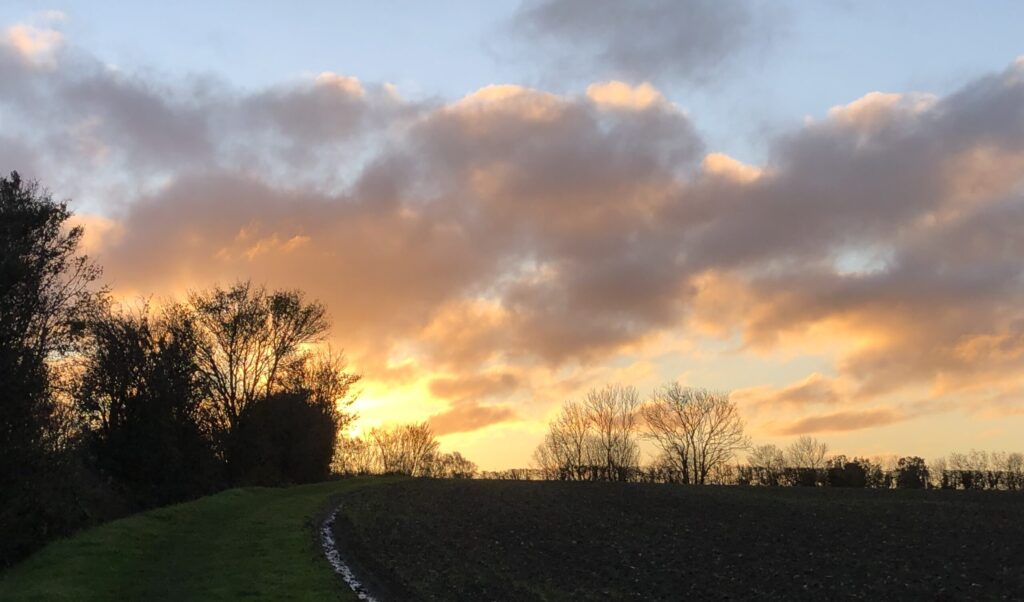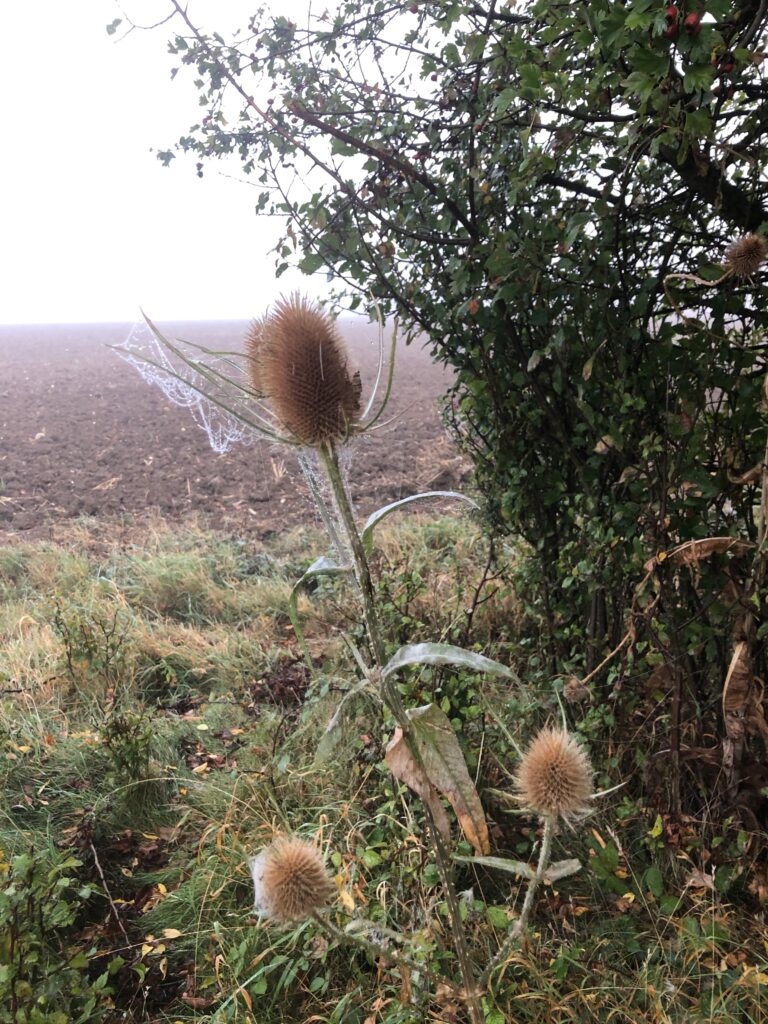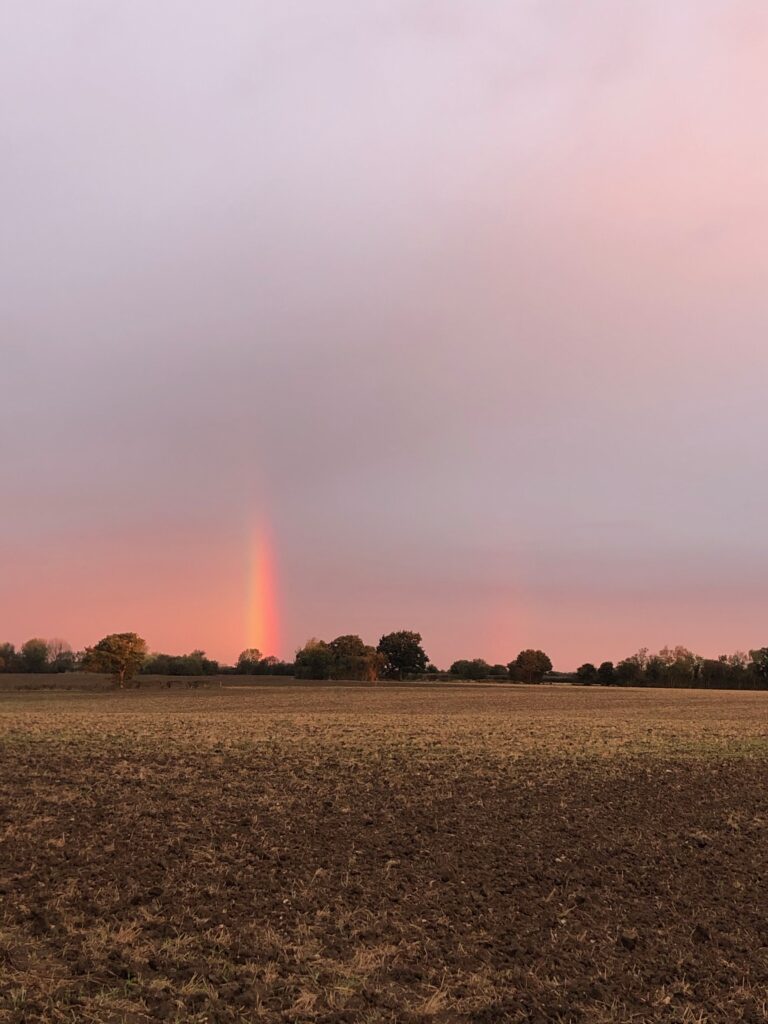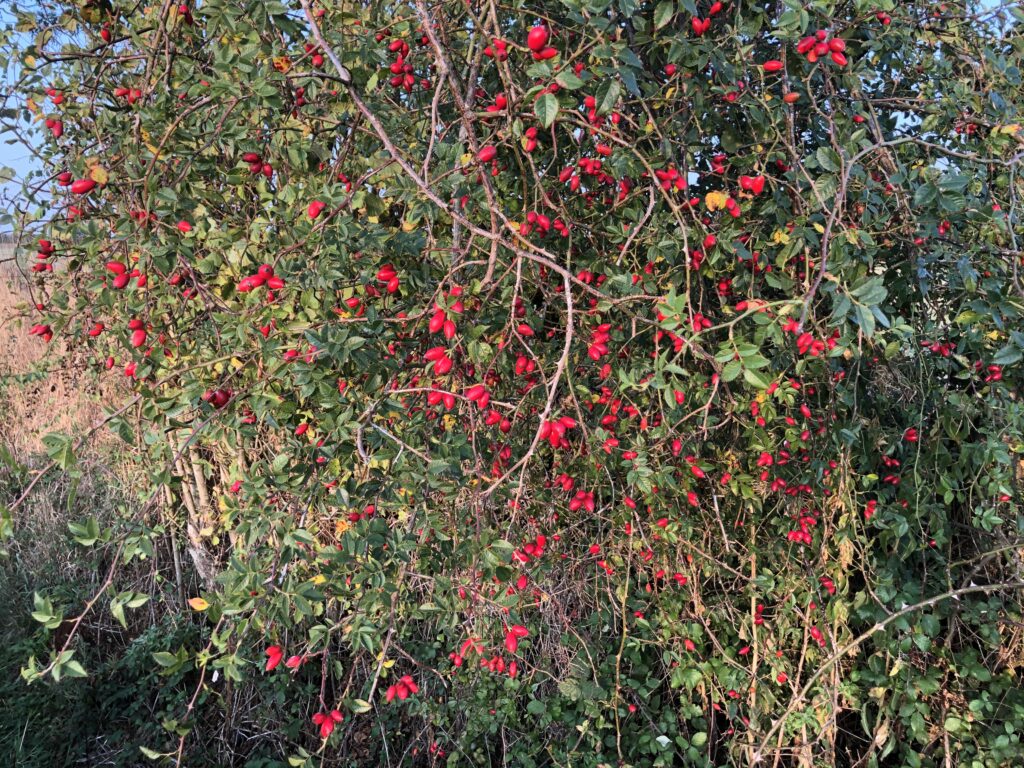
September 2020

Michaelmas Day 2020

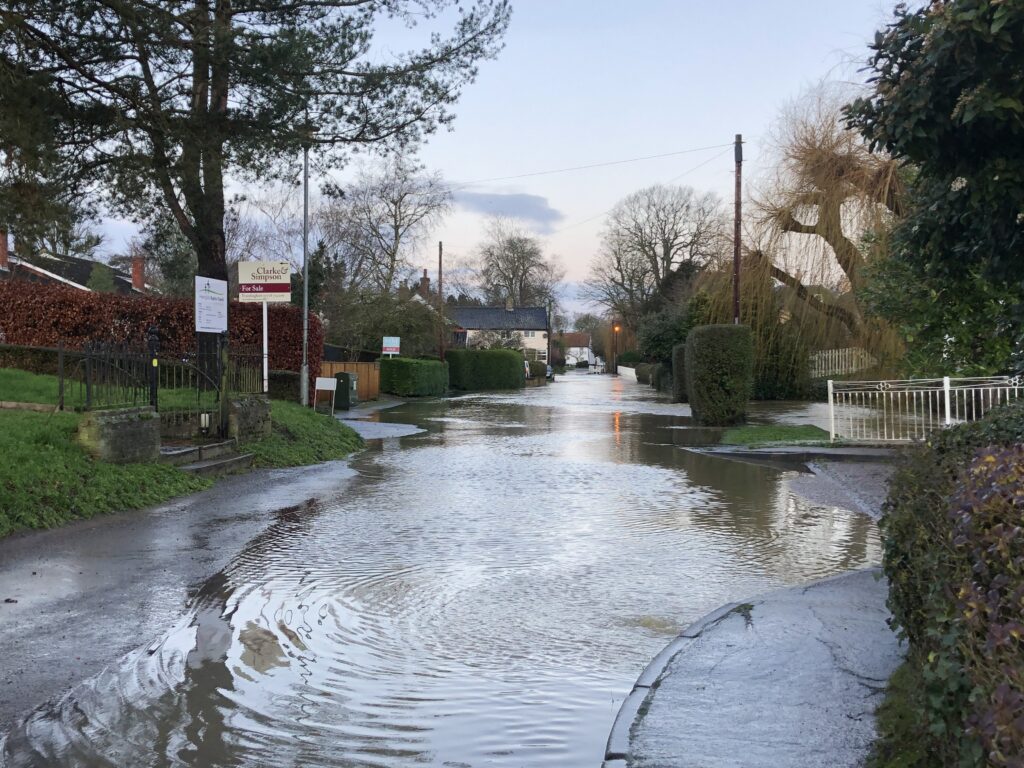
The raindrops roll relentlessly down my study window; it is raining so hard that the rods of water bounce off the ground; the cloud hangs low over the miserable fields.

Is it a feature of advancing age that my life is increasingly ruled by the weather? Its effects on both mind and body feel so dominant, more than merely that I live in a profoundly rural area where the seasons dictate work, and weather rules activity. It certainly forms the subject of this blog. Maybe one day some digital archivist will unearth it as proof of our changing climate.

We have had, give or take a few windy and rainy days, six months of summer. The constant rains of winter ceased a week or so before full lockdown began at the vernal equinox, and the good weather continued with meteorological precision till the day of the autumn equinox. It has been a blessing which has mitigated the effects of the restrictions imposed on us to limit the spread of Covid-19. Meetings have taken place out of doors; church services have been held with the doors wide open to air the interior; meals with friends could be eaten in the garden.

Bad weather coming

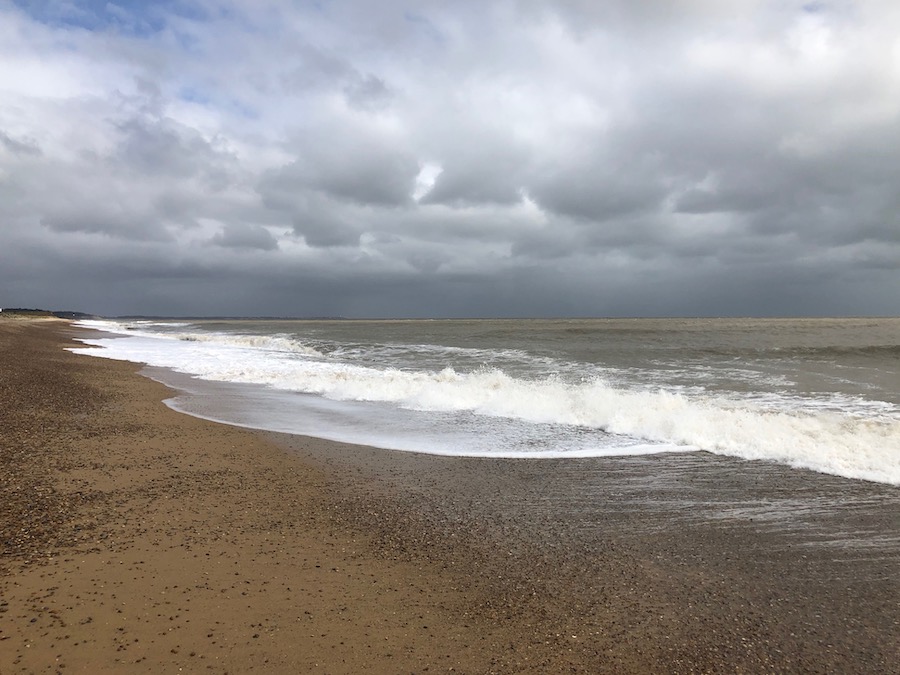
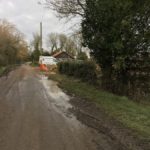
Everything now has changed. Here in the east bitter northerly gales swept down the coast to buffet us. Heavy rain such as we have not seen for half a year turned dust to mud within hours. It is cold. It is not, after all, that this is unexpected, but that the promise of winter arrives with the threat not only of wet and cold, but of more stringent regulations in the face of rapidly rising cases of the virus, more hospital admissions, and the beginning of an upturn in daily deaths.

The first three weeks of September were golden and warm, summer clinging on till the last moment with dreaming misty mornings and shimmering hot days. There is always a tinge of poignancy in the knowledge that these days are numbered, and for me a twinge of pain, for this perfect weather recalls that of another September, 34 years ago now, when our lives changed for ever.

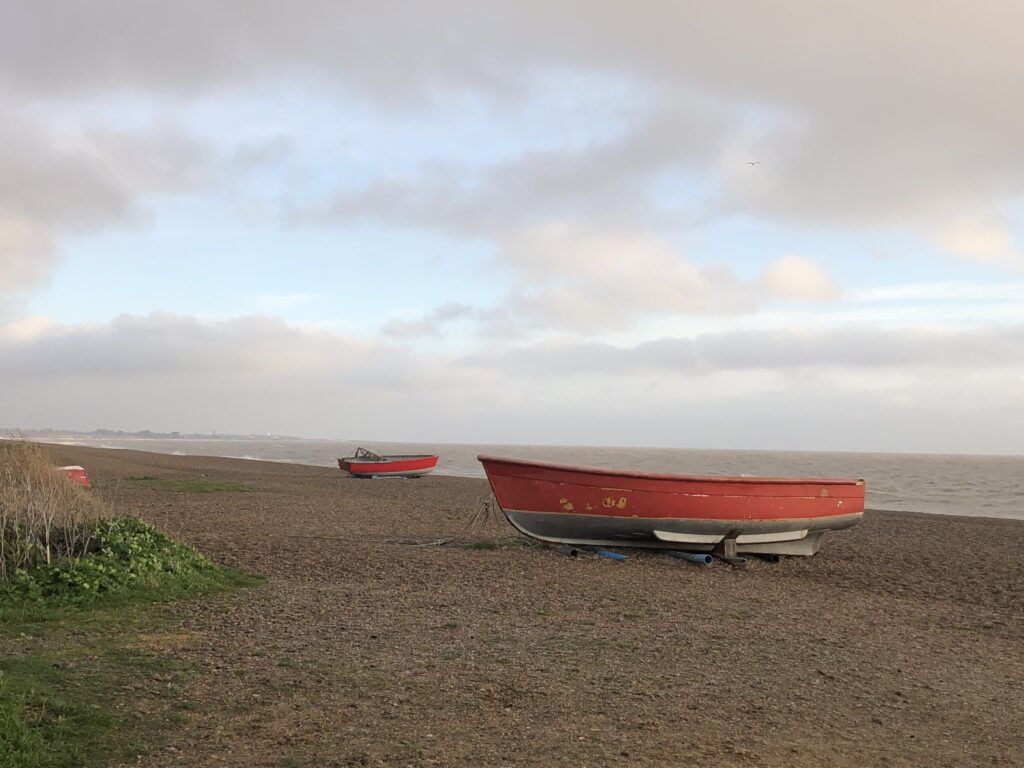
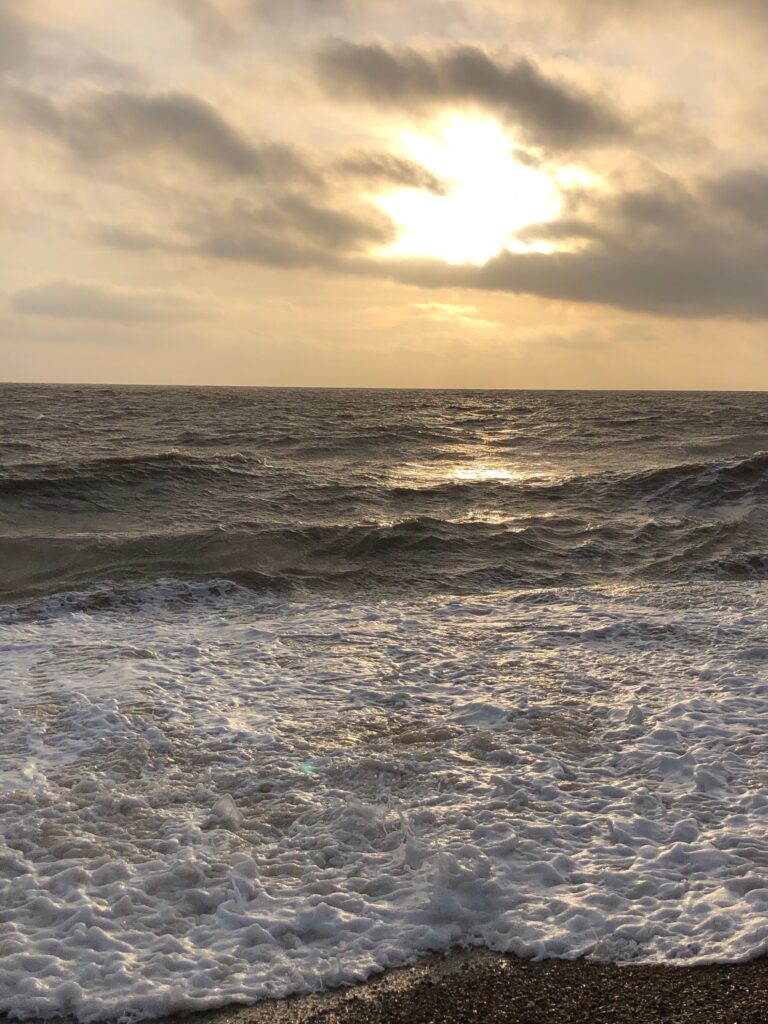
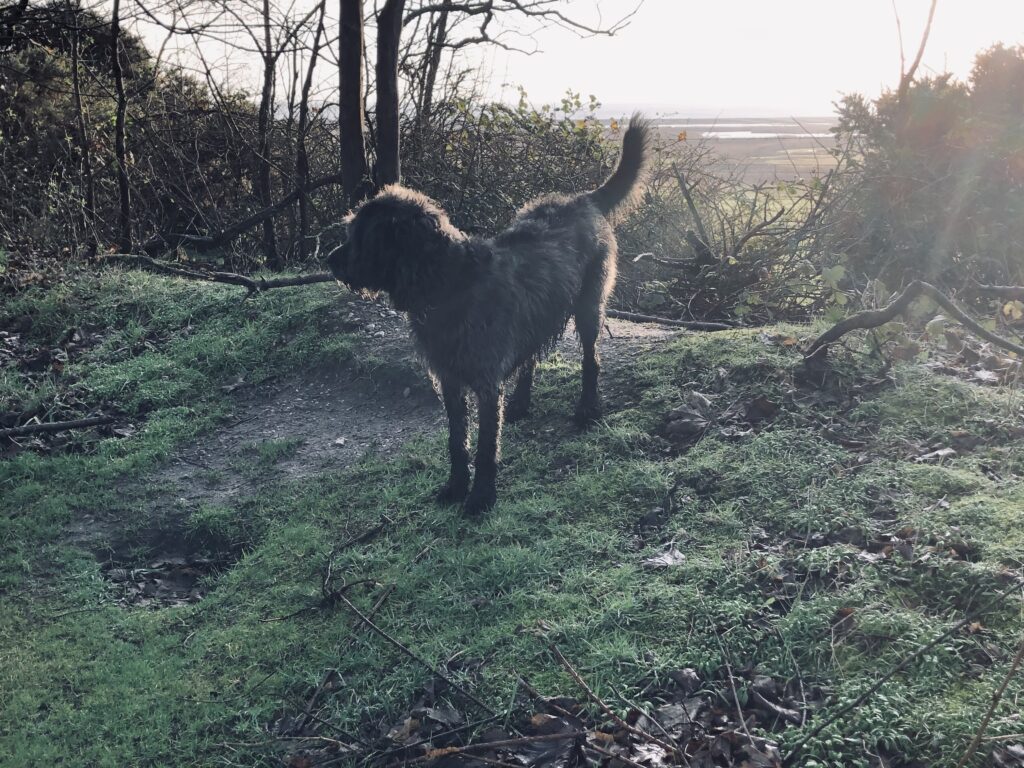
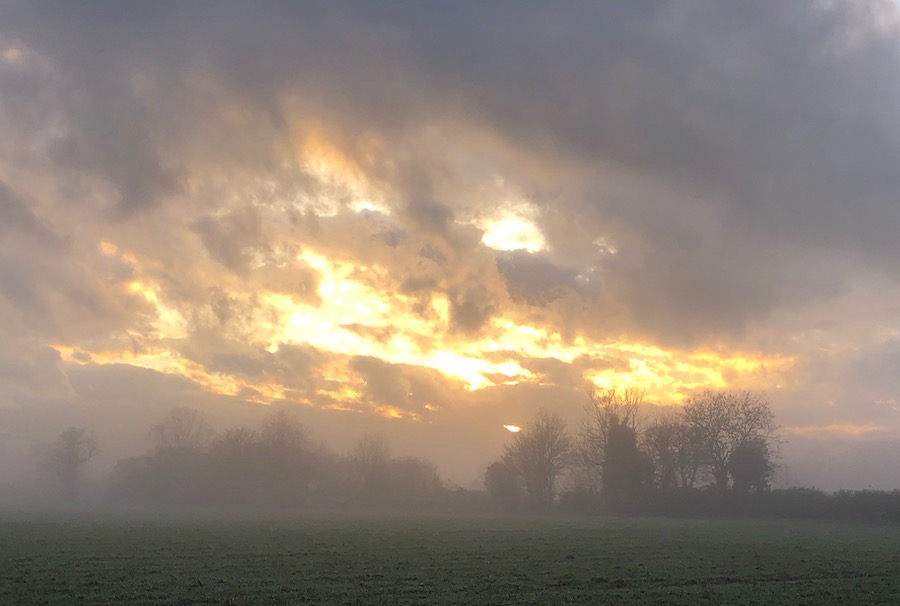
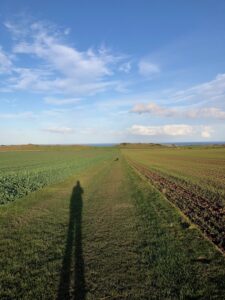
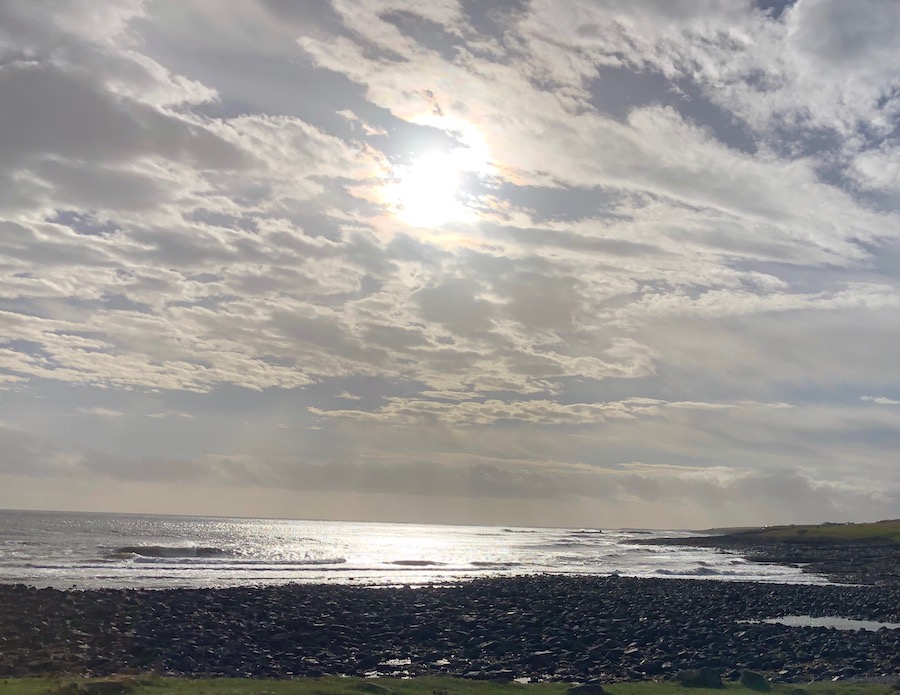
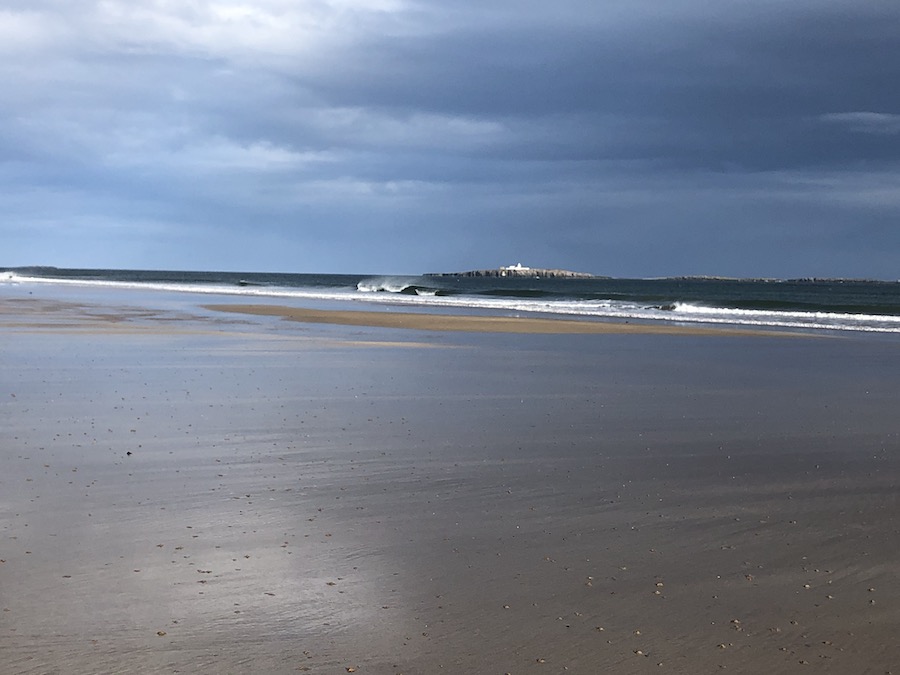
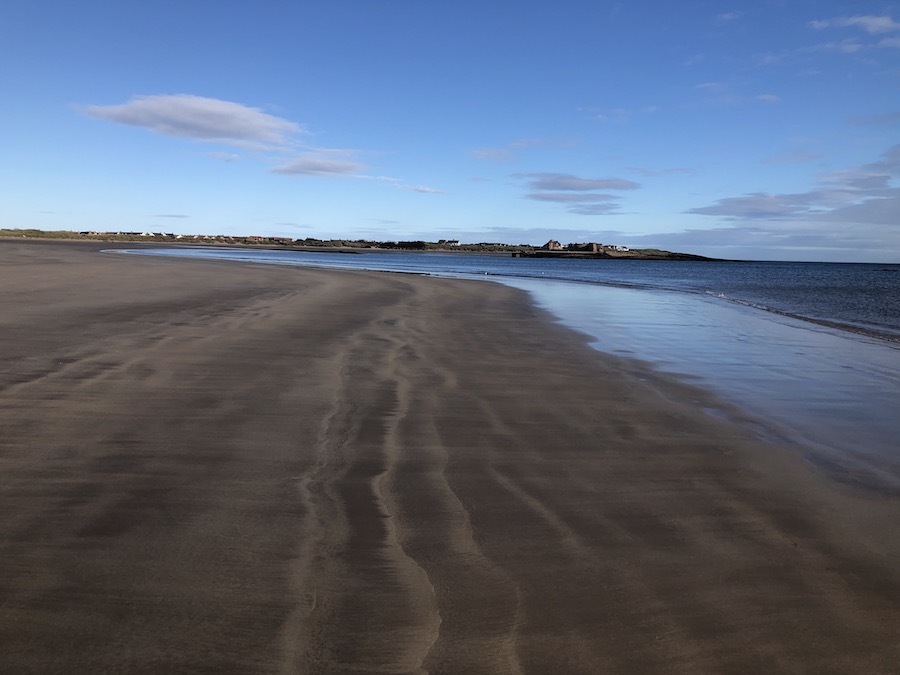
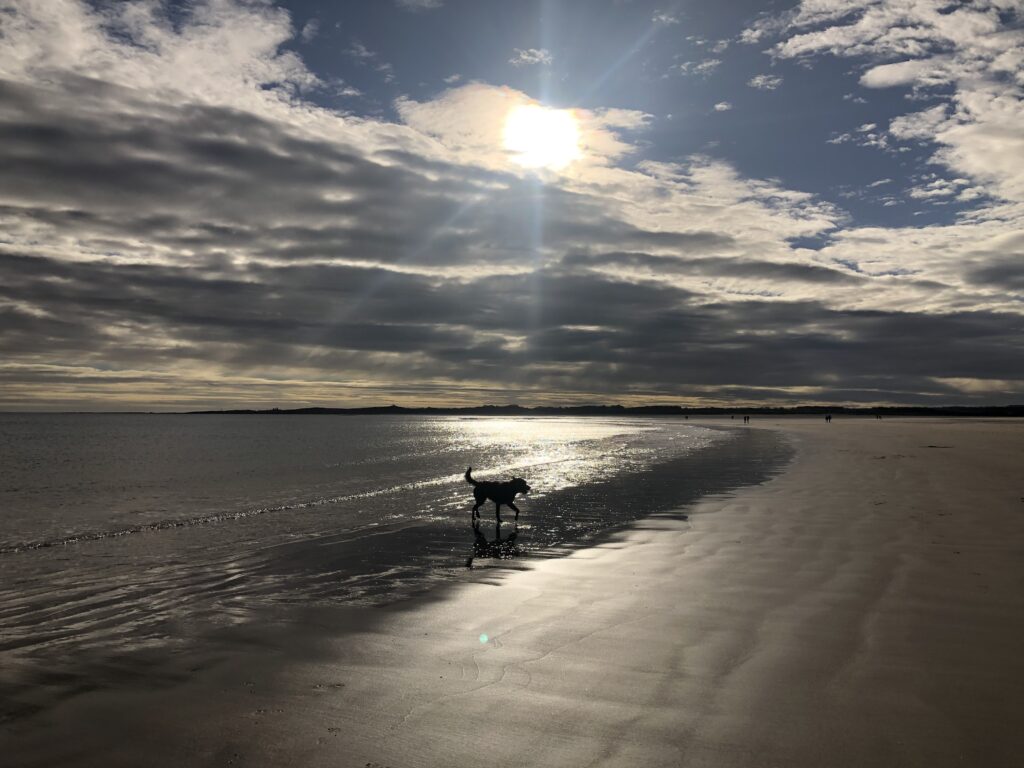
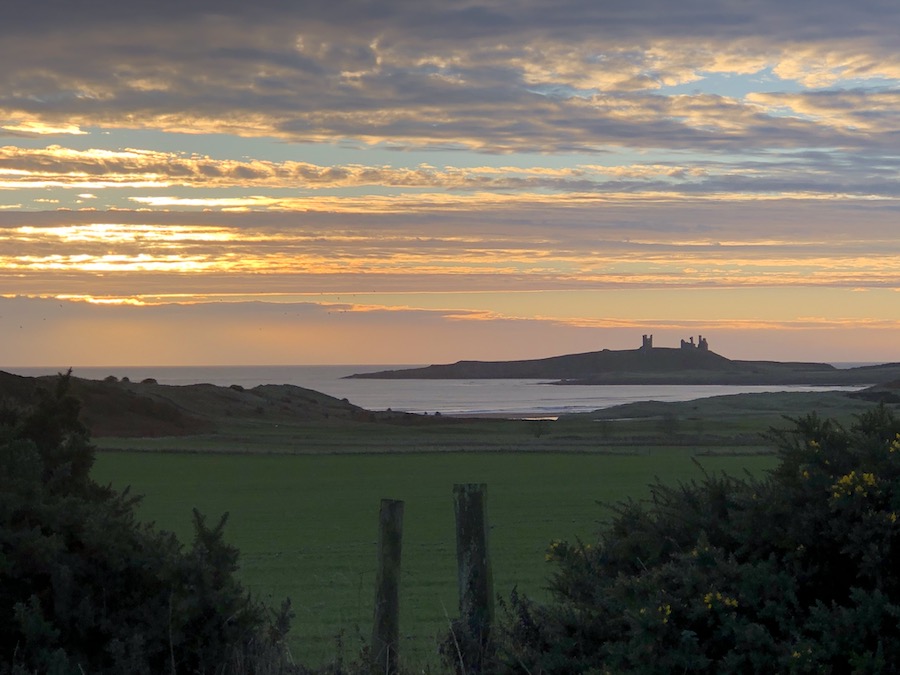
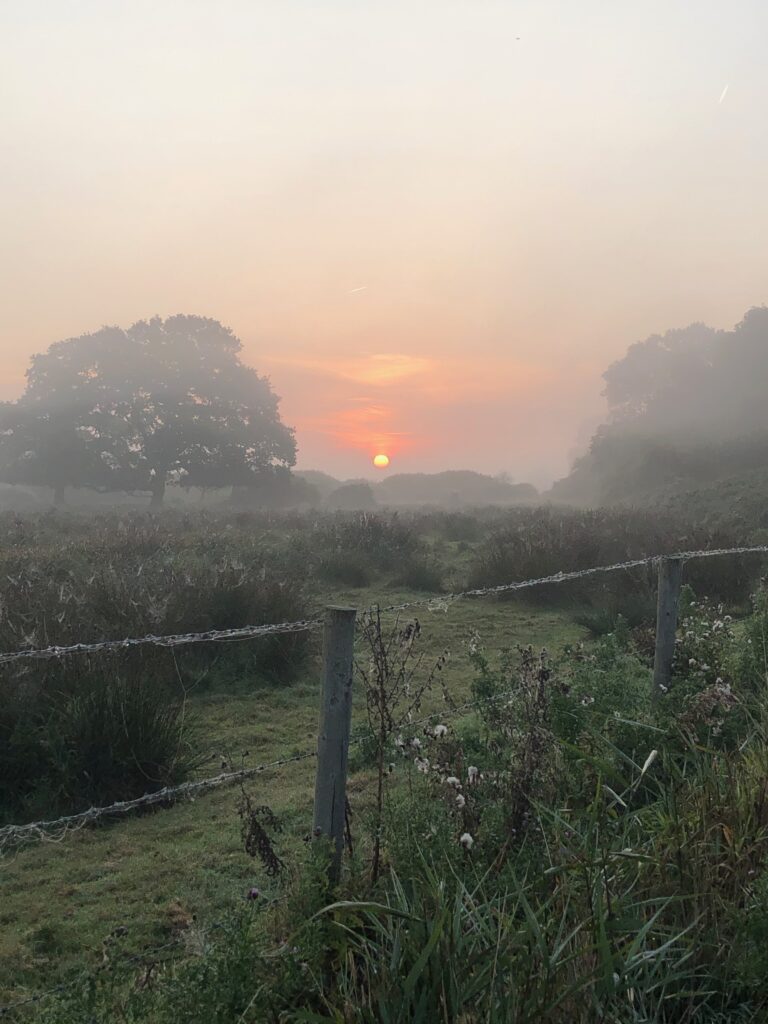
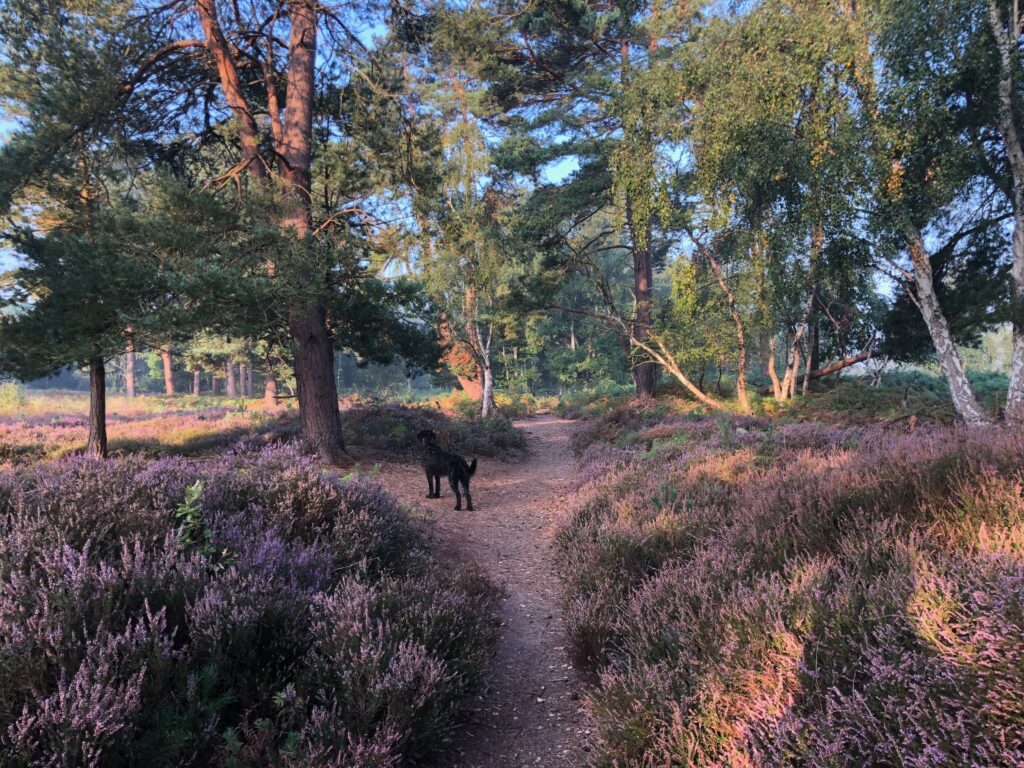
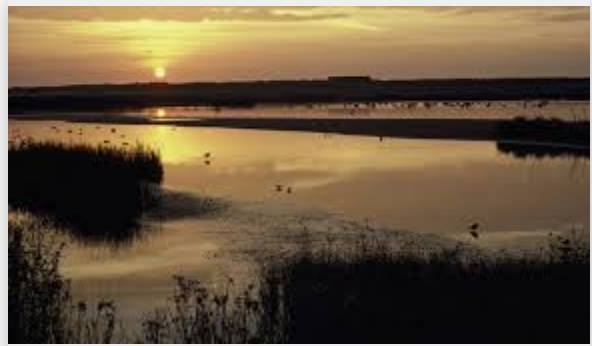
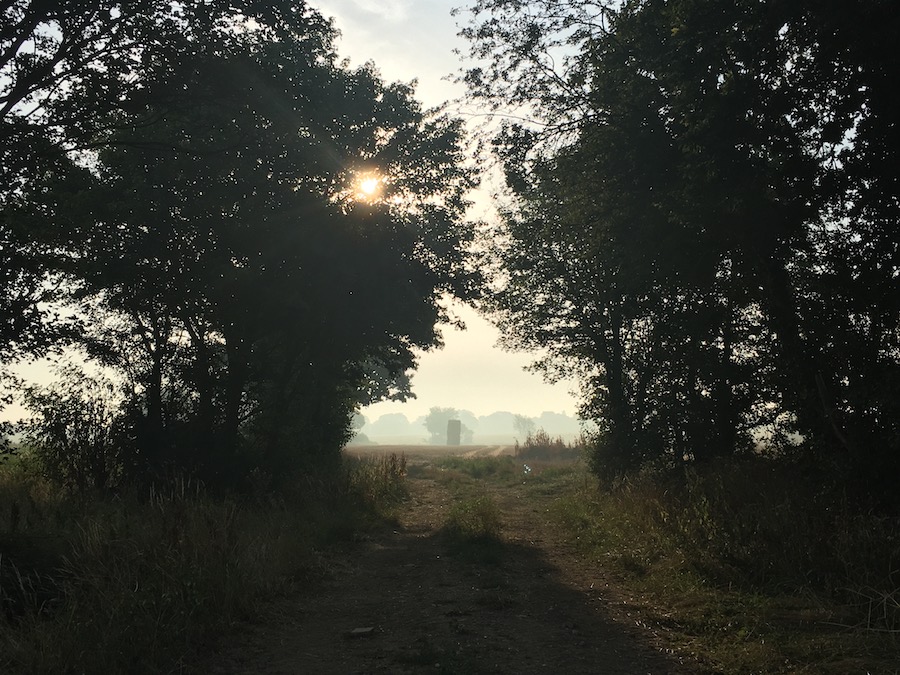
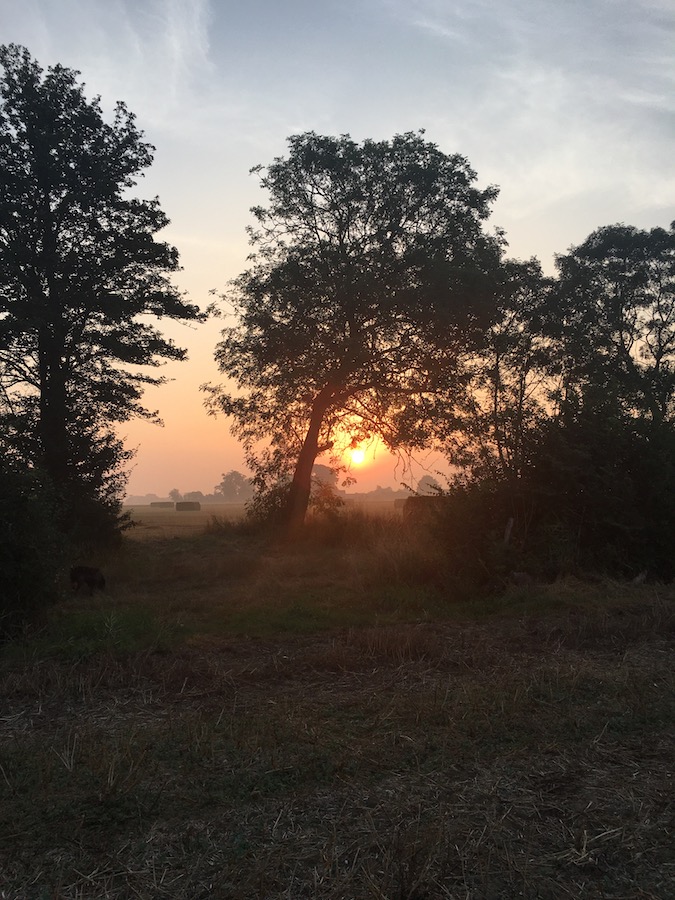
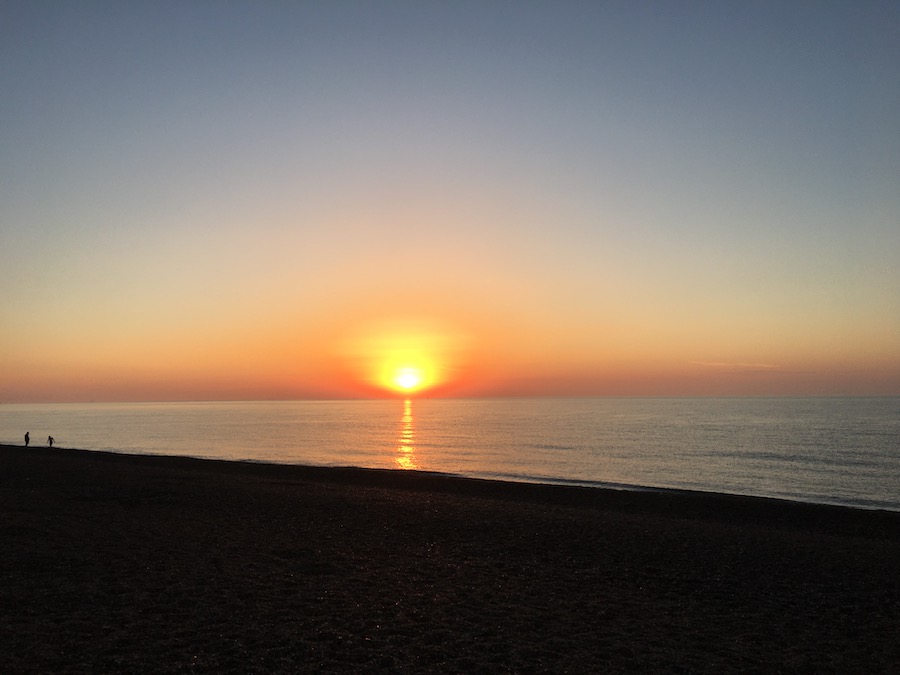
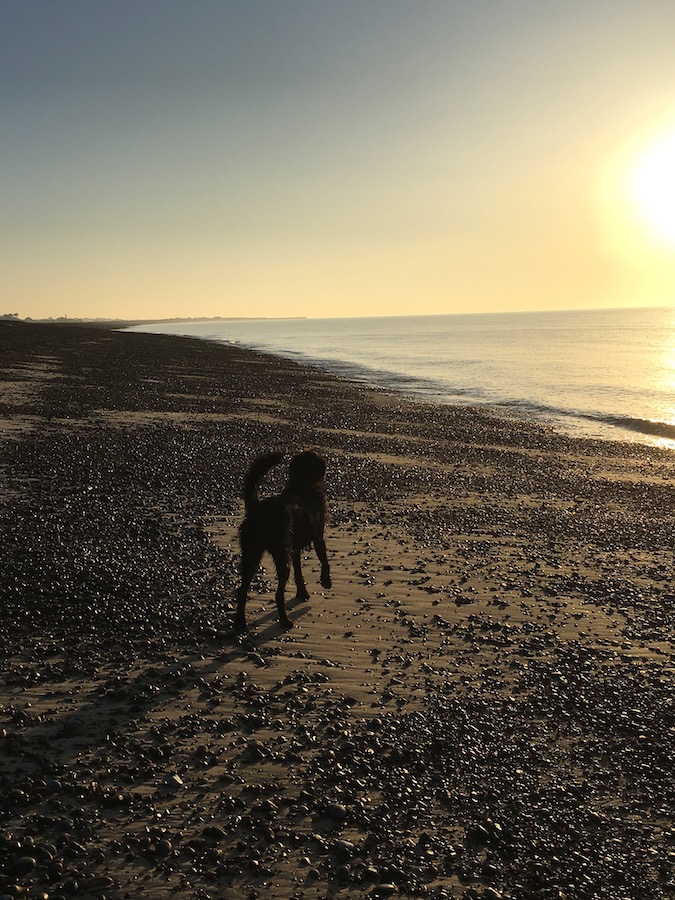
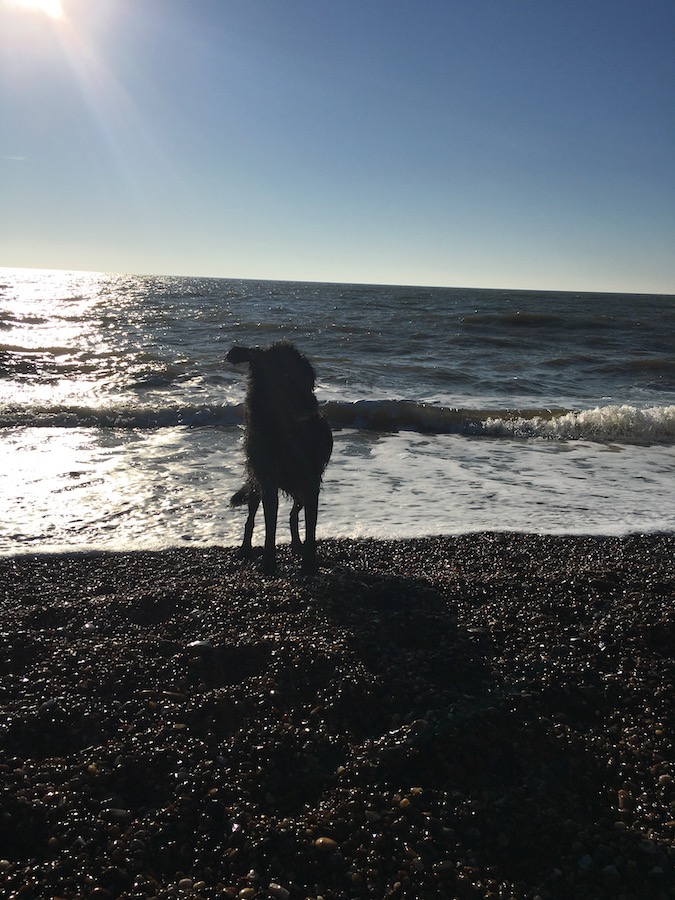
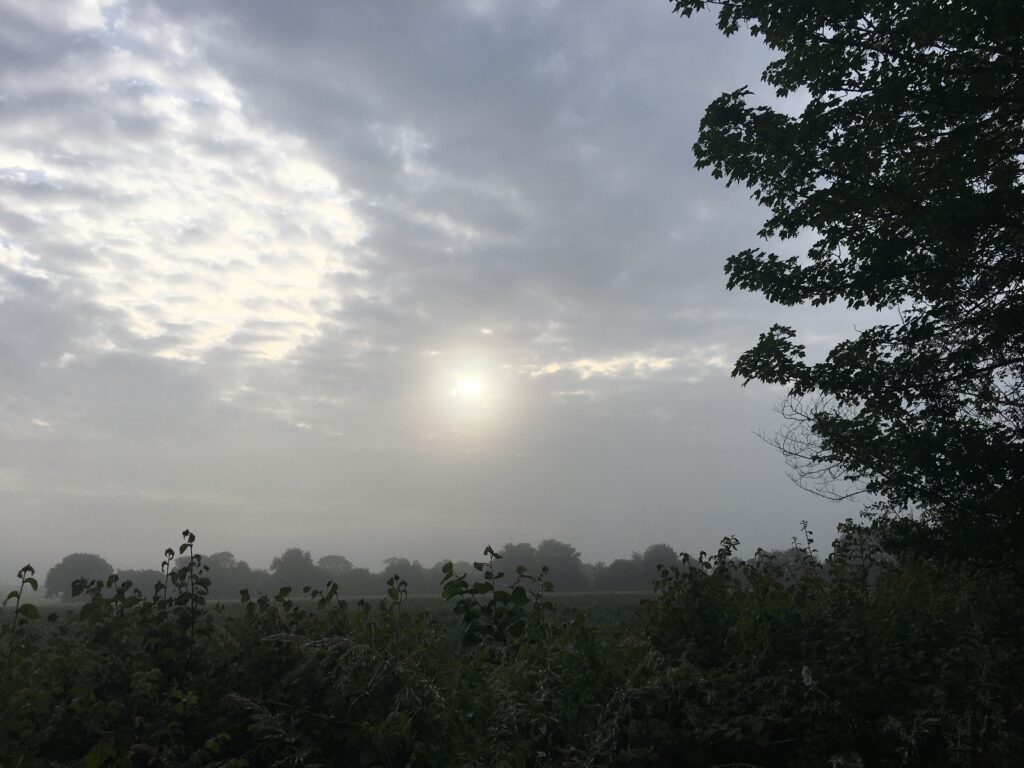
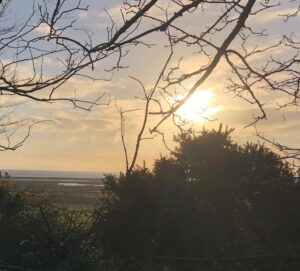
Mid-month the heat was building, and the dog and I went on what must surely be the last of our dawn excursions to see the sun rise over the sea. The regular reader will say there is nothing remarkable in that, but there was something that morning which took me beyond the usual joy in the loveliness of Suffolk shore and fields. As the sun rose through the mist I was conscious that I was in one of those liminal moments, a profoundly spiritual time, when darkness is vanquished by the light, and the animal world with its crepuscular creatures once again gives way to human noise and activity.

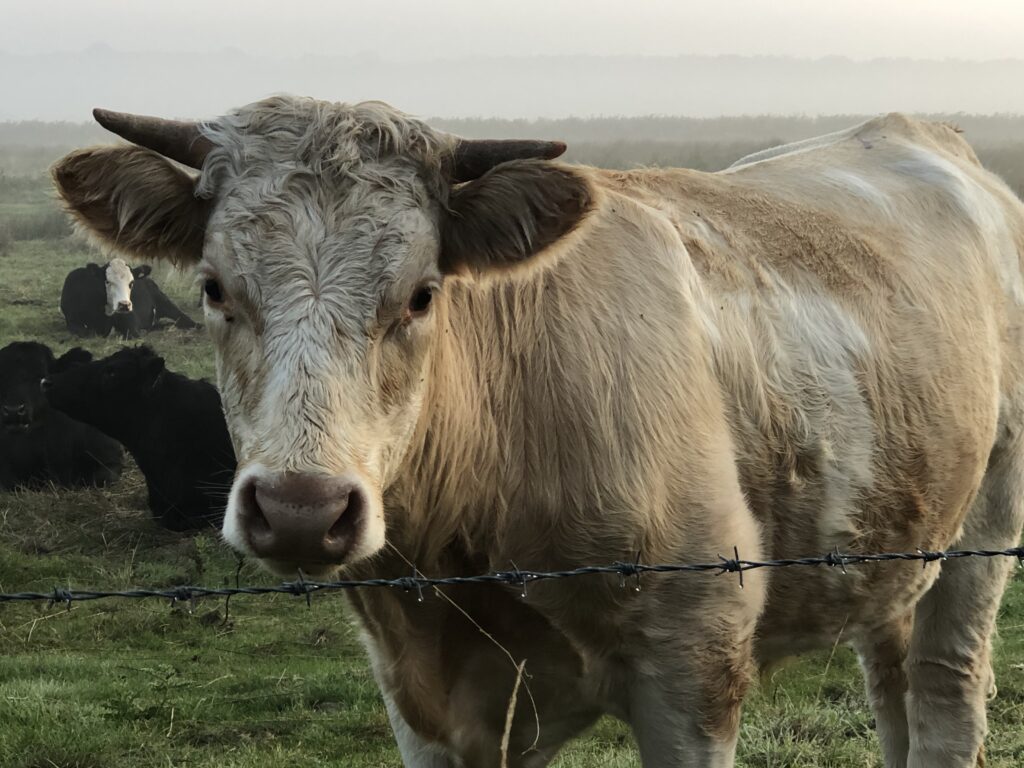
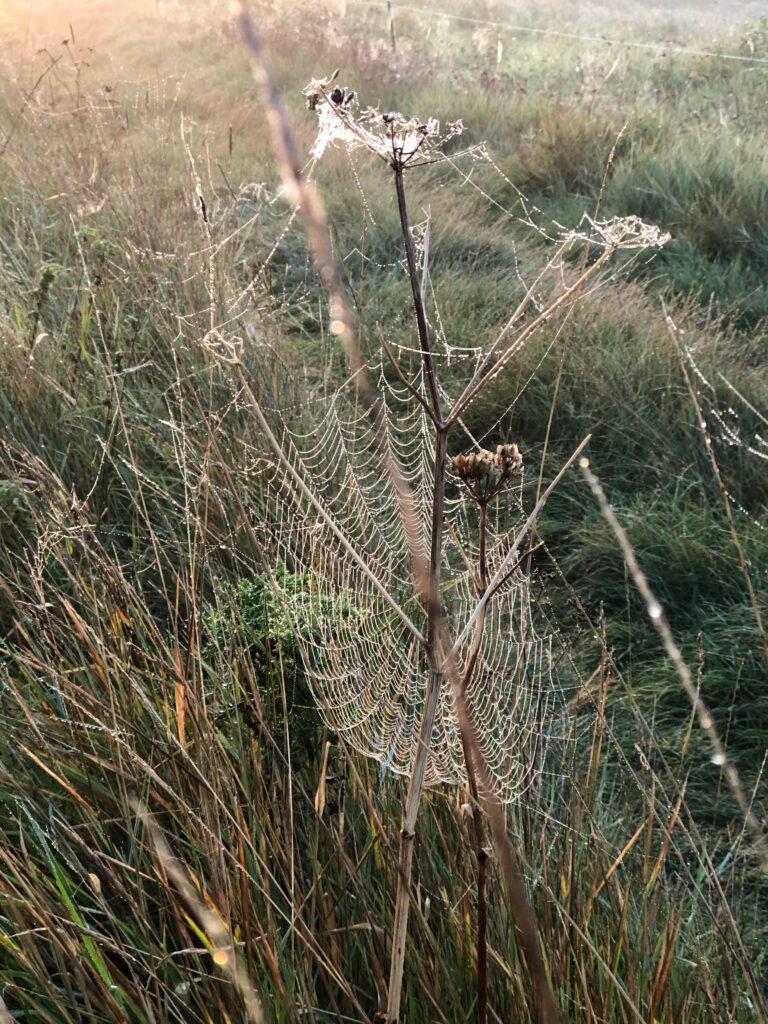
We walked through the dew towards the shore, along a path diamond-spangled with spider webs. Out of the brume an inquisitive calf loomed into view.

 In places in the hollows cold and lingering wisps of mist wrapped their chill around us. A slight rise in the path and the air was suddenly warm, a memory of the heat of yesterday clinging to the banks.

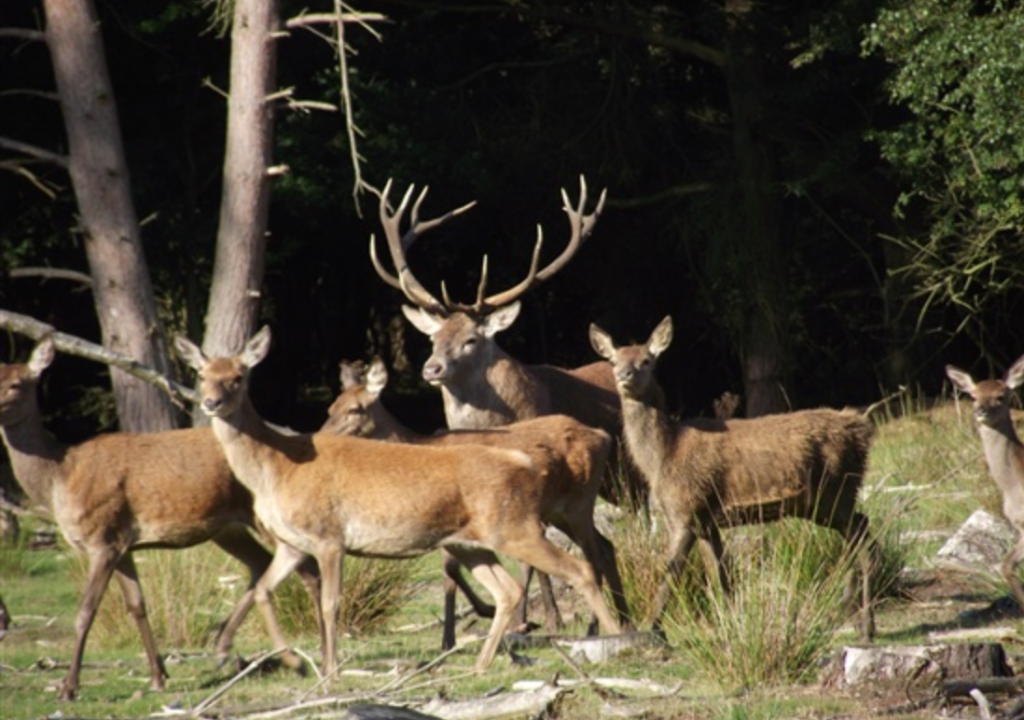
With no warning sound there was a crashing through the trees to our right parallel to the path, and red deer – five, six, maybe even seven, galloped alongside for a while. And then – then – we stopped stock still in our tracks. In front of us for one fleeting moment was a stag. He paused, his noble head with its many branched antlers held high and still, and then he was gone, leaping over the undergrowth to re-join his hinds. It was over in a second – no time for the camera on my phone for I was restraining the dog. But the encounter somehow signified more than this thrilling glimpse of one of the largest land mammals in the UK. It was the meeting of two worlds at the secret time of dawn, a timeless moment of mystery, an outward and visible sign of a special grace – of having witnessed something beyond my world, gone in a heart beat, but imprinted for ever in my mind’s eye. I felt more moved than I can say, almost that I could happily cease then and there to live, so that nothing following could ever mar or taint the memory.

There is a passage in the childhood book “The Wind in the Willows” by Kenneth Grahame when the two animals, Rat and Mole, are searching through the night for a lost young otter. Rat hears the ‘Piper at the Gates of Dawn,’ and knows an intense longing which I think is akin to what I felt:

“It’s gone!” sighed the Rat, sinking back in his seat again. “So beautiful and strange and new! Since it was to end so soon, I almost wish I had never heard it. For it has roused a longing in me that is pain, and nothing seems worthwhile but just to hear that sound once more and go on listening to it for ever.”

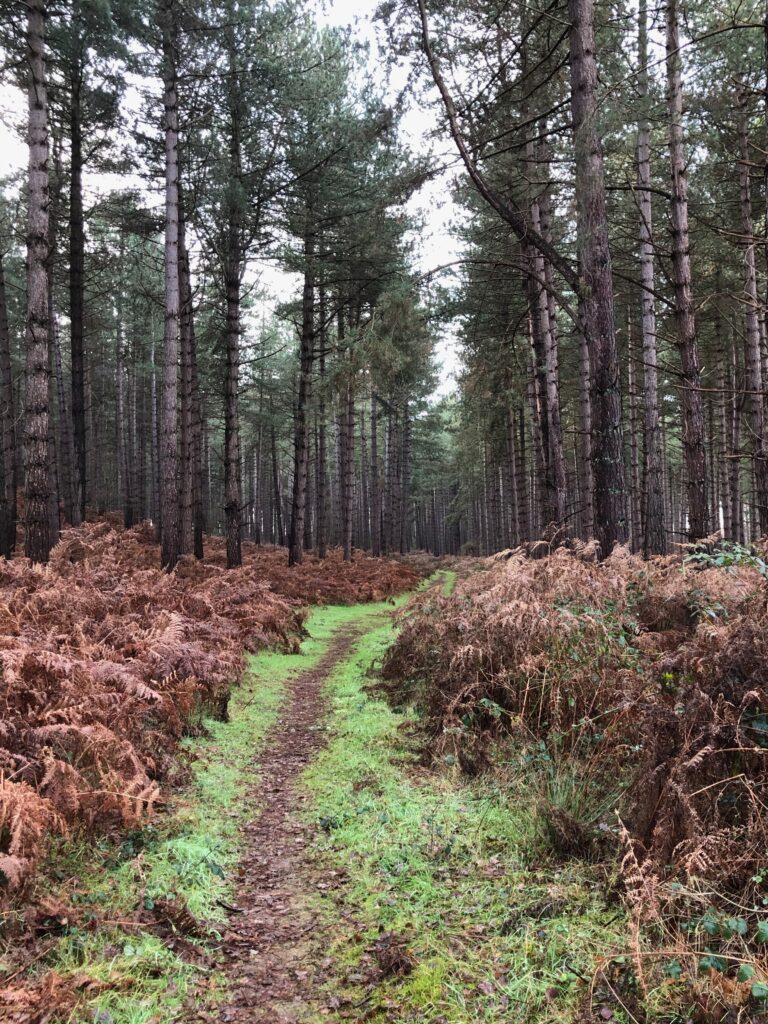
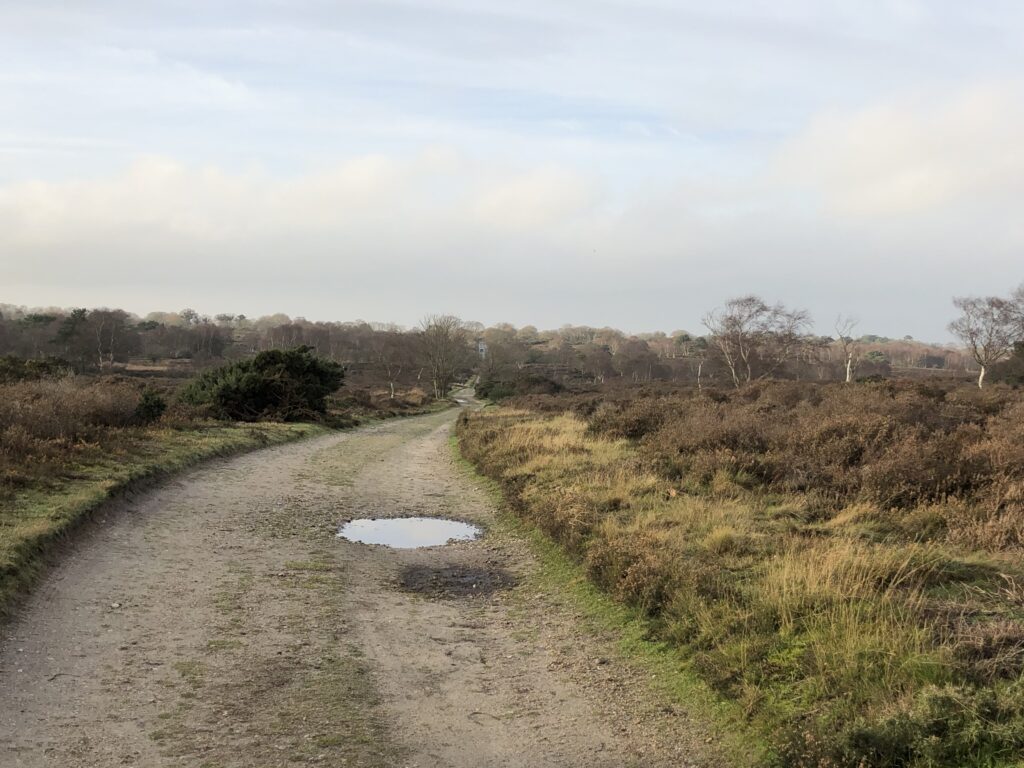
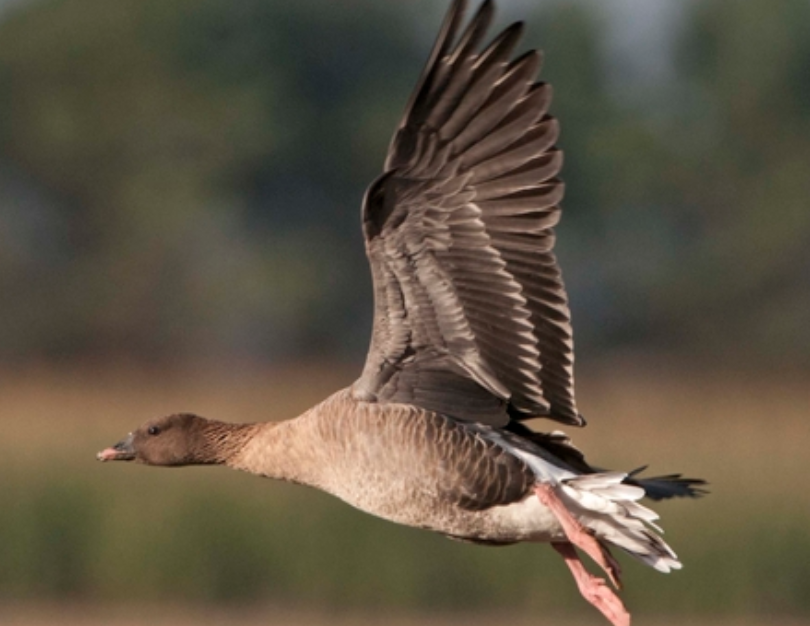
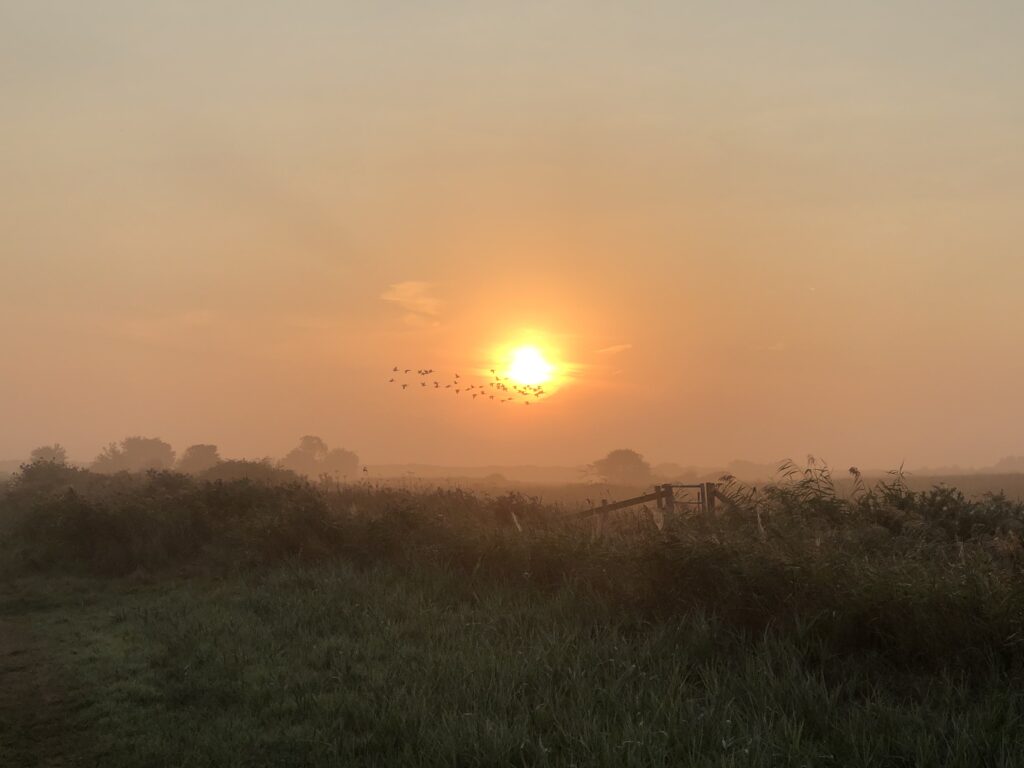
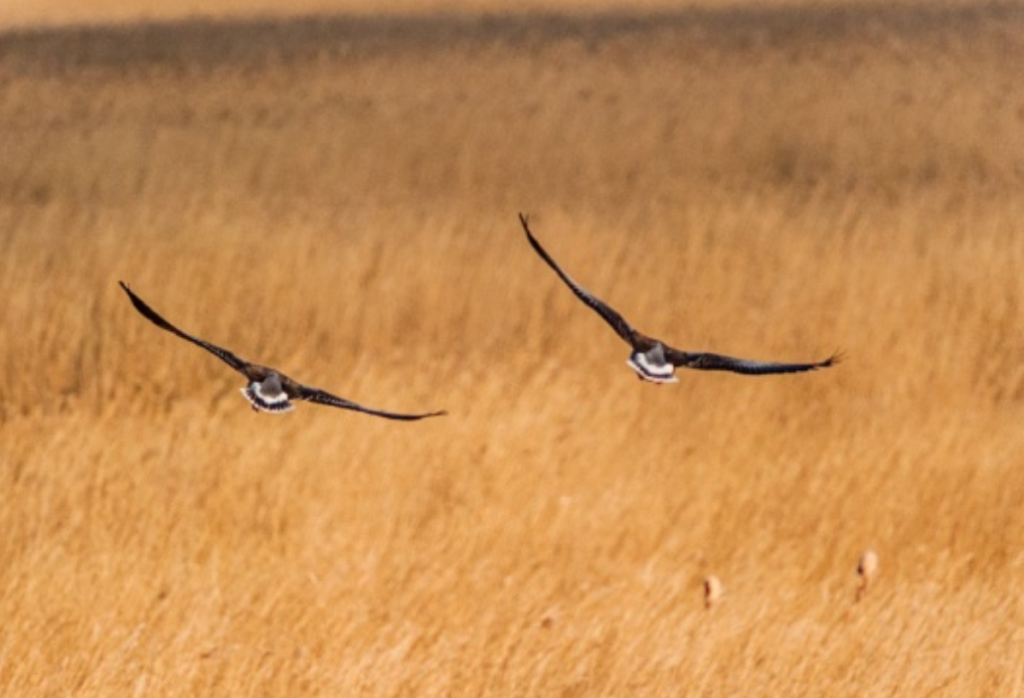
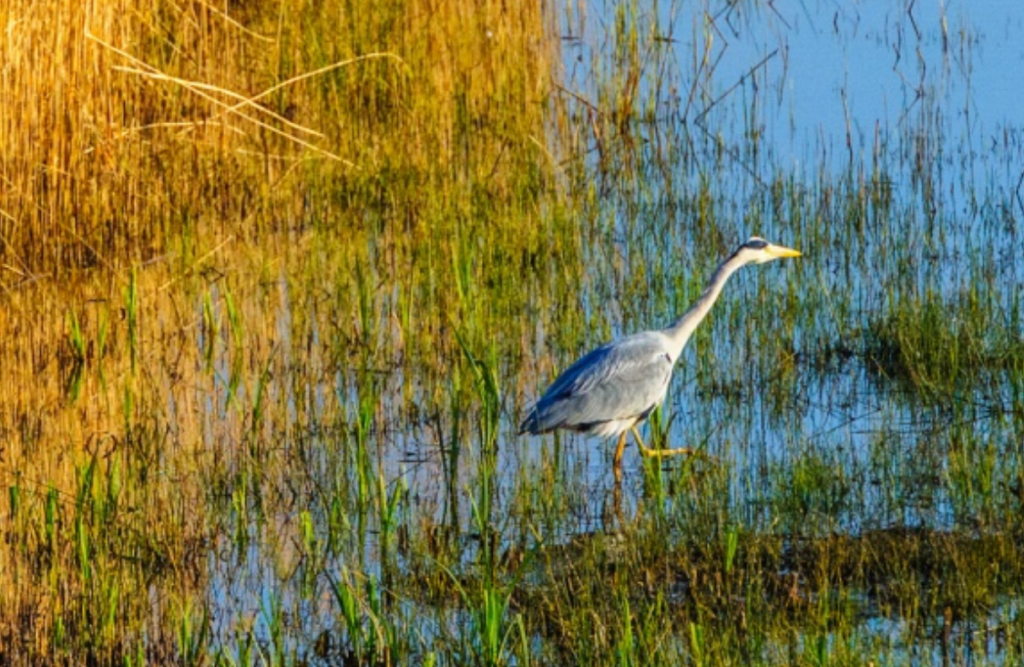
We continued into the rising sun, the sound of the sea gentle ahead of us. Across the dawn sky a skein of geese rose from the pools and flew south. And then we followed the shore north to the coastguards’ cottages, and back across the purple heath, and through woods of birch, pine and beech, dappled now by a radiant September sun. I have walked many thousands of miles through Europe – over mountain ranges, arid high plains, endless forests, battlefields of long ago, and gentle pastures – but somehow this walk will never be surpassed in memory.

On either side of them, as they glided onwards, the rich meadow-grass seemed that morning of a freshness and a greenness unsurpassable. Never had they noticed the roses so vivid, the willow-herb so riotous, the meadow-sweet so odorous and pervading. Then the murmur of the approaching weir began to hold the air, and they felt a consciousness that they were nearing the end, whatever it might be, that surely awaited their expedition.

Not my photo, but could this be the group I saw?

In case, reader, you are disputing that I saw red deer, I should note that the herd around RSPB Minsmere is the largest in the British Isles outside Scotland. The gentleman I saw will soon be fighting for his position, for in late September through October the stags return to Minsmere for the annual rut.

I have mentioned Minsmere and Dunwich frequently in these chronicles. Readers outside the area may be less aware than those who live nearby of the threat posed by the proposed construction of Sizewell C and D to the north of the ‘B’ power station, bordering the RSPB reserve, with a “campus” by the beautiful hamlet of Eastbridge. Posters from local opposition groups proclaim a threatened 600 lorries a day on our narrow roads and lanes.

More than 5600 different animals, plants and fungi have been recorded at Minsmere – more than on any other RSPB reserve and amongst the highest number of any nature reserve in the UK. Minsmere’s habitats include four of national conservation priority: reedbeds, lowland wet grassland, shingle vegetation and lowland heath. These habitats support a wide range of bird, plant and invertebrate populations of international conservation importance.

Among the diverse wildlife are nationally important populations of bittern, marsh harrier and avocet. Other wildlife in the wetlands include otter, water vole, kingfisher, specialist wetland plants and many rare dragonflies and other invertebrates. Across the heathland there are many rare species making a home, including nightjar, woodlark, Dartford warbler, adder, natterjack toad and silver-studded blue butterflies.

As well as its importance to today’s wildlife, Minsmere has played a significant role in wildlife conservation throughout the years. The reserve was the springboard for the recovery of both bittern and marsh harrier in the UK and, alongside RSPB Havergate Island a few miles down the coast, Minsmere ensured the successful return of breeding avocet to the UK after an absence of more than 100 years.

Unexpected meetings bring hope and pleasure. Online friendships can bring strangers together. I learned that a fellow pilgrim, who walked the Via Francigena from Canterbury to Rome two years after I did, and who is a member of the pilgrim organisation for which I work, was walking between East Anglian Cathedrals – Peterborough, Ely, Bury St Edmunds and Norwich. He must surely pass through Diss and onto the Boudicca Way? Yes, he would, and accordingly the dog and I walked a stretch with him one hot afternoon, through the gentle south Norfolk countryside, along lanes that time forgot, across meadows, over a gurgling stream, to little churches standing alone in their landscape. As pilgrims do, we had a lot to talk about.

Who could have thought, when I was young, that there could be virtual friendships? Virtual meetings and video conference calls? We used to joke as we answered our old-fashioned landline telephones, anchored as they were by a cord to the wall, that it was a good thing we couldn’t be seen the other end.

What else to say of September? We learn to live with uncertainty: everything changes and yet nothing does. Life goes on, but hedged around with questions – have I got my mask, my hand sanitiser, my vinyl gloves, with me? How many people can I meet at any one time? And where? Is the person behind me in the queue too close? Will we be locked down again? How will we get through a long winter without the comfort of friends and family?

The cycle of life in the country, the harvesting, the ploughing, the sowing, continues no matter what, and earths us, telling us – if we care to listen – that life goes on, and amid the pandemic gloom there will always be moments of transient grace – a bird that sings, a golden leaf that floats down in front of us, a noble stag at daybreak. I leave you with Sylvia Plath.

Black Rook in Rainy Weather

On the stiff twig up there

Hunches a wet black rook

Arranging and rearranging its feathers in the rain.

I do not expect miracle

Or an accident

To set the sight on fire

In my eye, nor seek

Any more in the desultory weather some design,

But let spotted leaves fall as they fall,

Without ceremony, or portent.

Although, I admit, I desire

Occasionally, some backtalk

From the mute sky, I can’t honestly complain:

A certain minor light may still

Leap incandescent

Out of the kitchen table or chair

As if a celestial burning took

Possession of the most obtuse objects now and then –

Otherwise inconsequent

By bestowing largesse, honour,

One might say love.  At any rate, I now walk

Wary (for it could happen

Even in this dull, ruinous landscape); sceptical

Yet politic; ignorant

Of whatever angel may choose to flare

Suddenly at my elbow. I only know that a rook

Ordering its black feathers can so shine

As to seize my senses, haul

My eyelids up, and grant

A brief respite from fear

Of total neutrality. With luck,

Trekking stubborn through this season

Of fatigue, I shall

Patch together a content

Of sort. Miracles occur,

If you care to call those spasmodic

Tricks of radiance miracles. The wait’s begun again,

The long wait for the angel,

For that rare, random descent.

August 2020

But, you will say, she was going to stop; she said she had nothing more to say. She said July would be an end of Common or Garden in Suffolk. And she did mean it. However, dear reader, vanity has yielded to the flattering requests to continue, but I do so on the understanding there can be little new, and doubtless much repetition of previous years.

Cue a threnody to the departing glories of summer, to the hot days and stifling nights, to the dusty stubble fields, to a time of ease and bounty. I think that’s what you have come to expect from me at this point in the year.

Little is “normal” about this year. The word itself is in too-constant currency since we all became aware of Covid-19 and its effects on our daily lives. There is much talk of “getting back to normal,” or “the new normal,” but maybe it is a word whose use should be curtailed, for when we says things are no longer “normal,” we mean that they are not as they once were, familiar, and enshrined and defined as the status quo ante in our memory.  In truth, there is no “normal” – normalcy – for life is perpetual change. It’s just that this year the change has sprung out and whacked us in the face.

Our weather has certainly not been “normal” this month, producing extremes of heat, then exceptionally dark and humid days, then storms and gales. Yet extreme is what we must become accustomed to as the warming of the planet produces our new normal. And this “normal” we have inflicted on ourselves.

Bank Holiday weather

As I write, in the dying days of the month, meteorological summer is thrashing its tail here in the east, doing a good imitation of autumn. So that’s a bit of “normal” – the security of the familiar, for the bank holiday here has produced weather we all recognise and are used to: lashing rain, wind, cold, and a weeping greyness that seeps into the soul. Normal August bank holiday. This, when all else is changing and passing, is how it is meant to be. We all grew up to expect it – the shivering seaside, the rain-soaked cricket pitches.

A hot day dawns

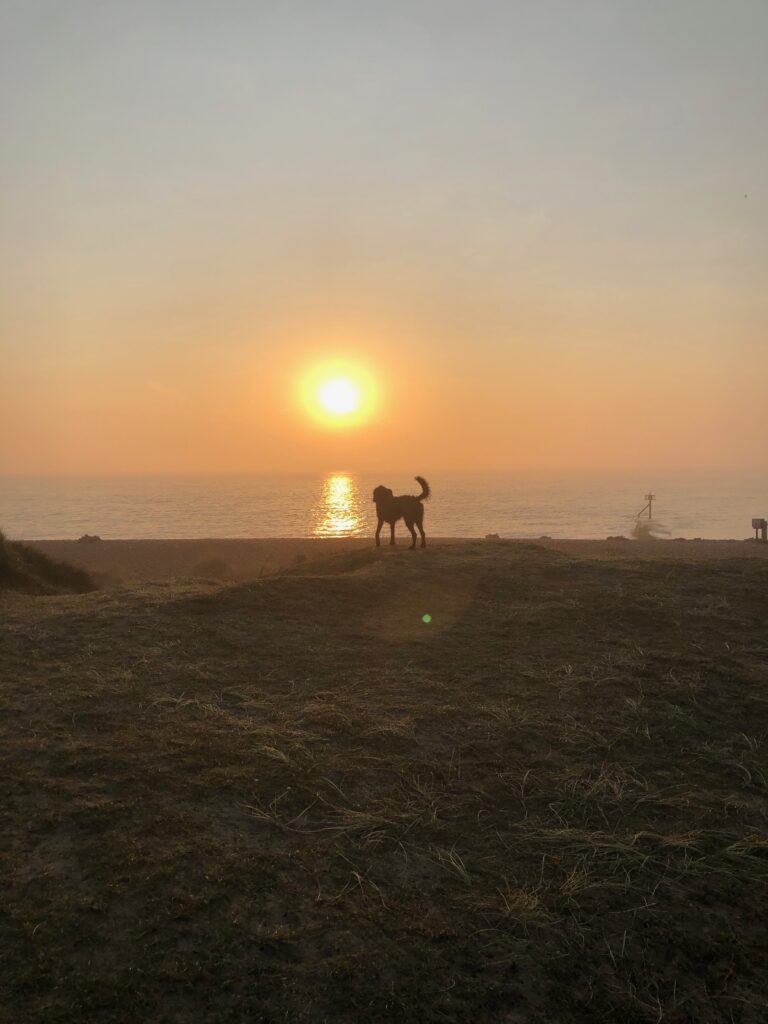
Hard then to remember the beginning of the month, when day after day – or so it seemed – we sweltered in scorching heat. Sleepless and sweating after a restless night, I went once again with the dog at sunrise to seek some breath of air at the sea. I thought that at 5.30am we should have Dunwich beach to ourselves.

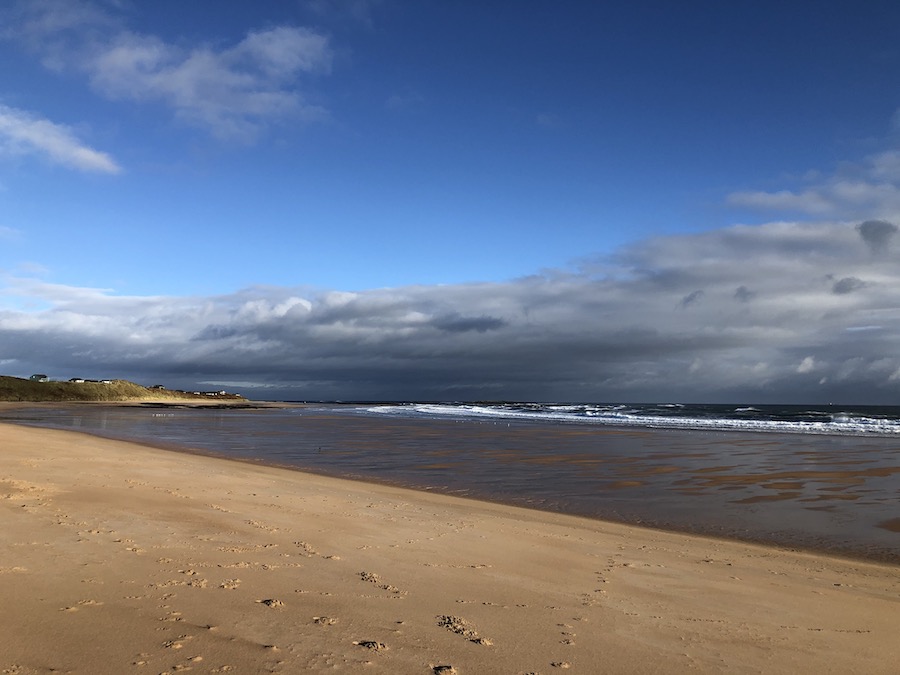
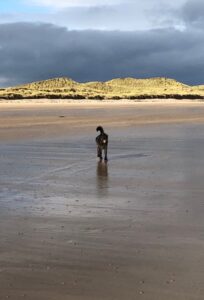
Far from it: as we descended the steep shingle bank to the sea we had to dodge huddled human forms in their sleeping bags. Already families were swimming. We walked north as far as Walberswick and back, and then we both swam, the dog not leaving my side in the unusually balmy water of the North Sea.

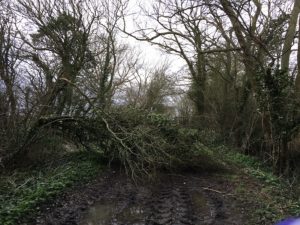
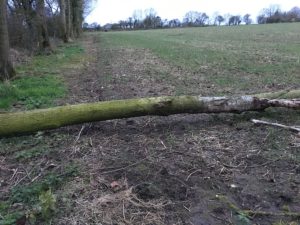
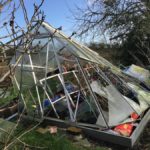
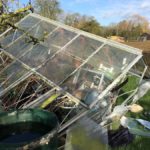
This last idyllic taste of summer disappeared abruptly with violent storms. One night as we went out before bed we were surrounded 360° by constant flickering lightning. And after the storms came the wind, violent and destructive. Such is the exposed position of my house and garden that a gate was torn off its hinges, and yet again I lost a pane from my new greenhouse, despite its new more sheltered site. The old one was razed by storms Ciara and Dennis in February.

Heat and dust are now a memory, replaced by rain and cold, and the first log fire to cheer the chilly damp. Back to “normal.”

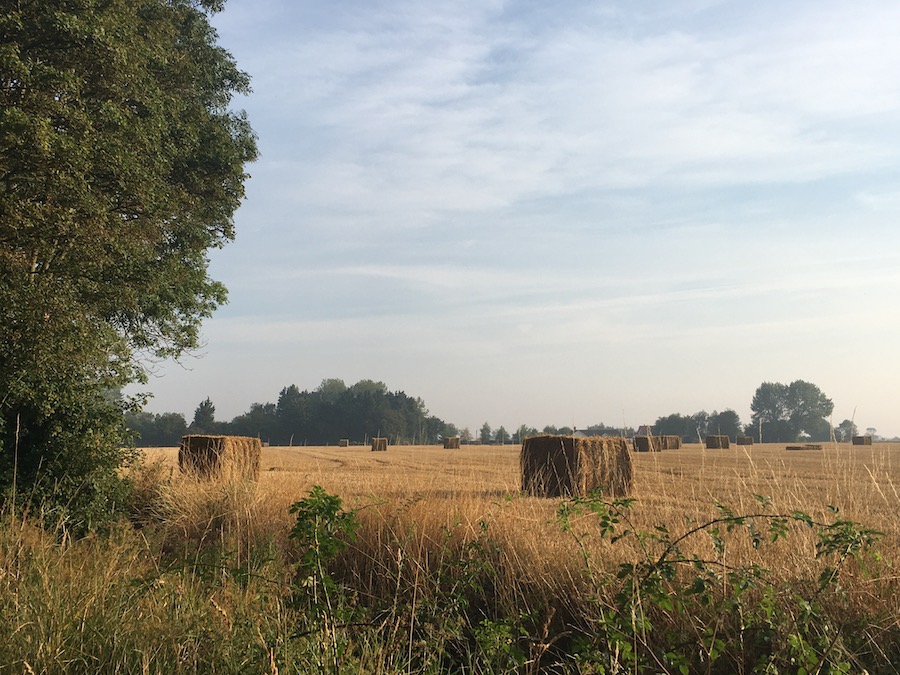
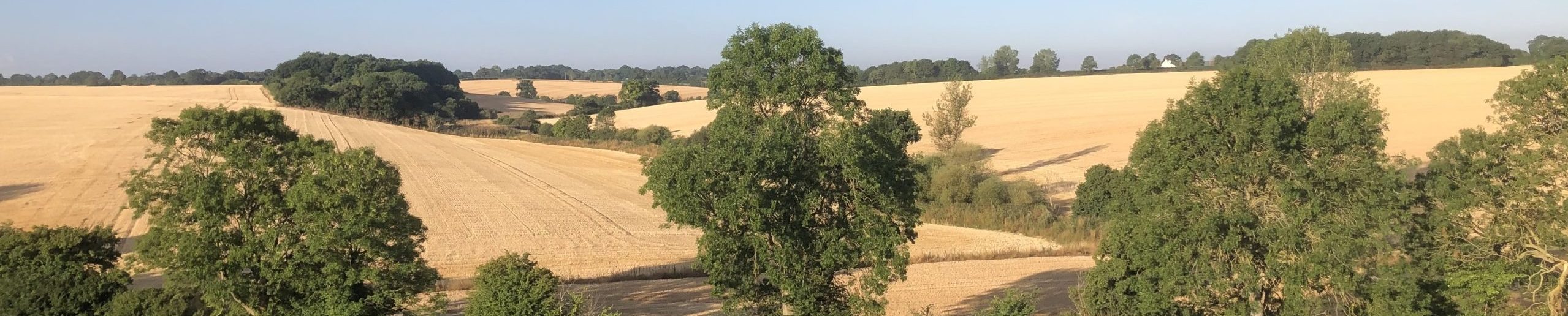
Harvest is finished, a poor yield this year, especially of wheat, after the water-logged fields of the winter and the extreme drought of the spring and early summer. I was going to say all is safely gathered in, but one farmer over whose land we often walk in the early morning is notoriously slow to cut. Year after year the good weather comes and goes, while his crop waits to be flattened by downpours, laid, and beginning to sprout before he stirs himself and his combine.

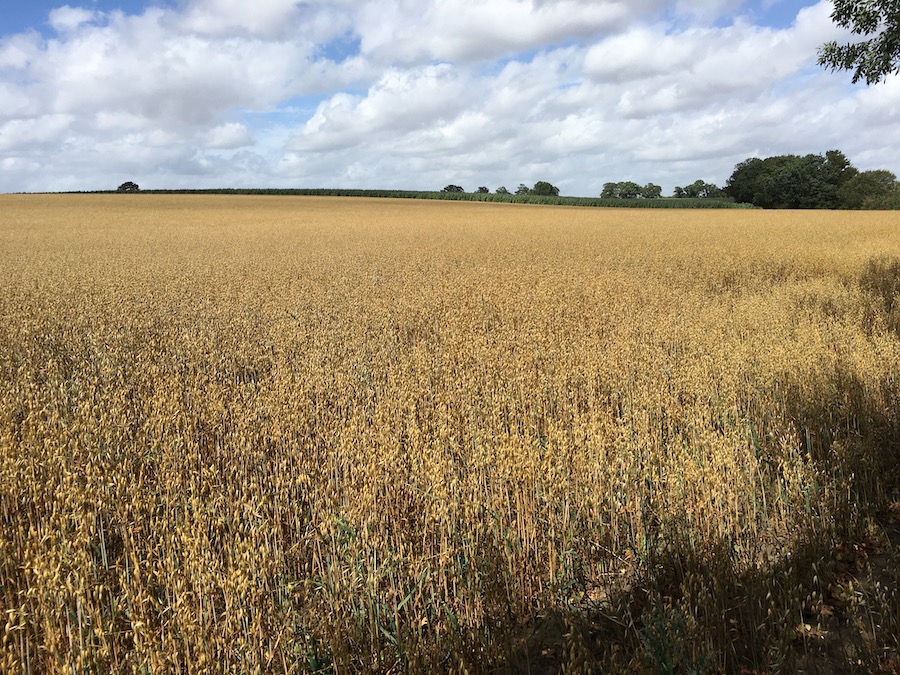
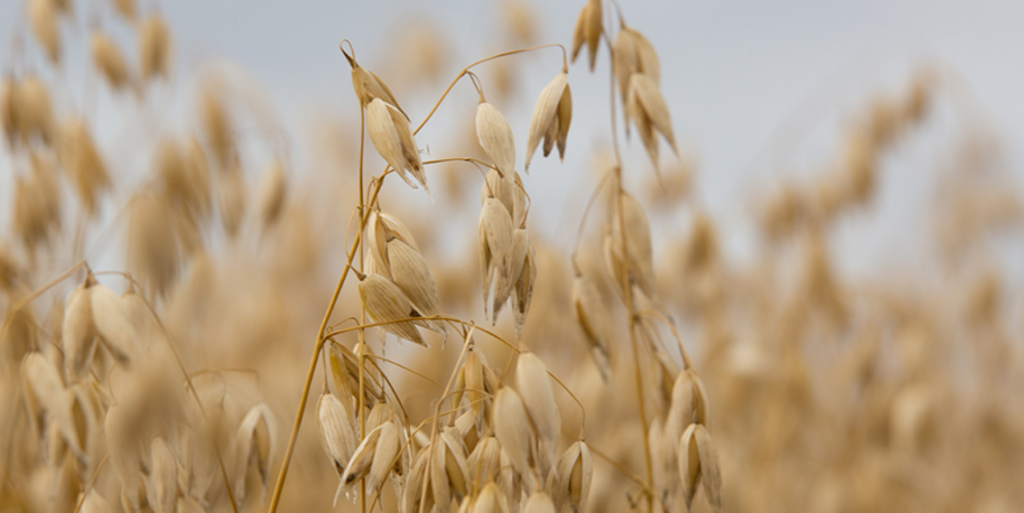
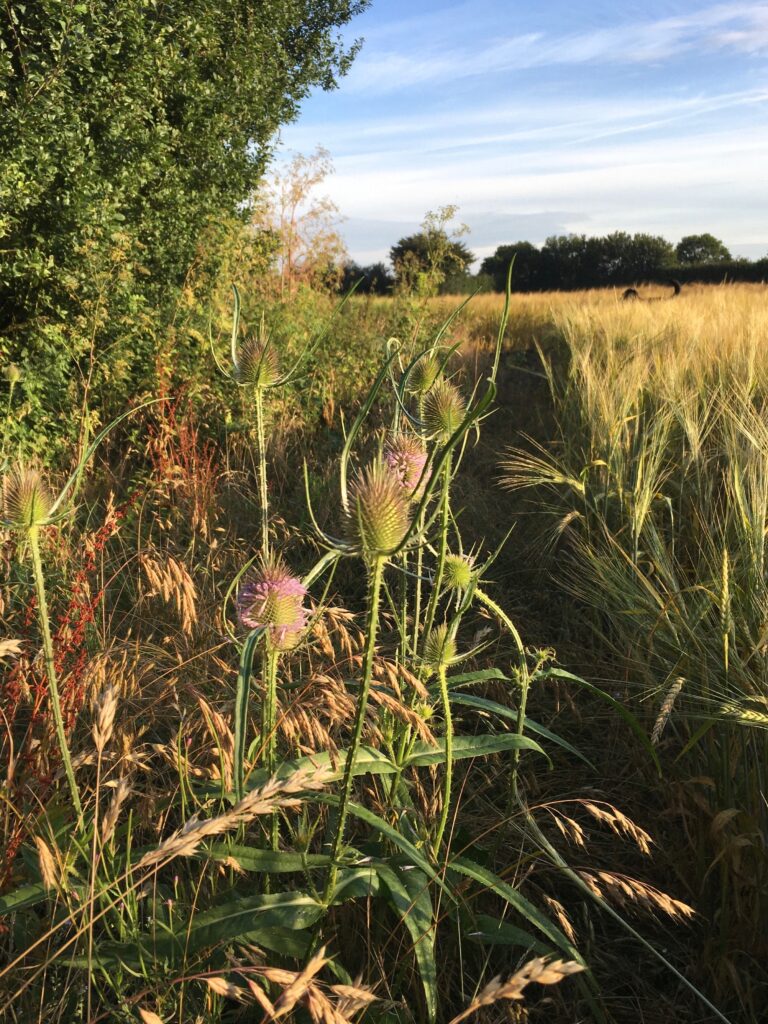
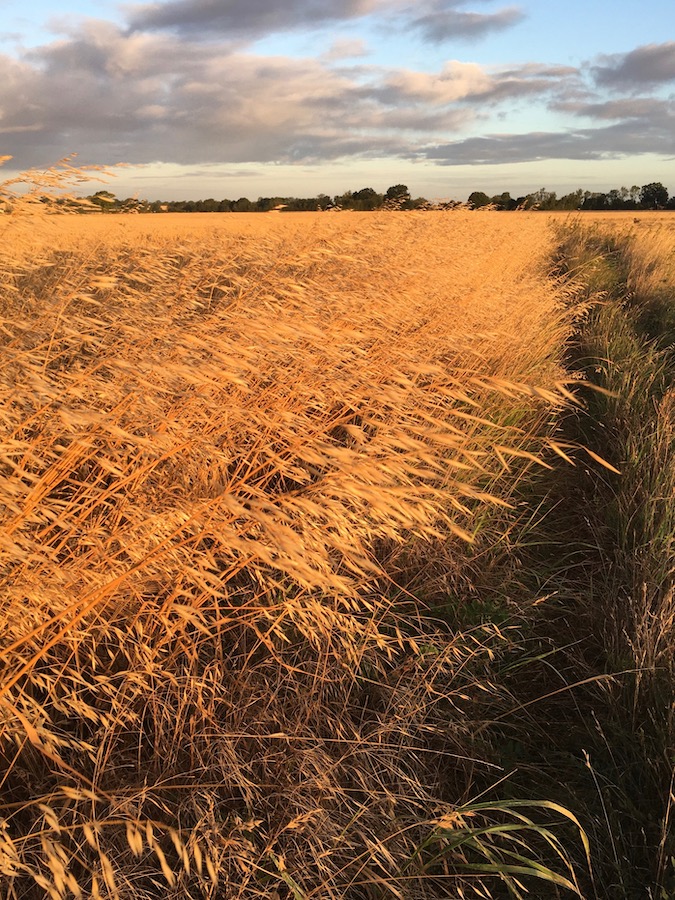
This year I have noted several fields of oats, which had become a rarity. They are tolerant of the damp conditions which obtained till mid-March, can be planted with more flexibility of timing, and are good as a break crop to help control the dreaded black grass. An oat field is a beautiful and a graceful thing, the grains translucent and shimmering. That they were once more common is attested by the wild oats on nearly every field margin (the top-most picture this month shows an example).

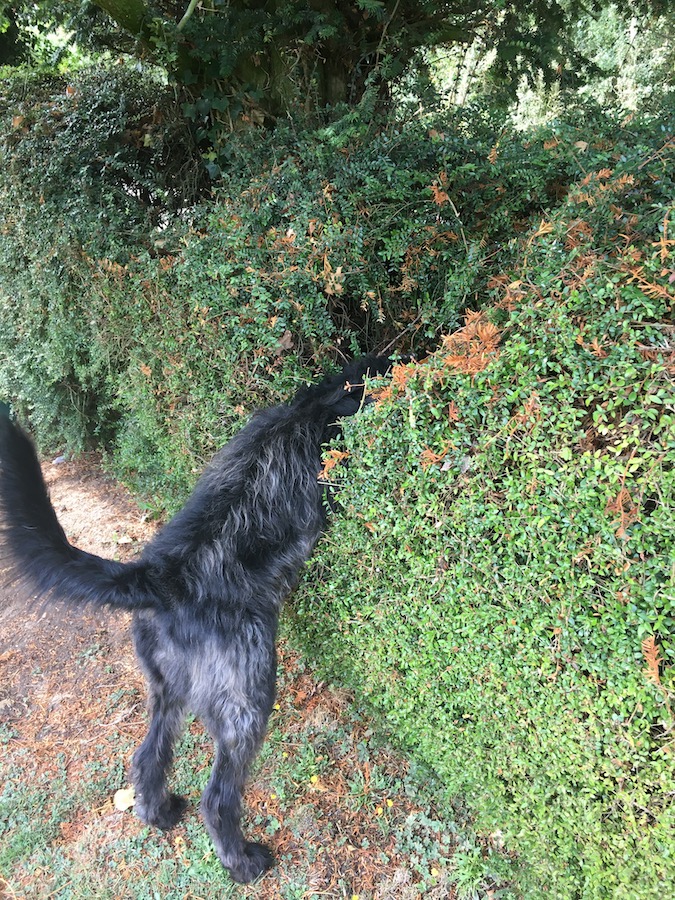
Because we walk our two hours so early in the morning to avoid heat, the young dog requires some exercise later in the day. A ball suffices for endless and insatiable amusement. To stimulate her brain and make her work we have, in previous years, done several scent work courses, during which she graduated from finding a felt mouse stuffed with catnip (easy) to detecting a hidden £5 note (quite skilled), an activity which I feel should be encouraged. When we lose a ball she is relentless in her quest to find it. In October she will be introduced to mantrailing. Perhaps she will find me a man…

Dogged searching

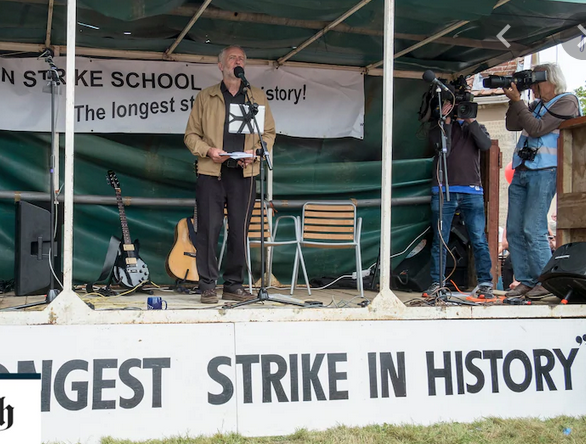
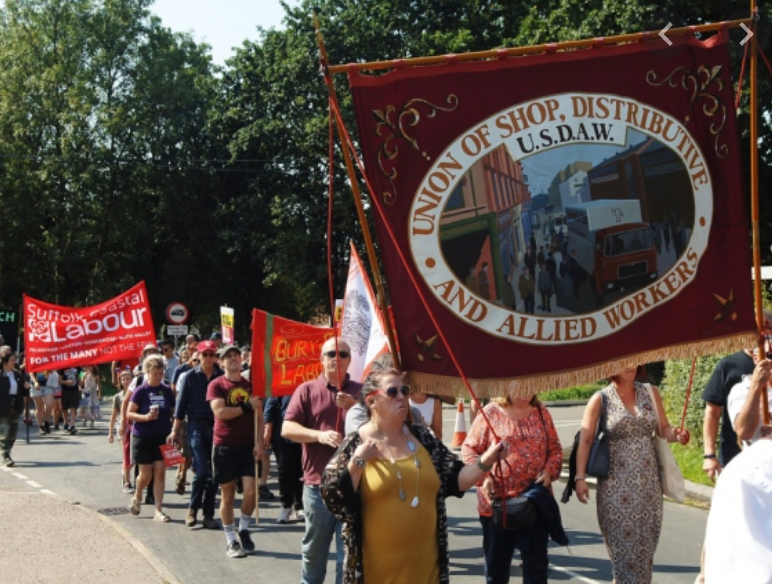
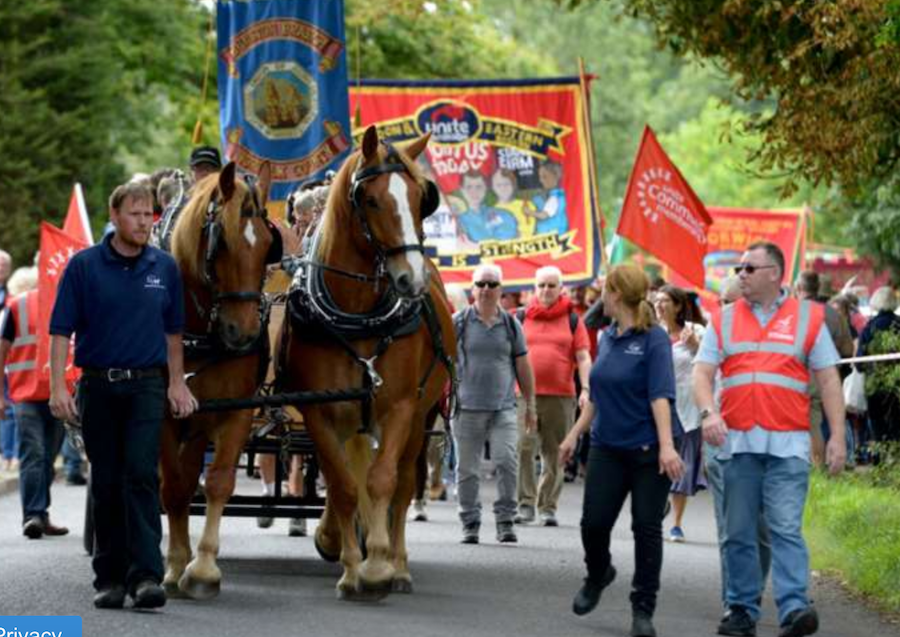
After taking a visiting daughter to the station in nearby Diss (over the border in Norfolk) the dog and I once again walk part of the Boudicca Way, of which I wrote in June. We pass a lane leading to the village of Burston, and I am reminded that the first weekend of September usually sees the Burston School Strike Rally, habitually attended by the major Trades Unions, and addressed by the great and the good – and leaders – of the Labour Party. But not this year of course; this year there is no normal, and Covid has claimed another cancellation.

Many have not heard of the Burston School Strike, which lasted from 1914 to 1939, conferring an enduring fame on this tiny south Norfolk village, and making it a symbol of Socialism. I knew nothing of this before I worked on a local newspaper back in the 1980s. This is the story of the longest strike in UK history.

Tom Higdon and his wife Annie were appointed as teachers at the Burston and Shimpling Council School in 1911, but had previously worked as teachers at Wood Dalling School, also in Norfolk where – as Christian Socialists – they had objected to the poor conditions, and about the employment of children by local farmers, which interrupted their education. Many of these farmers were also school managers so the Higdons’ activities created social tensions.

Eventually, the Norfolk Education Committee gave the Higdons the option of dismissal or employment at another school. They transferred to Burston where they found conditions for many labouring families were similar to those at Wood Dalling. Tom Higdon gained election to the parish council at Burston in the hope of making improvements, while Annie repeatedly made requests for better conditions at the school.

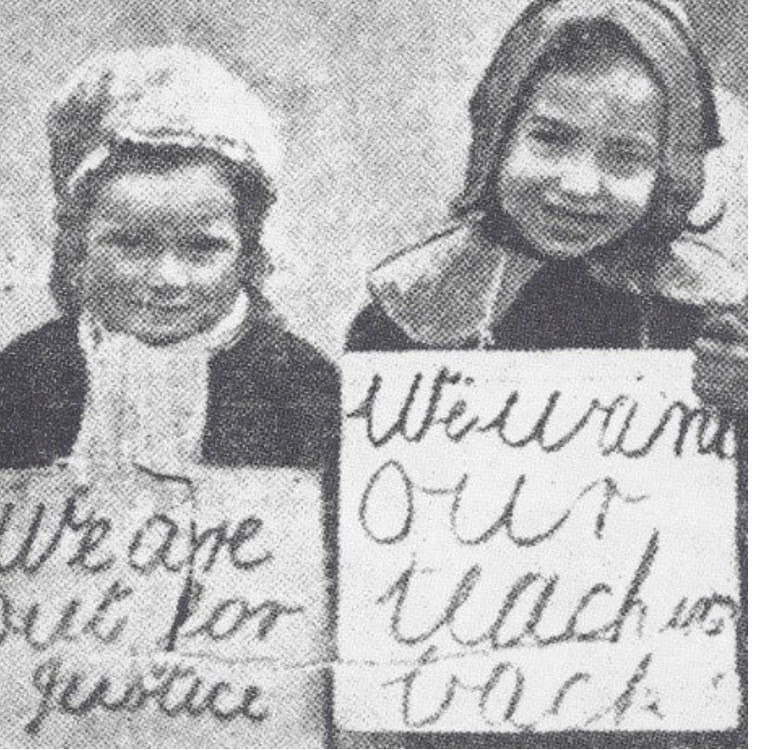
Local farmers objected, as did the Revd Charles Tucker Eland, the local rector and chairman of the school managers, a man of plentiful income and considerably less compassion. Allegations of pupil abuse were made against the Higdons in 1914 and they were subsequently dismissed. Many of the children and their parents believed the allegations to be fabricated, and on 1 April 1914 Violet Potter led her fellow pupils out on strike to show their support for the Higdons.

A separate Burston Strike School was established on the village green for those pupils and parents who refused to send them to the official council school. Many labour organisations supported the Strike School and eventually enough money was raised to build a permanent schoolhouse. It opened in 1917. The strike ended in 1939 when Tom Higdon died.

And so tomorrow autumn starts. There is much work still to be done, harvesting, picking, processing. We hear little of the Brexit talks, buried in news of a rising tide of Covid cases, of holidaymakers quarantined, of schools returning to an uncertain future. But what seems certain is that we may be in for a very rough time soon, if the talks yield no good trade deal and the end of the Transition Period coincides with a wave of Covid and winter ‘flu. Out to the garden, then; off to the hedgerows…

July 2020

July 2020

You see strange and wonderful sights when you walk, and particularly when you walk early in the day. Some of these encounters bring us to within touching distance of those animals who live so close to us, but who for the most part remain unseen. We see signs of their existence, but – as with neighbours in cities – we rarely meet. Sometimes, however, it is the eccentricity of our human nature that stops me in my tracks.

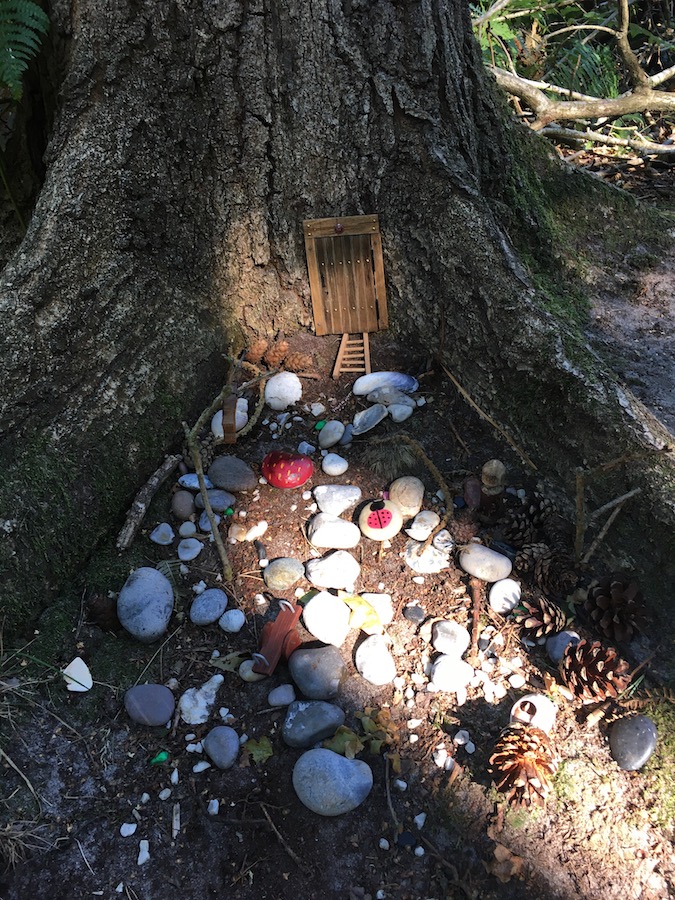
I offer this photo as an example of the latter, glimpsed one morning in a Suffolk wood. Unless, of course, this is not human whimsy, and I have stumbled unknowingly on the Little Folk…

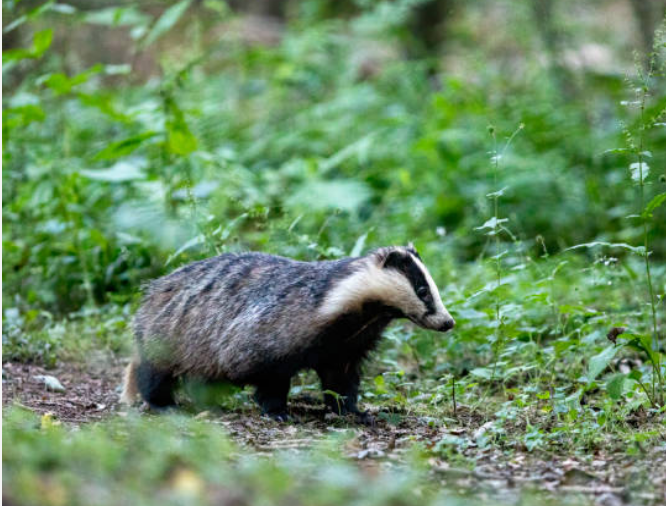
As for the former, the dog and I – walking down a track around 6am – came face to face with a badger. This was a marvellous encounter, for in my three score years and thirteen I have seen only one badger, a shabby and mangy specimen late at night on the outskirts of a southern French town. British Brock however  was a splendid creature – sleek, fat and groomed. We glimpsed him at the same moment, the dog and I. She stiffened, and quivered, straining forward. I stood absolutely still.

Badgers are extremely short-sighted for they are nocturnal and live mostly underground in their setts. Brock trotted on towards us, unconscious of our presence, and then – at the correct social distance of two meters – halted, peered myopically at us, saw a wolf-like hairy dog in front of his face,  realised the full horror of his situation, did a swift U-turn, and disappeared back down the track at a shambling canter. Such encounters make my day.

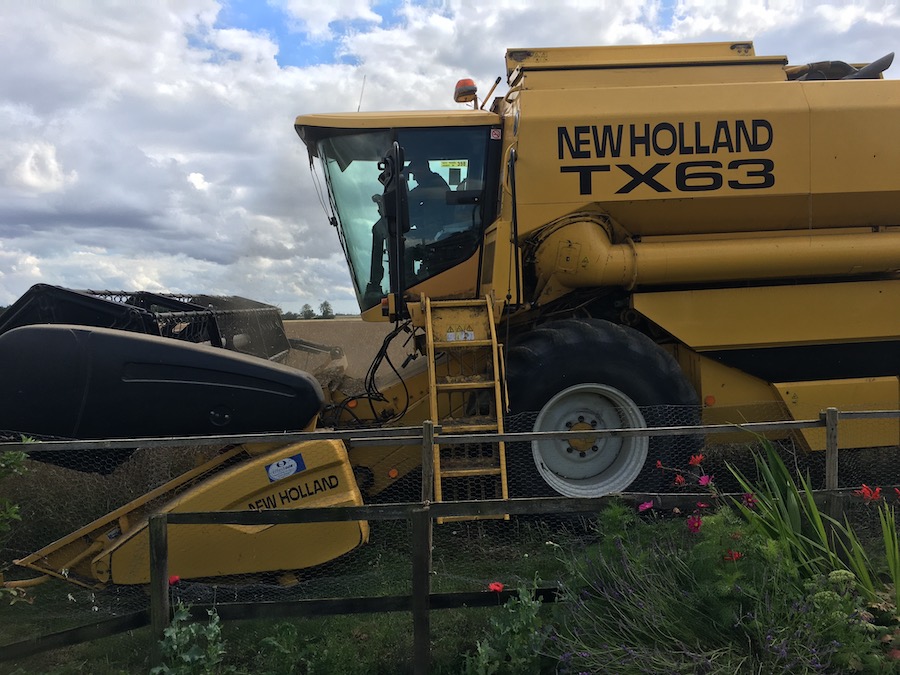
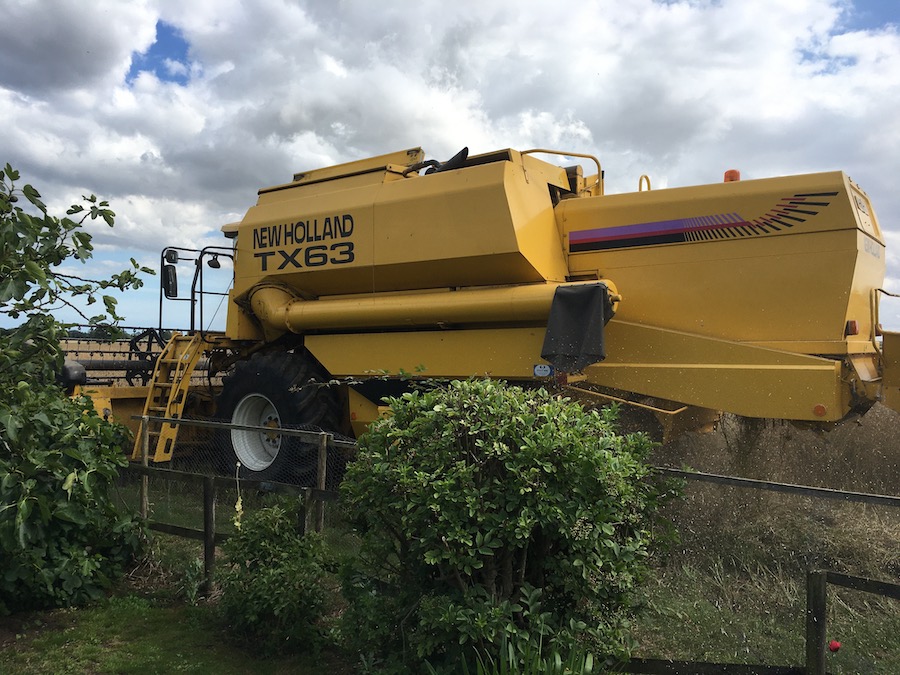
What of July? It has been what my father would have called a mouldy month. After the Mediterranean spring has come a British summer: dark, gloomy, windy and often wet. On the dry days harvest is in full swing. First the oilseed rape, and early in the month the combine turned in to the field beside the house – a great lumbering roaring mastodon that sent straw and dust flying and the earth shaking. I am glad the rape has been cut for once it has flowered it then smells of rotting cabbage until harvest. Rape stubble though is vicious: sharp calf-height stalks prevent walking over the field, unless you want bleeding legs. Even the dog declines to chase a hare far through it.

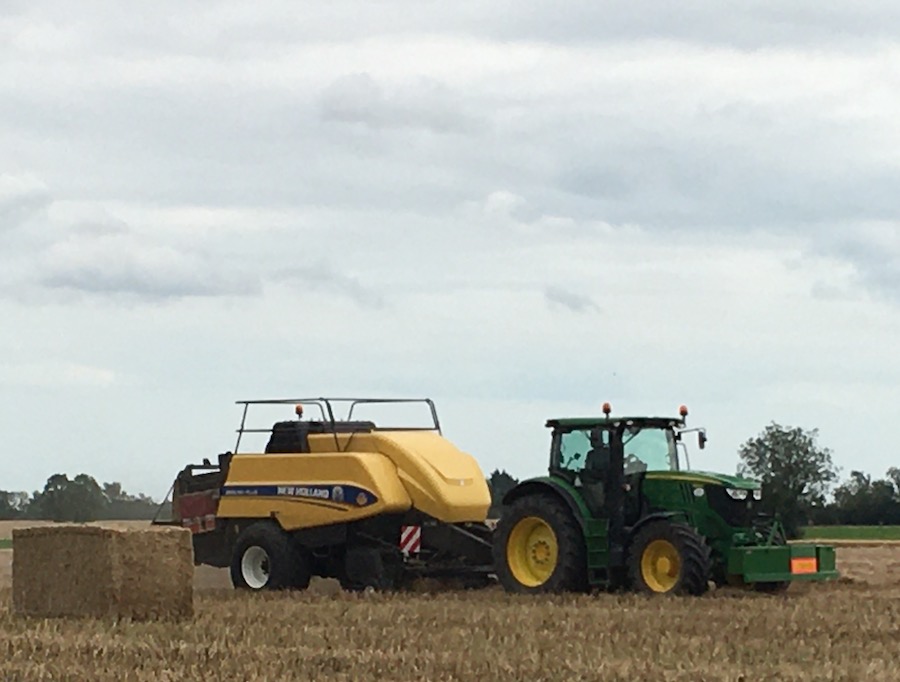
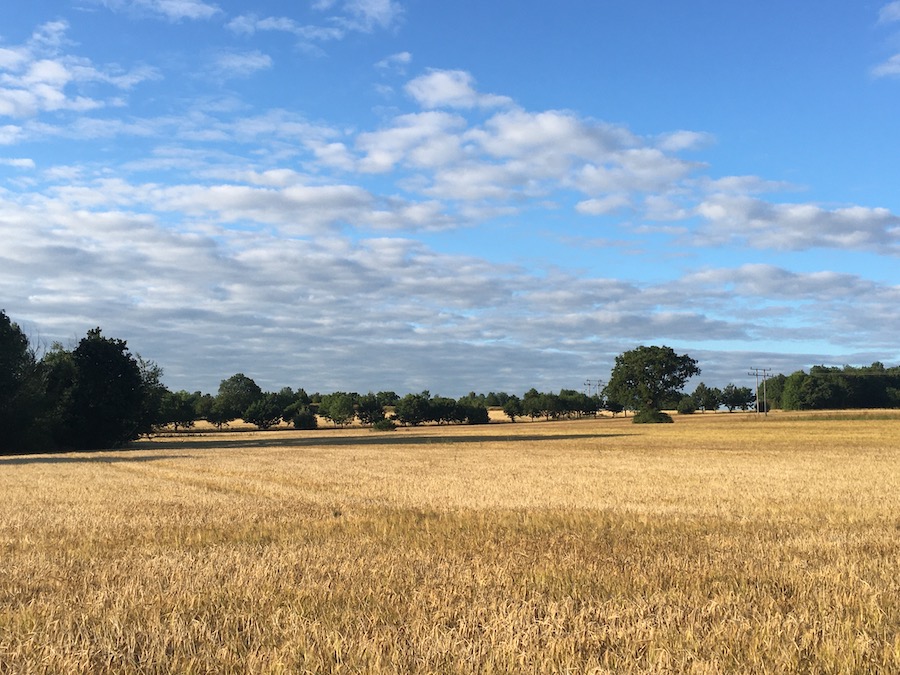
After the rape, the barley and the wheat, and the fields of gold disappear into the monstrous jaws of the combine . The distant rumble of the engine accompanies me to sleep, and the clatter and roar of the tractors hauling grain through the small hours  then wake me again. The air smells of straw, a scent I love, a smell of summer – and of adolescent holidays spent at stables.

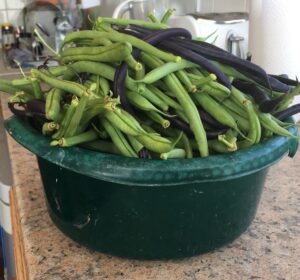
My own harvest is abundant: every day I pick and process, pick and process. The early days of lockdown this year have taught us that food security is vital, and the Brexit negotiations don’t seem to be going too well. We are not surprised. It seems both right and somehow sacred to work my small parcel of land, and – insofar as possible – live from it.

A hill of beans

These final few days of July have seen a return to sun and heat.

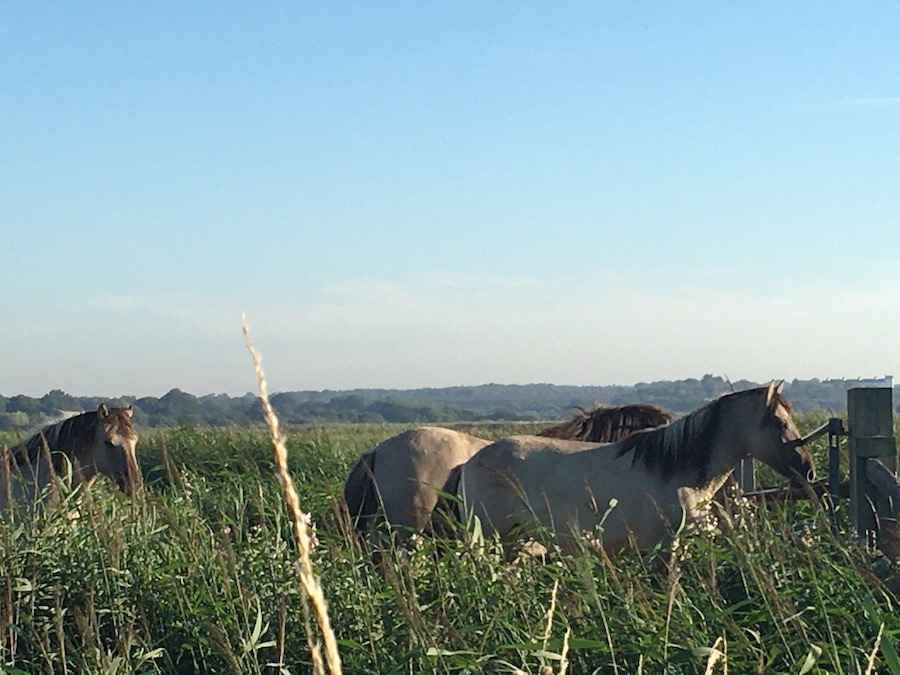
Once again the dog and I go and walk by the sea in the brief hours of cool before the sun is high. Between the tiny hamlet of Eastbridge and the beach we see the ponies often – but wrongly – called Tarpan horses, a name which comes from the Kasakh or Kyrgyz for wild horse.. They certainly have the look of the horses in cave paintings: dun with the characteristic dark eel stripe down the back, stocky, a thick neck and a thick, often standing, mane.

Strictly speaking, these are not Tarpans, but Koniks, a breed created by Polish horse-breeders to resemble, as closely as possible, this extinct wild horse of Europe. Although they look and behave much like Tarpans, they are a separate breed, since it is impossible to re-create an extinct species/breed.

They were brought to these marshes by the Suffolk Wildlife Trust, for they are at home in wetlands, where they graze the reed-edge and fen vegetation and create tussocky areas that are favoured by birds such as snipe and teal.

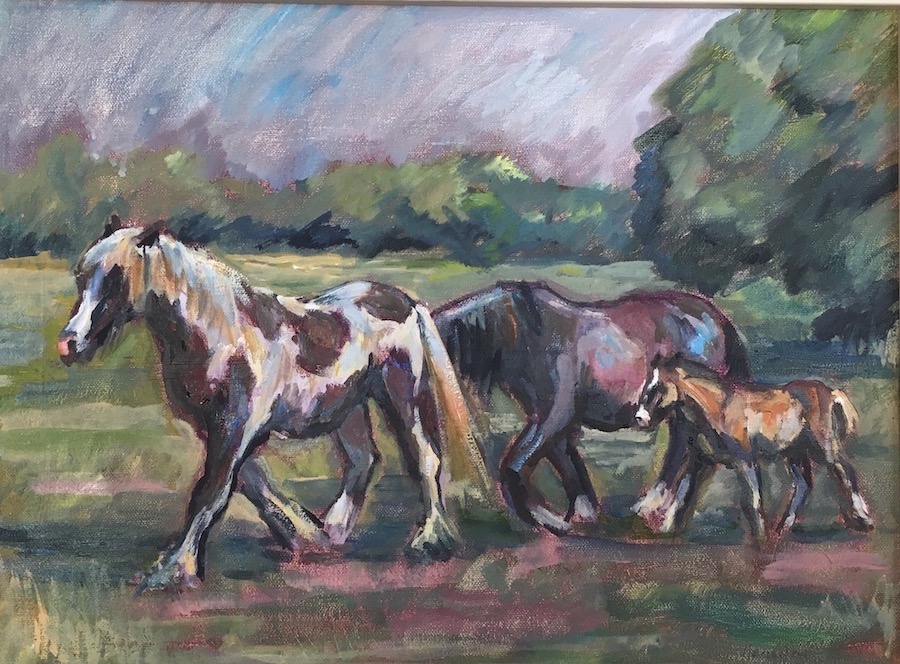
Nearer to home the horses on the Common managed somehow to bridge the cattle grid, and one misty morning I saw four of them walk in procession, led by the dominating white mule, up the lane to disappear down a grassy headland behind a hedge. They were too far off for me to do anything about it, and besides that mule is not to be messed with. Have they returned? The Common looked strangely empty, with only a few mares grazing. I return to painting them over and over. I could draw a horse with my eyes shut, and they have been my subject since childhood. A meagre claim to fame aged 11 was to have a painting of the rumps of two heavy horses ploughing tour the country as the result of some long-forgotten competition.

High summer segues into late summer, and there is a hint of autumn in the chill of dewy mornings. The long grasses are dying back, and when cut for hay smell sometimes inexplicably of liquorice. Leaves have long since lost their freshness. Despite the sporadic dampness of the month the paths and fields are dusty. The year is past its youth, past even its middle age, and the poignancy of August is that it is the beginning of the end, the year slips into old age, and soon we shall descend once more into the darkness.

It is now three years since I started these chronicles. Each year the same flowers grow, the same birds sing, the same crops are cultivated. Each year the weather is either good, bad or indifferent. I feel – as witnessed by the above – that I have little to say, and last month there was an accusation of trying too hard to write poetic prose. “You really went for it,” said a friend. And so I think it is time to stop.

Thank you for reading.

June 2020

Five forty-five on a morning already hot, the hottest of the year so far.  The dog and I walk south along the shore, by a gentle sea whose soothing suck and drag over shingle induces a sense of peace, and of rightness with the world. The sun, still close to the horizon, makes a silver pathway across the water.

The dog (I can no longer say “the young dog” for she is now nearer four than three) has till now never cared for water – apart from standing hock-deep in slimy and stinking ponds. It is odd, considering each of her parents is from a race of water dogs. Today, though, is different: she discovers the joy of swimming. Taken by surprise by the sudden shelving of the shore, she has no choice but to swim. She is surprised; she likes it: “Look, mummy! Look at me! I’m swimming!” And then I cannot get her out of the water – she frolics, she cavorts, she plunges, and …she swims.

We had driven towards the sunrise to Dunwich – a staccato journey, braking constantly to avoid hares zig-zagging, small rabbits playing, pigeons lumbering into flight, a muntjac, and two cock pheasants fighting, oblivious to the motorised danger. On our way back, driving with car windows down, through the shade of Dunwich Forest we hear nightingales.

Midsummer… The scents of midsummer: mown grass, honeysuckle, privet, roses, young barley on the breeze, the delicate perfume of field beans in flower. Midsummer…. The winter barley has turned and soon Suffolk will be a sea of gold. Midsummer…nights never truly dark.

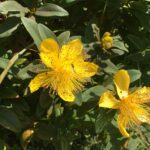
Midsummer. On cue comes the St John’s Wort for the Nativity of St John the Baptist, a quarter day which signals that the year is half over. It is always a poignant moment when the solstice is past, the point of sunrise ceases its slow drift northwards, and nights begin to lengthen. More perhaps than at New Year we look both forward and back; this year more than most.

A gardener, of course, is always – Janus-like – looking forward and back, learning from the successes and failures of past sowings; looking forward to harvesting the result of hard physical toil. A gardener’s job today is always to create tomorrow out of yesterday.

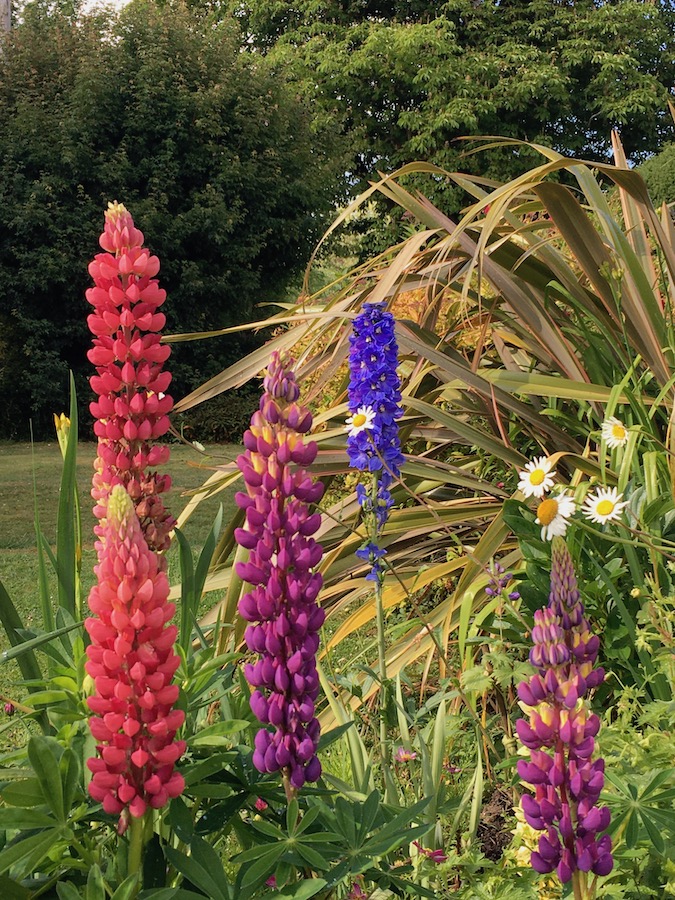
Midsummer is that moment of transition, and now at this tipping point of the year I can start to eat the result of past labour – broad beans, peas, chard, courgettes, potatoes, beetroot, lettuce, onions, herbs, artichokes. The “front” garden, too, is at its best. For two or three weeks each year (as I never fail to note in this chronicle), my flower beds give a passable imitation of a real cottage garden, the abundance of flowers hiding and disguising the weeds.

At the beginning of the month, with the first tentative steps out of total lockdown, the glorious sun and warmth which had lasted all spring deserted us. New month, new weather once more. The sky became grey again and rain could be smelled on the wind before it came. It was cold as only June in England can be. A fire was lit.

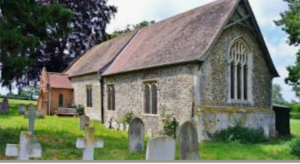
With the partial liberation we learn to place the words “socially distanced” in front of any activity involving another person or persons. On a grey windy day I met a friend for a socially-distanced walk, and we explored part of the Boudicca Way, a walking trail which links Norwich station southward to Diss, meandering – seemingly back in time to the 1950s – through the gentle South Norfolk countryside, sometimes on lanes innocent of traffic; sometimes by a river, across a ford, through pastures and meadows. We sat a while outside the tiny isolated church of St Andrew, Thelveton. No sign in the lane proclaimed its presence to passers-by; no notice told us to which saint it was dedicated. The only company was a meadow of cows and calves, guarded by a bull; the only sound was birdsong. And yet the churchyard was neatly mown, the graves tended, the headstones upright and clean.  

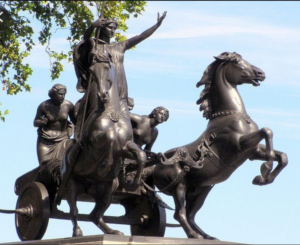
Boudicca, or Boadicea, was of course the legendary flame-haired warrior queen of the Celtic Iceni people. Boudicca’s husband, Prasutagus, was king of the Iceni (in what is now Norfolk) as a client under Roman suzerainty. When Prasutagus died in 60 CE with no male heir, he left his private wealth to his two daughters and to the emperor Nero, trusting thereby to win imperial protection for his family. Instead, the Romans annexed his kingdom, humiliated his family, and plundered the chief tribesmen. While the provincial governor Suetonius Paulinus was absent in 60 or 61, Boudicca raised a rebellion throughout East Anglia. The insurgents burned Camulodunum (Colchester), Verulamium (St. Albans), the mart of Londinium (London), and several military posts. According to the Roman historian Tacitus, Boudicca’s rebels massacred 70,000 Romans and pro-Roman Britons, and cut to pieces the Roman Ninth Legion. Paulinus met the Britons at a point thought to be near present-day Fenny Stratford on Watling Street and regained the province in a desperate battle. Defeated, Boudicca either took poison or died of shock or illness.

Statue of Boudicca and her daughters at Westminster Bridge

Hard to think of all that slaughter as we walked the irenic green lanes.

In a few days the major part of our Covid incarceration and enforced inactivity will come to an end. Only hindsight will tell us whether we are unlocking too soon for safety, too late for the stricken economy; whether there will be spikes, second waves, more deaths, more disaster. Three months, which at the beginning might have seemed to some too long a sentence, have for me flown past. And now, reviewing, the question forces itself upon me: “What have I done with them? What have I actually achieved in this unprecedented period?”

And the best answer I can give is that of the Abbé Sieyès, priest and political theorist under the French Revolution, who – when asked what he did during the Reign of Terror – replied “J’ai vécu.” I survived. Maybe it seems obvious, looking back, that the majority of us would survive, but three months ago we looked on appalled at the Four Horsemen riding over the land. The Grim Reaper stalked us, and any careless contact, a touch, a cough could spell sickness and death. He may yet come back to get us.

What have we done with it? Have we re-evaluated? re-assessed? Have we promised that things will be different? that we shall live simply, travel less, save the planet, enjoy our loved ones, eat local produce, grow our own food, reduce stress, change our priorities? I hope so, but I am pessimistic, for I know that real behaviour change takes at least six months to become rooted in our lives.

We can now, cautiously, breathe again – for a while at least, and the existential questions recede. Time now for other worries to take over: a dear friend anxious about her octogenarian husband’s memory lapses; another who lives in a marriage of coercive control. “For better for worse…in sickness and in health.” Today we hear of a likely spike in the number of divorces after couples in three months of lockdown were forced to confront realities often evaded by long hours at work. Happy are those who can say “J’ai vécu” after years of marriage.

A friend has called these chronicles “melancholy.” Maybe that is because I am pessimistic about human nature; maybe because I am all too aware of the swift passing of the seasons, and thus that there are few remaining years for me. I don’t feel sad, only occasionally wistful for the chances missed, the graces resisted.

But hey! Who could be melancholy with the prospect of a haircut in a few days!

May 2020

Time passes. The days merge. My hair grows.

And there I could end my record of the month of May 2020. A torpor has descended; tasks are postponed – a Covid procrastination, for  why do them today when tomorrow will be the same, and the day after? I feel fixed and unmoving in a no man’s land where time – though it passes both pleasantly and all too rapidly – also seems immobile.

My world has shrunk. Lockdown has confined me to those very places of which I set out to write: my garden, the Common, and the fields and woods beyond. Outings are rare in the extreme – a slow puncture to be mended; chicken feed to be collected. I watch, distantly, the easing of restrictions, and neither want nor need to join in the emerging of the herd.

It would be wrong but easy to think that life was passing by unlived, that this year – one of the perforce few remaining – was being wasted, devoid as it is of the usual rush and bustle. The lived moment is life, and the value we put upon it – good or bad, pleasurable or painful, solitary or social – is just that, our subjective take.

Nonetheless, we are human and we experience pleasure and pain, however small our world has become. For me, blessed as I am, May has brought great pleasure…and a little pain. It has been the sunniest May since meteorological records began in 1929, and the driest in 124 years. Day after day the sky has been a Mediterranean blue and the sun has beaten down upon an increasingly parched earth with a dazzling intensity. From time to time there have been violent and rough winds to shake the darling buds, and these have served to dry the land still more. I have never seen grass burned brown in May before.

The old country proverb once again holds good:

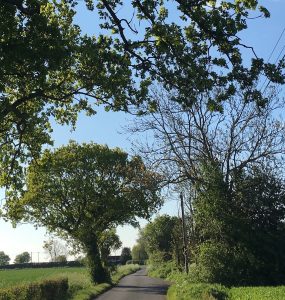
Oak (on the left) in leaf before the ash (on right)

Oak before ash, we shall have a splash.

Ash before oak, we’re in for a soak.

Even a splash would be good….

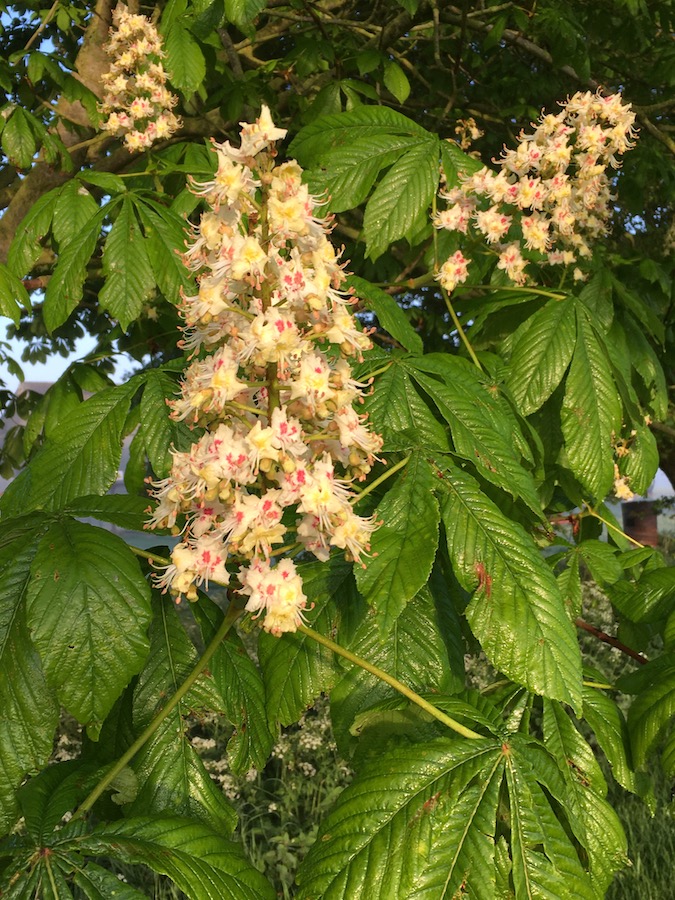
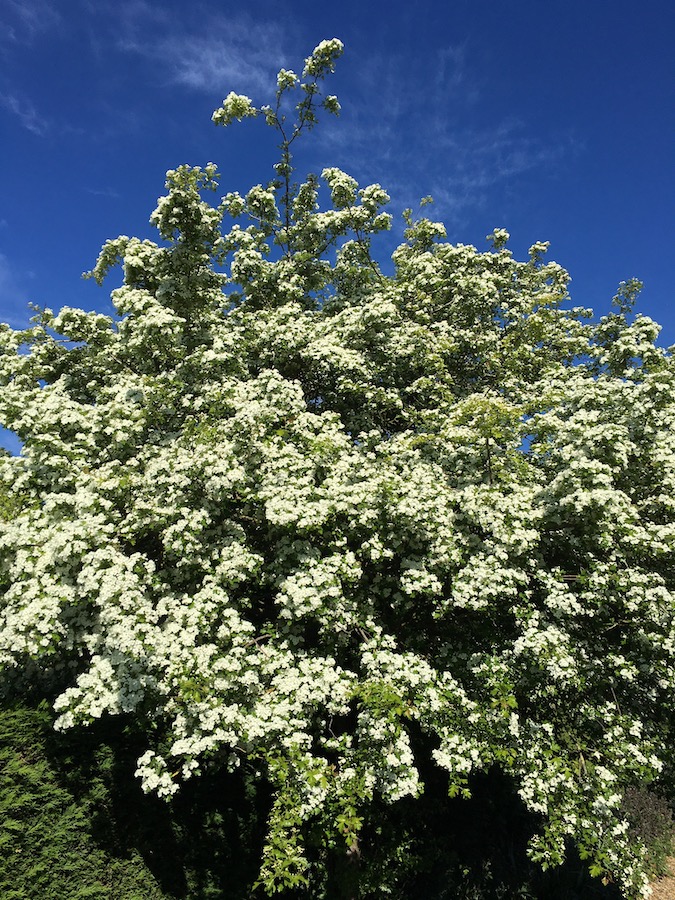
In fact this year the darling buds of May had all opened and burgeoned well before the month began, for at an estimate most vegetation seems four or five weeks ahead of where it would have been a few decades back. The chestnut candles are long since dimmed; the hawthorn had dropped its blossom by mid-month – the indecent smell of it gone now.

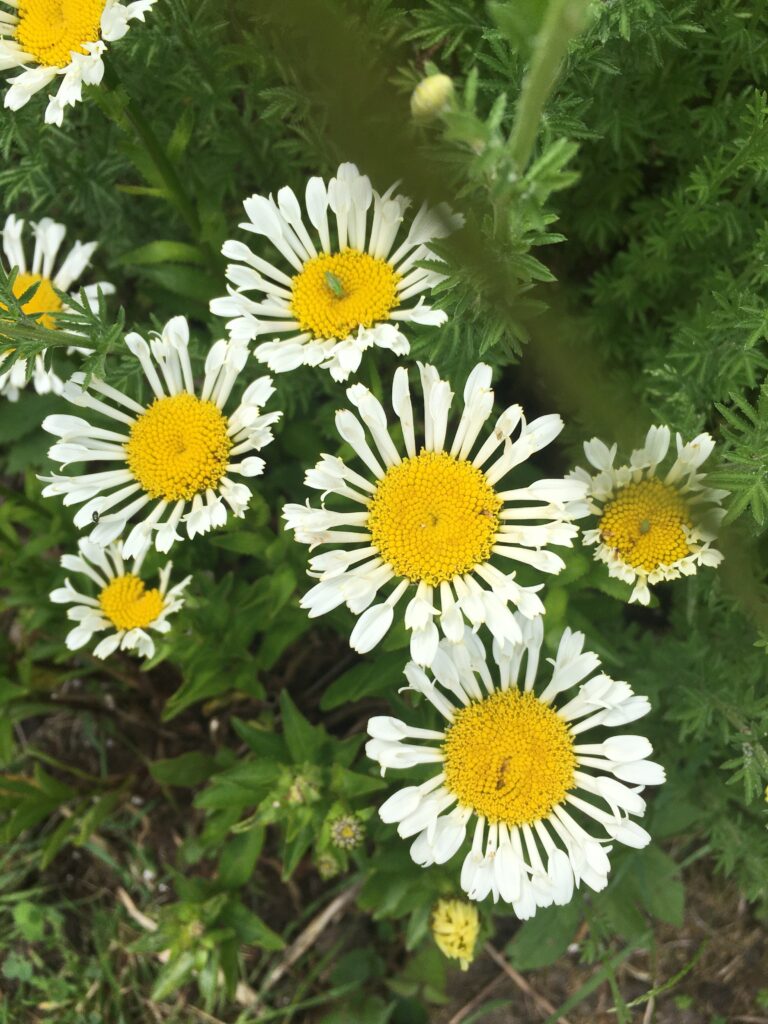
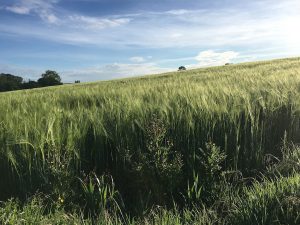
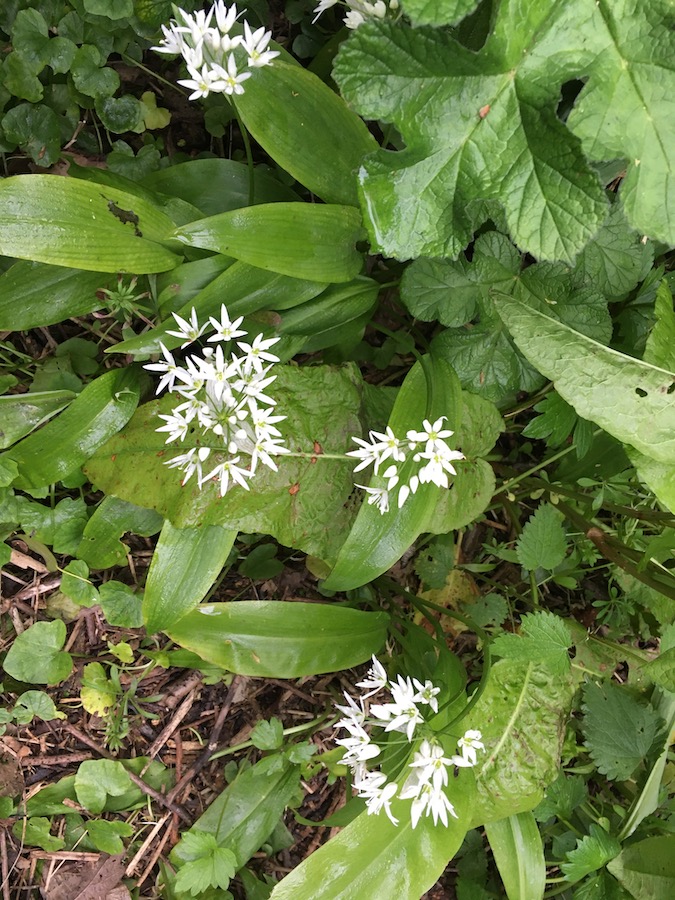
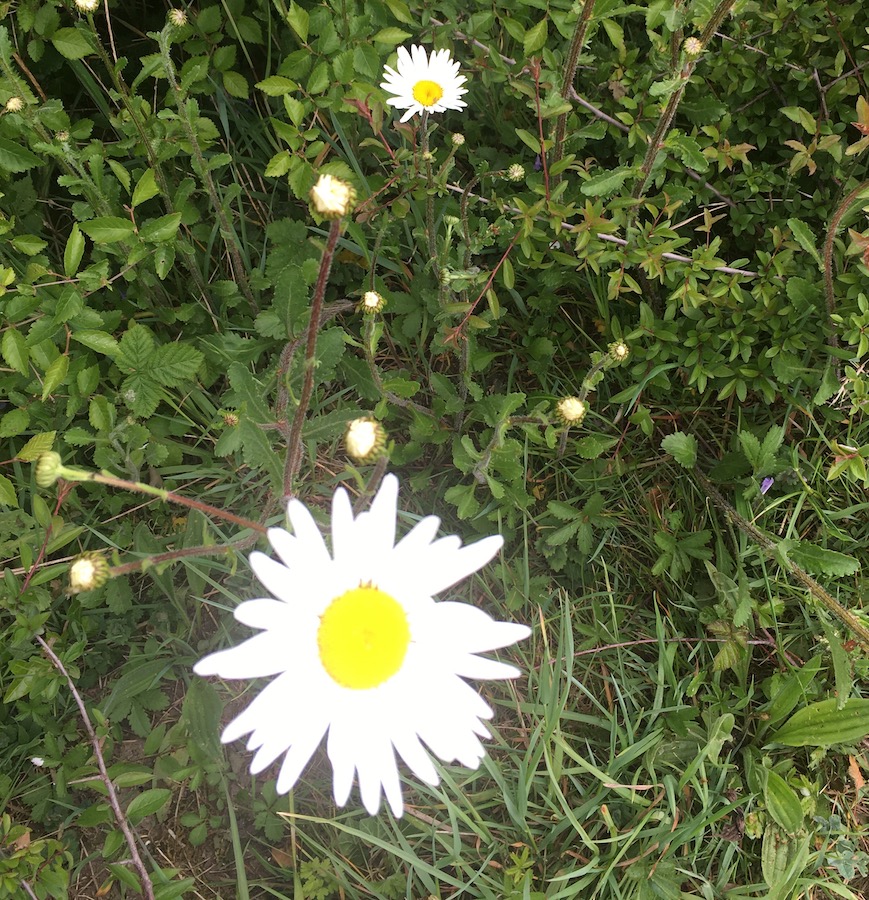
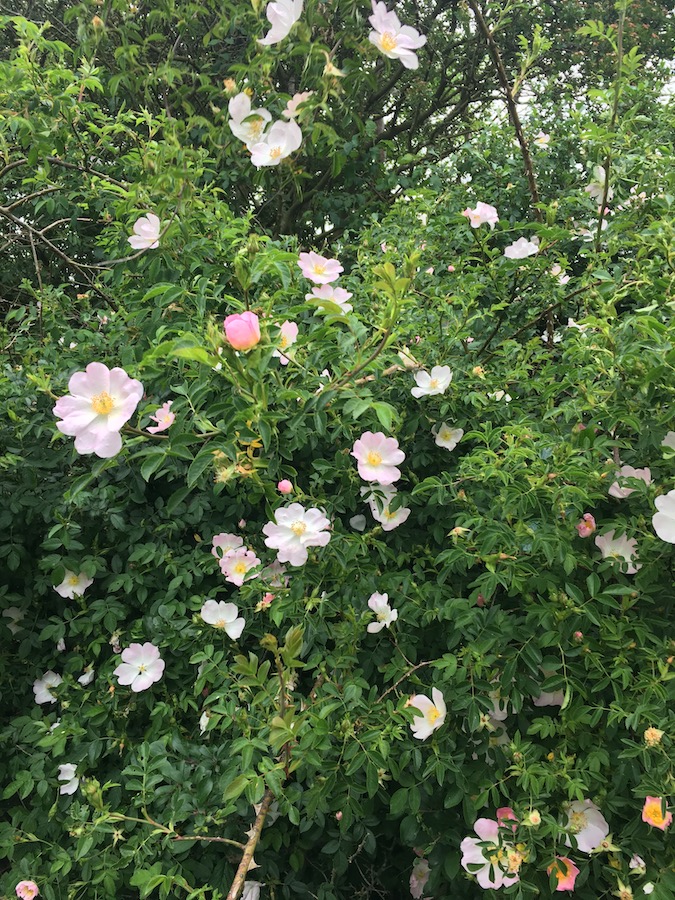
The barley has “eared up,” as we say round here, and the million filaments shimmer in the morning light. The wheat begins to grow tall, blue-green. The uncut roadside verges frothed briefly with bridal cow parsley, and the starry white flowers of the pungent wild garlic have faded. The elderflower is out; dogroses cascade in the hedgerows; ox-eye daisies dance in the breeze. Summer races ahead, outstripping spring.

This early flowering and seeding brings with it another sort of lockdown for me: the grasses are seeding and hay fever limits the time I can spend out of doors. On our morning walks I set out, duly medicated and sprayed and eye-dropped, in dark glasses, and my eyes and nose smeared with Vaseline. The dog precedes me through the long grass me sending up golden clouds of pollen dancing in the low sun.

Summer has come early; the electric lime green of spring matured too quickly. Soon the glory of morning birdsong will fade, little by little, unnoticed, till suddenly one morning we hear… silence. The lark may still sing high on the wing, and a yellowhammer may still announce “Little-bit-of-bread-and-no-cheeeeese,” but that exuberance and joy (how we love to anthropomorphise the aggressive avian macho mating defence of territory!) will be gone till next spring. And thoughts come unbidden – shall I live to hear it? Live in the moment. Live in the moment.

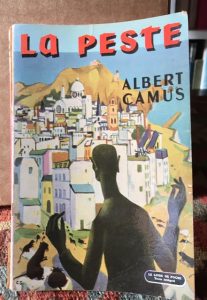
The continuing pandemic, and the feckless floundering of our government, have sent me to my bookshelves for my ancient copy of Camus’ “La Peste” (The Plague), gathering dust since university more than half a century ago. The plague in the novel is generally taken to be a metaphor for the rise of Fascism, though some read it as a diatribe against capitalism and materialism. Given the current situation, especially in the United Kingdom, it can equally well be read as a literal account.

The infection comes to a town that is obsessed with business, a place where the sole object seems to be the pursuit of wealth. The authorities are slow off the mark, reluctant to act because of the economic consequences and the reputational damage to the town. Mitigation measures are mired in bureaucracy, until, as fevers spike and bedsheets are soaked from night-sweats, there is no choice but to quarantine the town: “We should not act as though half the town were not threatened with death, because then it would be….We must keep endless watch on ourselves lest in a careless moment we breathe in somebody’s face and fasten the infection on him. What’s natural is the [virus]. All the rest—health, integrity, purity—is a product of the human will, of a vigilance that must never falter.”

Businesses complain about being closed down. Social distancing is not properly observed. There are hoarders and profiteers. Before long, hospitals are overwhelmed; medical supplies are scarce; a makeshift quarantine camp is established; and the police do their best but are sometimes heavy-handed. The cast of characters is eerily familiar: the Prefect who begins in denial (“There are no rats in the building,” as the rats die all around them), but then has no choice but to bow to the expertise of his medical advisers once the exponential spread of disease becomes apparent; the chap who tries to escape the lockdown, heedless of the risk of spreading infection beyond the walls. It could have been written in the past two or three months as we witnessed the Cummings and Goings of our masters.

Aristotle argued that, thanks to the gift of language, man is destined to be a social and therefore a political animal. Today I, and many, live in the paradox of an enforced solitude whose window on society is perforce through a screen, mediated by a cacophony of voices – politicians, pundits, scientists. We see the world through a television screen; we see our friends and families through a computer screen. Through a glass darkly to a world where we can look, but we cannot touch.

Can I end this month’s chronicle on a note of optimism? I can say that the number of cases in this country has fallen, that death rates are down, that the first tentative steps of a return to previous existence are being taken by some. I can say that some of the seeds I sowed in early spring are already providing food, that the rest will soon follow; that baby birds are fledging; that there is a foal on the Common.

April 2020

The year rushes on, but down a path no-one in living memory has travelled. Where it goes nobody knows. There is no road map.

I do not wish, in a blog of my privileged life in rural Suffolk, to make this into some latter-day journal of a plague year, and those who know me will guess at my feelings about mistakes our leaders may have made in facing this crisis. History alone will give us a clear perspective. Moreover, it feels indecent this month to write of glorying in the beauties of this most lovely of all springs when all around there is illness, death, suffering, poverty, domestic violence. Unseemly indeed, when we read of – for example – a young NHS worker stabbed to death, just before the funeral of his father, who died from Covid, by a gang wearing medical-type masks.

It seems so distant from this paradise where we are untouched by it all, isolated from the realities of pandemic Britain, and yet not far away there is a hotspot of Covid deaths and hospitalisations. Despite these, there seems to have been a shift from a month ago, when fear stalked every outing, when the slightest slip – a door carelessly touched, a cough from someone in a queue – could spell sickness and maybe death. Lockdown in deep Suffolk has bred a potentially dangerous sense of immunity from it all, insulated from the intensive care units with their exhausted and ill-equipped staff, from the full mortuaries, from the breeding grounds of disease and death that are our old people’ homes. Here I am cocooned and cared for – a supposedly vulnerable septuagenarian. The drawbridge is up; the portcullis down.

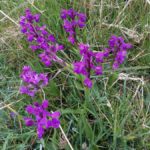
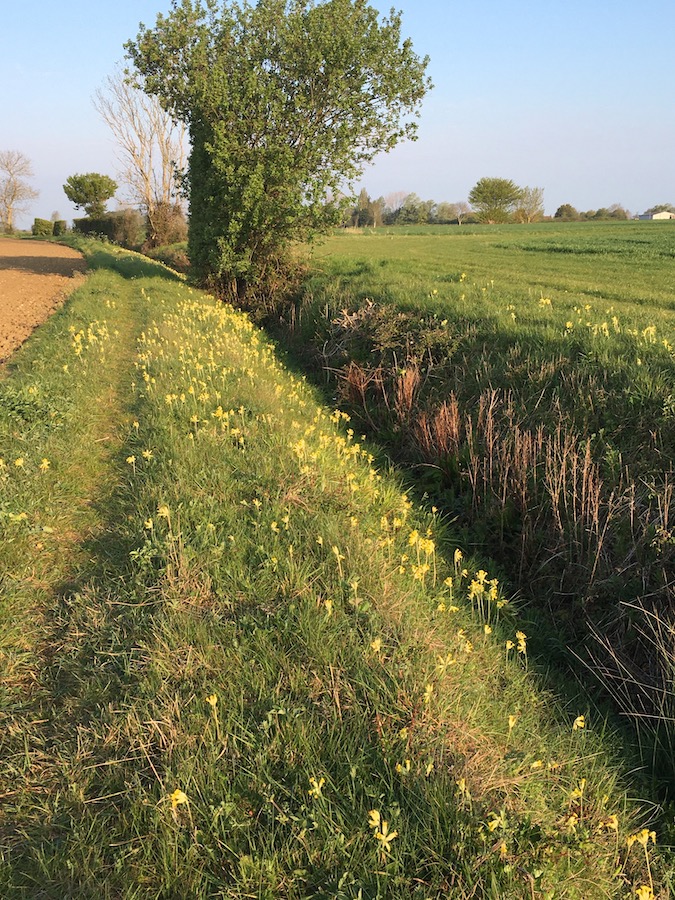
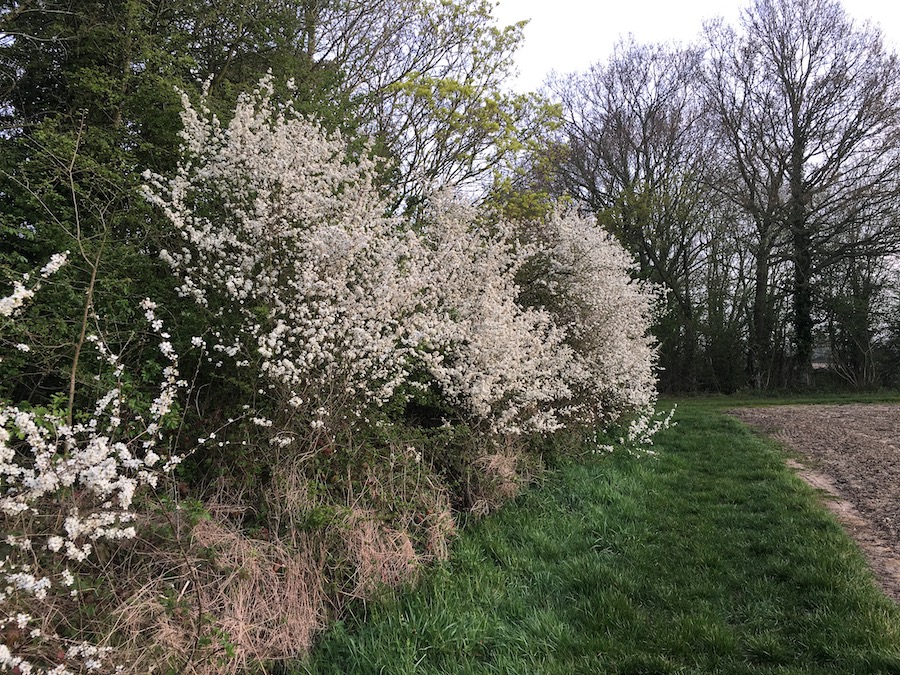
And, as such, I live in a world which has shrunk to the confines of my garden and to the Common, and walks beyond far over the fields, long walks beginning with the sun which rises ever earlier on what has been an idyllic world. Those solitary miles with the dog have seen the transition from early spring with trees still skeletal to full leaf, from bare earth to greens which no artist’s palette could ever capture, filtering the early light. The primroses are now drowning in the rising lushness of new grass, the cowslips abundant on banks and in meadows after a winter of rain, the orchids on the Common bright magenta among the yellow of buttercups. Now the blackthorn in the hedges has given way to the may, with its sweet sickly smell of death. A barn owl glides silently before me along the field edge. A buzzard hunts. And all around  the birdsong of the morning is uncorrupted by man-made sound.

These pure days of dawning blue and gold were like Eden before the Fall.

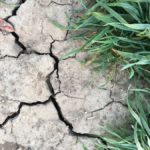
April was a month of virtually no rain, a month which marked a transition from waterlogged fields and paths of mud to iron-hard, bone-dry cracked earth. The garden turned to dust and needed watering every day. The garden…always a preoccupation, but in this month of isolation it became a daily ritual, a guardian of sanity, a saving grace, and a promise of the future. The present circumstances convince me more than ever of the necessity of growing my own food.

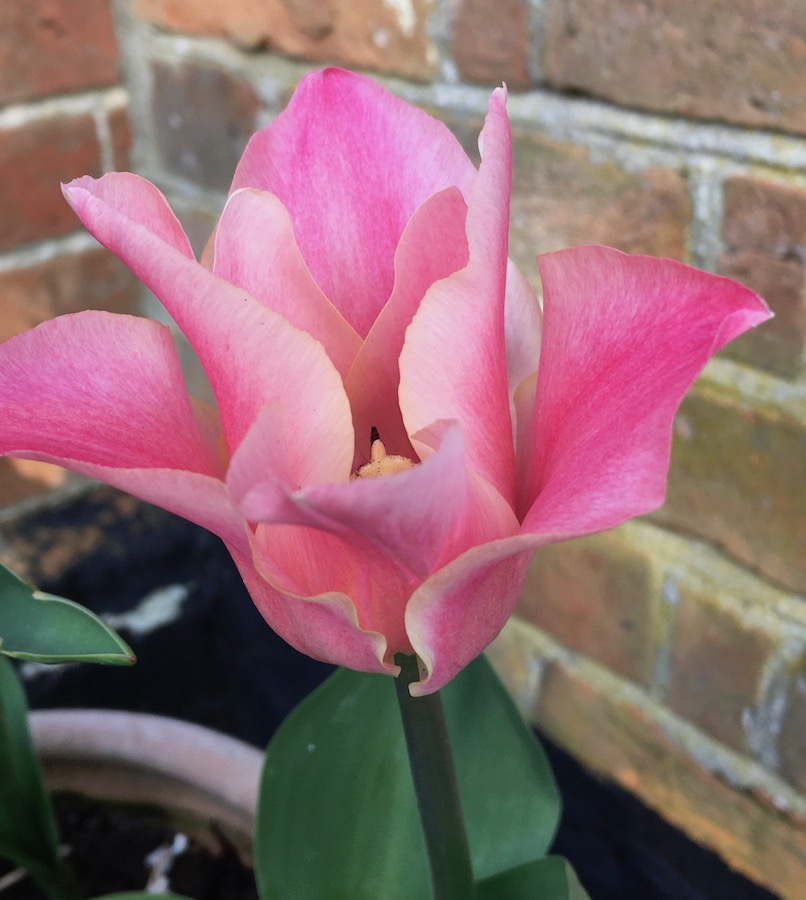
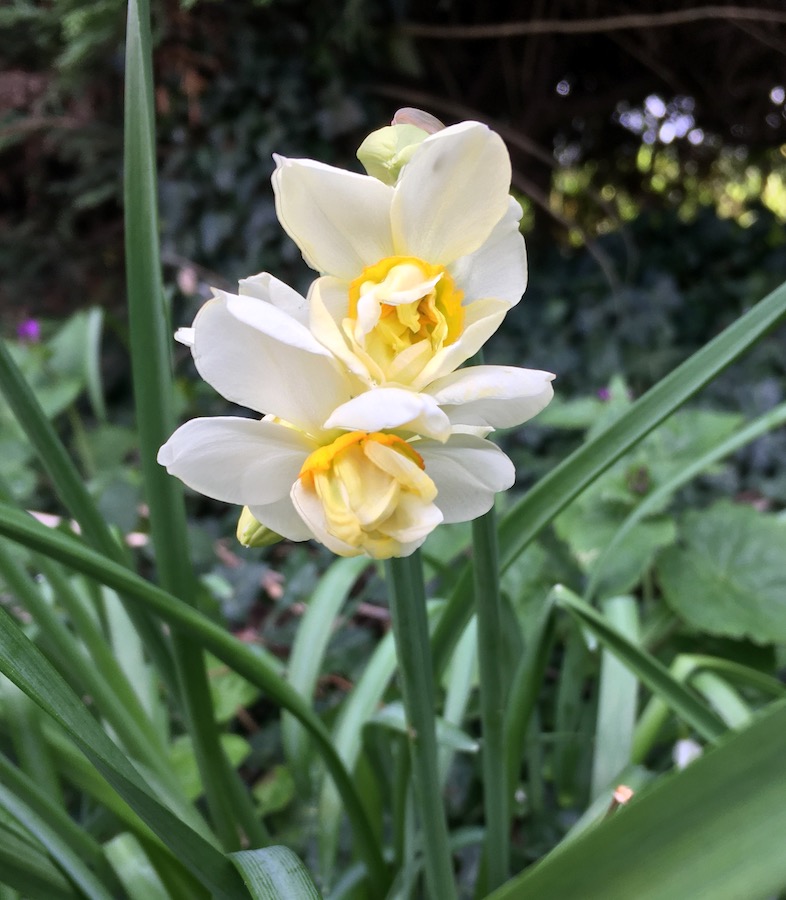
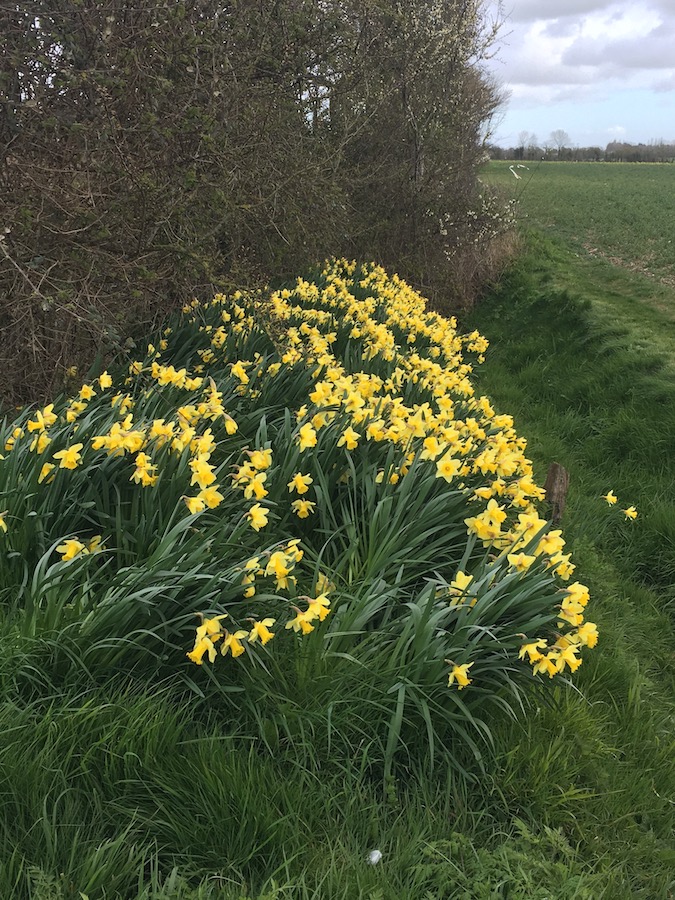
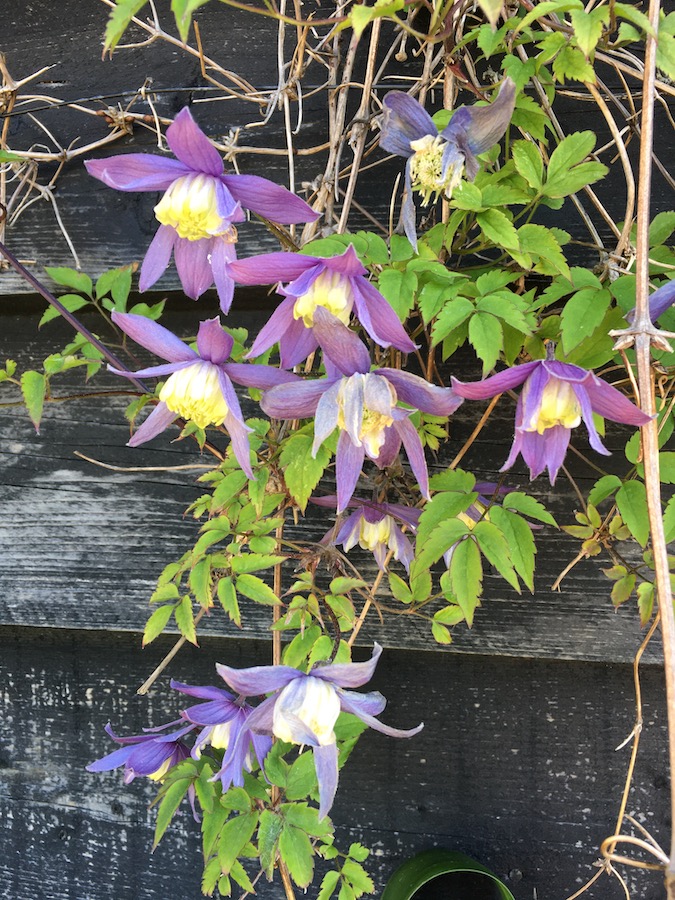
The beauty of the spring garden lifts the heart and soul when the news is grim:

It is of course impossible not to reflect on what is happening beyond the bounds of my eremitical existence. Although nobody living has experienced anything like this pandemic, it seems there is little new under the sun. Daniel Defoe, who was only five during the Great Plague of 1665, wrote his “Journal of a Plague Year”, based on contemporaneous accounts. It sounds so familiar: “The infection was propagated insensibly, and by such persons as were not visibly infected, who neither knew whom they infected or who they were infected by.”

And again:

” And finding that I ventured so often out into the streets, he (a friend) earnestly persuaded me to lock myself up and my family and not to suffer any of us to go out of doors that we could keep within doors entirely…And here I must observe again, that this necessity of going out of our houses to buy provisions was in a great measure the ruin of the whole city; for the people catched the distemper, on these occasions, one of another.”

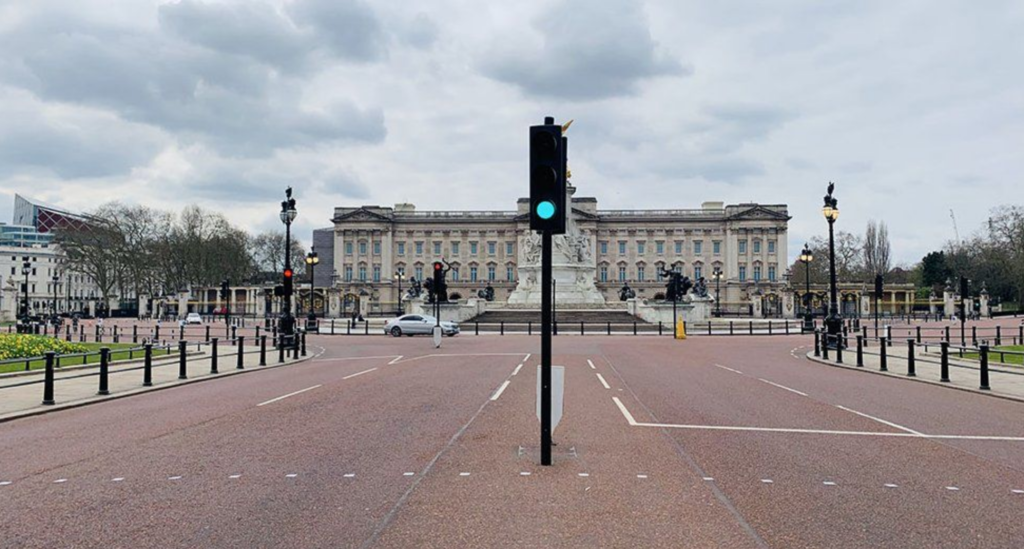
The face of London, Defoe tells us, was “strangely altered,” and Pepys, who was an eye-witness, marvels at how empty the streets were, before deciding it might be more prudent to stay at home:

“But now, how few people I see, and those walking like people that have taken leave of the world…. I to the Exchange, and I think there was not 50 people upon it and but few more like to be, as they told me, Sir G Smith and others. Thus I think to take Adieu today of London streets ….”

Pandemic London (photo Sophie Raworth)

I myself have been out very little. I have no need. But on the rare occasions I have driven anywhere (out of necessity to the vets for the quarterly flea and worm treatment) I marvel at the empty roads. I drove six or seven miles and saw one car. Spooky, weird, disquieting, the end of days.

I have no need to move from the confines of house and garden because I have kind friends who bring shopping. I don’t need much. I am so blessed: I have a well-stocked larder, home-grown produce still in my freezer, and I am still working my way through a big No-Deal-Brexit Box amassed at the end of last year when it looked as though there could be shortages. There could still be, for in the focus on the present pandemic we edge, blindly and seemingly inexorably, to a situation where no trade deal with the EU can be secured before the end of the year.

And friends have brought cake and chocolate, exchanged at the gate – two metres apart – for eggs and plants. There were Easter eggs, too.  I grow tubby, and there is no-one to see. Hard to have the grace always to receive and accept, and not to be out and doing. I think of Calais where refugees now go without hot meals or the means to keep themselves safe, and where the clearances and brutality continue. Watch and pray, send money. It is so passive.

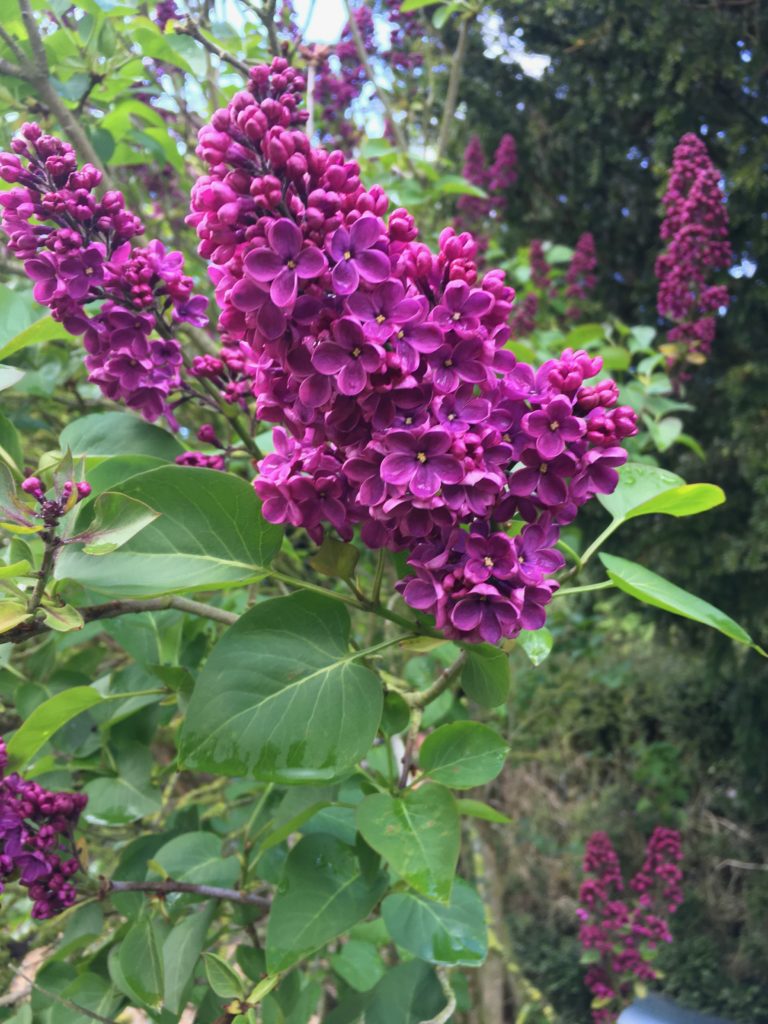
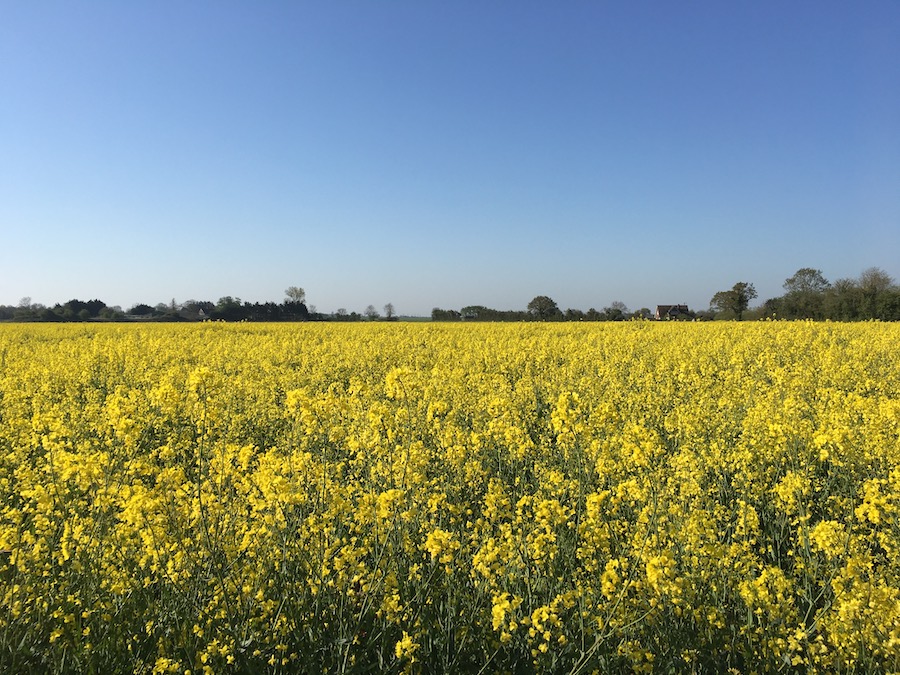
The fragrance of the rape field beside the house swirls round the garden, vying with the lilac. It has been the most poignant and beautiful of springs.

April 2020 will be remembered by us all. I can do nothing to alleviate the suffering that surrounds us, save to stay – obediently – at home, protect the NHS and save lives. Watch and pray.

March 2020

The past is a foreign country; they do things differently there.

“The only traffic I hear is ambulances,” said my daughter in London. In rural isolation here that stark sentence brings home the threat.

Writing anything at this time seems redundant, but life continues. The cycle of the year keeps turning.

A month of two halves. The first, a phoney war situation when nothing had changed, but a creeping awareness of menace coming closer, and with it that the scenes of deserted streets and overwhelmed hospitals and rows of coffins in makeshift mortuaries in Italy and Spain – then France -might soon be our own normality. The second, when suddenly it was upon us, with hundreds of new deaths reported every 24 hours, the populace confined to their homes, the elderly told to stay put for four months, and a government scurrying to catch up with what should have been done so much sooner.

New phrases are on everyone’s lips: lockdown, self-isolation, social distancing. “C19”  is no longer a shortened form for the nineteenth century, but something deadly which stalks us, waiting for one careless moment, one slip of our guard.

It seems somehow irrelevant to write of the ‘old’ normal.  The recent past, the beginning of March, seems long distant, as alien to our present way of being as that of a previous century. But maybe recording life and times is still important.

The old normal

In like a lion came March, with tempests of wind and even more rain – a continuation of our dark and drenched winter. Work took me to France the first weekend of the month. As Eurostar sped me to Paris, and another sleek and  smooth TGV raced me to Reims, I saw fields under water and trees down as they were in England, the similarities smoothing out the shock of the speed of travel.

France, ahead of the UK in its number of Covid-19 infections, was definitely nervous. No-one shook hands; no-one kissed; Friday night restaurants and bars were nearly empty; hand sanitiser was much in use. I felt compelled rather self-consciously to wipe down the seat tray and arm rest of the trains.

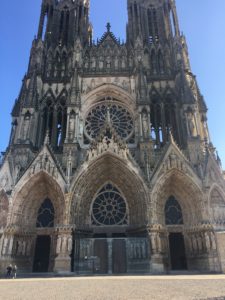
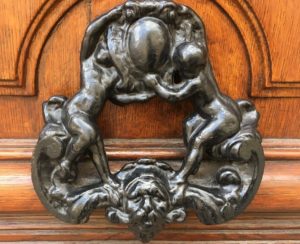
Despite the advancing virus, the meeting in Reims went ahead. I was there as an observer, representing my organisation, and made a brief speech presenting it, with many expressions of fraternity in this post-Brexit age. I was treated royally, which was quite humbling – and surprising, given the usual French jibes of “Who burned Joan of Arc?” when faced with the English. Champagne apéritifs, dinner, lunch, a private tour of the cathedral and Art Deco Carnegie Library. Walking along a street past the Archbishop’s former residence I caught sight of a knocker on the main door…I wonder if some frustrated former archbishop commissioned it specially…

The Archbishop’s knocker

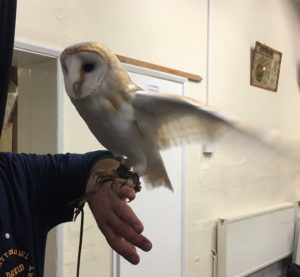
That same week I went to a talk in a neighbouring village about owls. Owls, I learned, are now big business, farmed like puppies as must-have accessories and pets, thanks to the popularity of Harry Potter and Hedwig, his snowy owl. The tame talking owl Archimedes, belonging to Merlin in T.H. White’s “The Sword in the Stone,” is surely a prefiguring of Hedwig.

My childhood reading of this book gave me a love of owls, and hence I went to this talk. Alas, children discover that the owl their parents were persuaded to purchase is no Hedwig, and must be cared for. Thus many end up in sanctuaries, and cannot be released into the wild. A barn owl and a tawny owl were present to illustrate the talk. On my walks I see many barn owls hunting silently in the twilight of dawn and dusk, and I hear tawny owls most nights, but I had never come so close.

I was allowed to hold the barn owl, and stroke her softly with the back of my finger. My reaction to her beauty and to her proximity surprised me. I had to fight back tears.

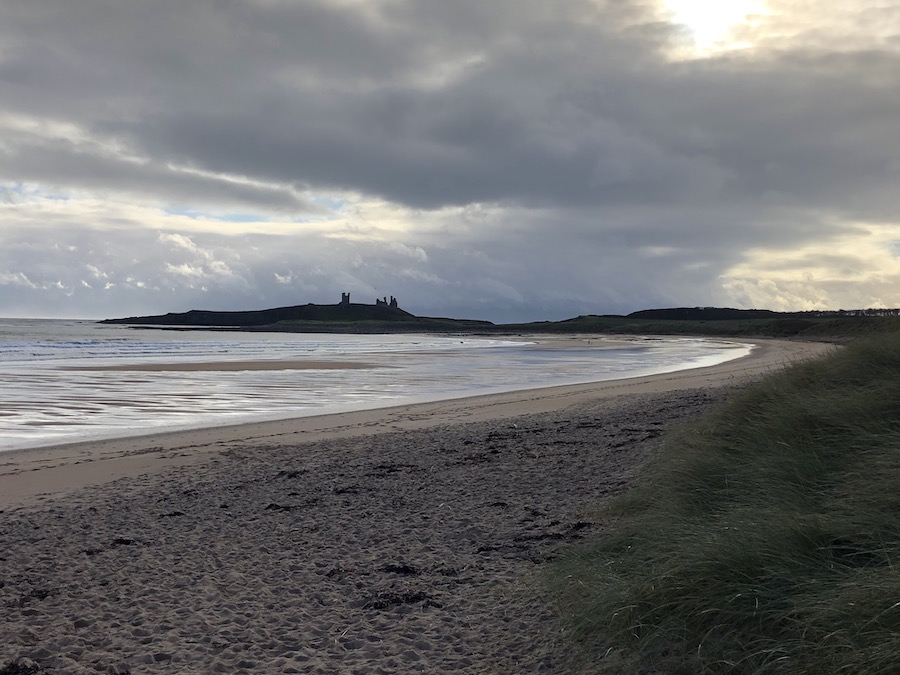
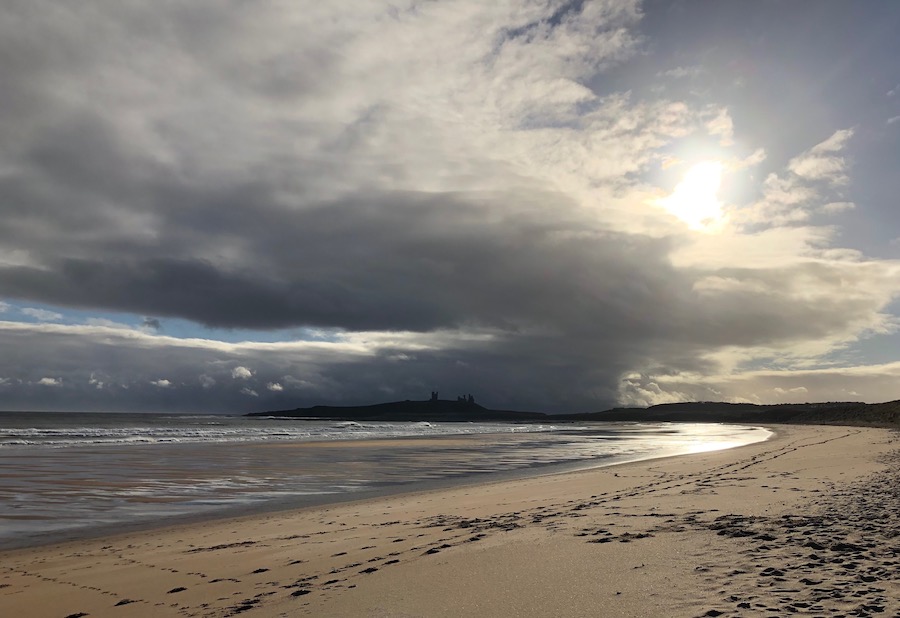
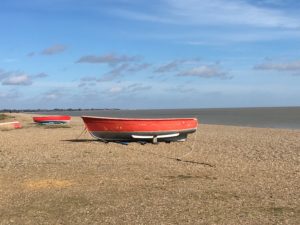
On one of the last days of our freedom (oh, if only we had known it was about to be so curtailed) the dog and I went to Dunwich, and walked along the shingle shore towards Walberswick. Hard to think of it as once a busy port, with its many churches now long sunk in the invasive sea. Dating back to Anglo-Saxon times, Dunwich once stood proud as the capital of the kingdom of the Eastern Angles, at its mightiest in the 14th-century matching London for size. It was a seat of power for the Anglo-Saxon bishops for centuries, an international port, and the Domesday book of 1086 puts the population at over 3000.

That day the sun shone. And with the sun came rapidly that wonderful opening up to life which is the spring. The land dried, winter mud and mire soon just a memory.

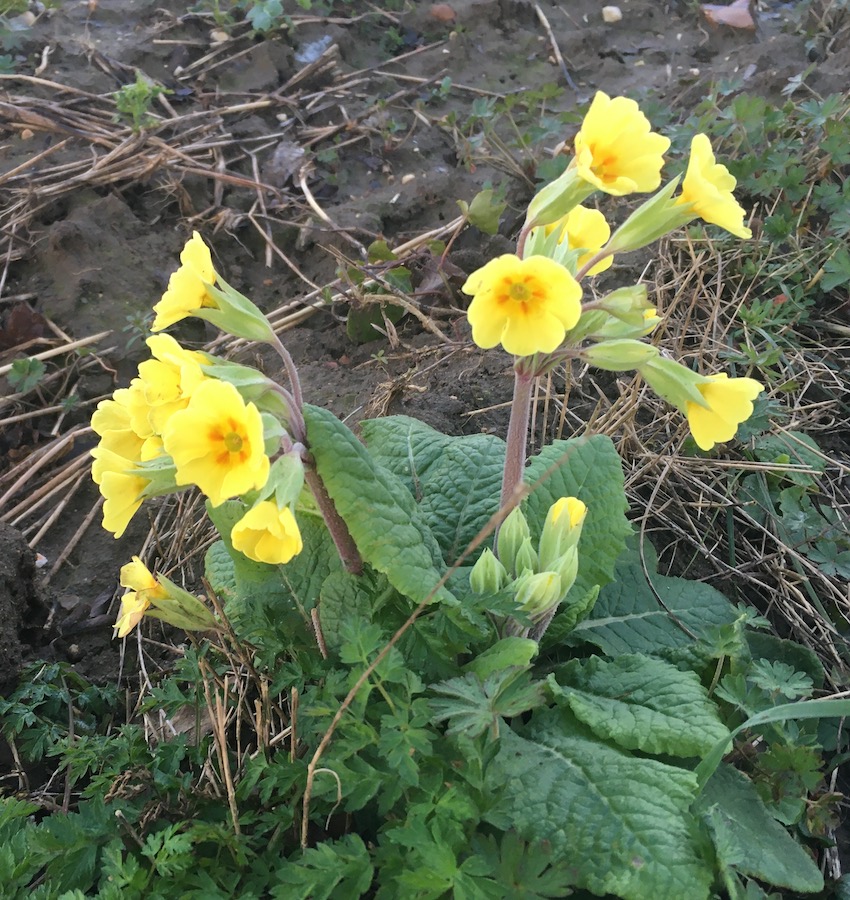
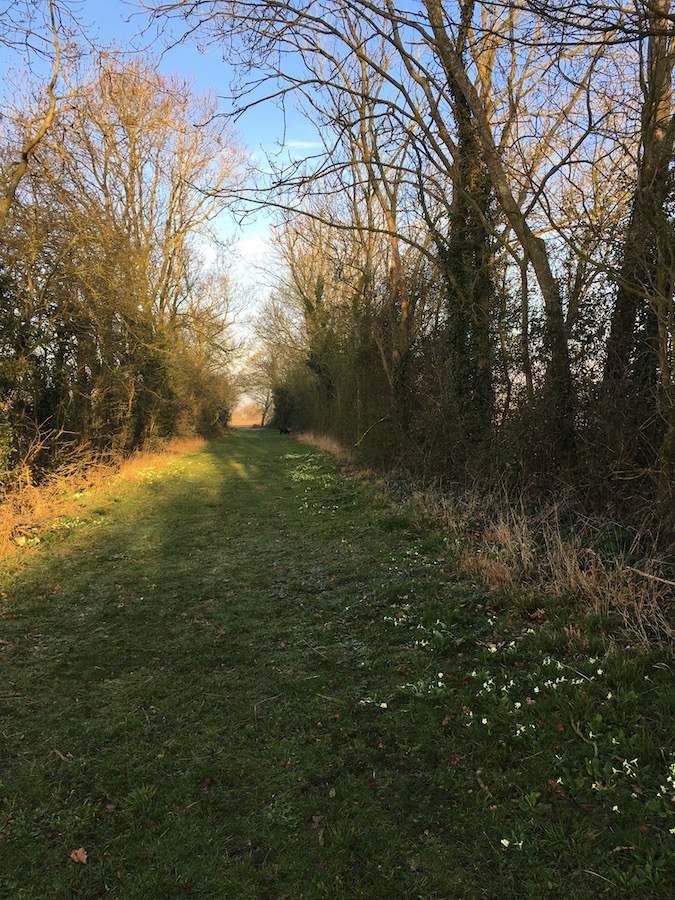
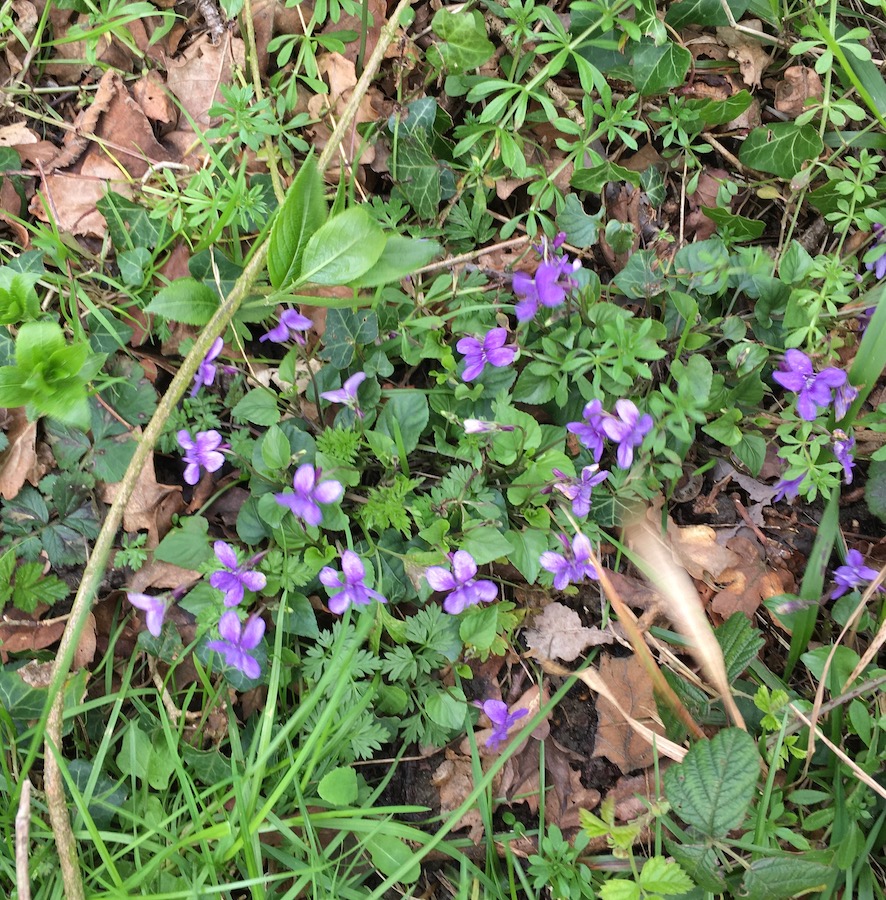
The mildness of the winter meant the greening came early. There were primroses and violets and cowslips and oxlips and birdsong and blue skies. The land rejoiced. My heart rejoiced.

And then came lockdown.

The new normal

It would not be unfair to say that earlier in this crisis the government (still cock-a-hoop no doubt with its resounding new majority and having “got Brexit done”) did not respond in any way commensurate with the situation, with what had been apparent to anyone who could see the straws in the wind. Covid-19 appeared in December in China. We have long known a pandemic was overdue; and the Cygnus crisis simulation three years ago proved the NHS – underfunded for years – would be unable to cope.

Government messages started to come thick and fast. First we heard that we must all be exposed to the virus to confer “herd immunity,” though it meant many elderly and vulnerable would die. This survival of the fittest policy made economic sense – no burden of care for the elderly, no blocking of beds in the NHS, no pensions to pay out….but it was fairly quickly dropped, for it showed a shocking disregard for the sanctity of life, and I – as a septuagenarian – didn’t feel quite ready to take one for the team. Besides, herd immunity is conferred by vaccination not widespread contagion.

Then we oldies were told we must isolate ourselves for four months to save our lives – the very lives which a few days before were to be recklessly dispensed with – and to prevent our health service being overwhelmed. This was swiftly followed by a general lockdown.

The lane is silent. A car is a rarity. There is a background drone of tractors finally able to get on the land and drill spring crops and the regular reports of the bird scarers. But otherwise all is silent . The builders on the site next to my property along the lane have gone, and it is mercifully quiet now the pile drivers and excavators have stopped, and machinery stilled. The dominant sound now is the high note of the skylark.

I choose to live isolated, surrounded by fields and fresh air, and in general I am happy with my own company, and that of a cheerful and enthusiastic dog. I grow much of my own food, and I am busy with  work and many projects. I am thus blessed more than most in our current circumstances, but the prospect of being cut off from all community for months is daunting. No-one knows what will happen; what the future will be for ourselves, for our loved ones.

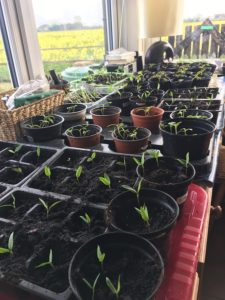
As I start to wake the garden up and sow seeds these symbolise tiny expressions of hope: when this germinates and grows and bears fruit the plague may have passed us by.

Growing anything, but specially food crops, earths us and roots us. It declares a continuity from the past to the future. We are performing the same actions, the same gestures on the same days of the year as our ancestors did, and future generations also will. It shows us our place in the scheme of things, in the cycle of birth and death, and it helps, at this time when grief or death may come suddenly and surprise us, to understand this.

Dark times ahead?

The reader will, I trust, forgive me. I updated this particular software and have been rather unsatisfactorily and unaesthetically getting to grips with it.

February 2020

27 February 2020

The lull before the storms

Three days off the beginning of meteorological spring. Damp snow – the first of the winter – is pouring from the sky, adding more wetness to the spongy saturated ground. Much more rain is forecast.

At this point it would be ungracious and ungrateful not to point out that I am writing from the flood-free “heights” of East Anglia. Nightly our TV screens show towns and cities in the west and north of the country with flood water rising to the upper storeys of houses and shops. We see it so often, our hearts go out to those affected, we say “I can’t imagine how awful it must be,” and then – for those of us in dry dwellings – it becomes normalised, submerged beneath panicky reports of killer viruses coming ever closer, killer riots in Delhi, killer bombings in Idlib.

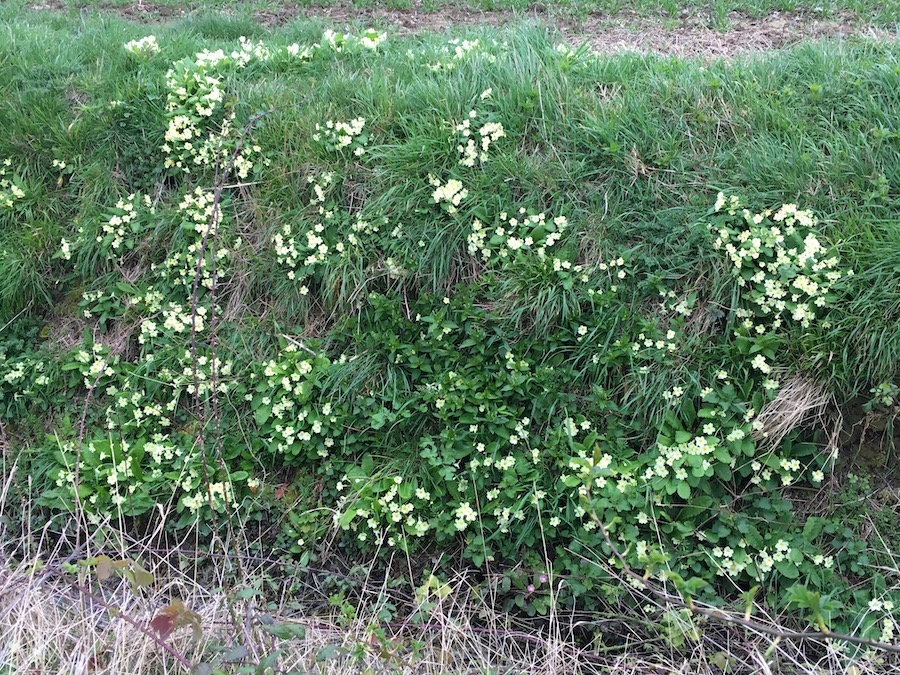
Nature has decided that spring is already here. The mean temperature in the UK this winter has been 5.2°C, around 1.5° warmer than average. One by one the primroses have appeared on the steep banks like stars in the summer dusk. The grass is growing, daffodils are blooming, I have even seen a cowslip. The birds are singing and the ducks are pairing off. These are sights to lift the spirits, but it is hard to maintain a rejoicing heart in perpetual deluge.

More so when the deluges have been borne in on storm-force winds. Storm Ciara first, then Dennis battered the British Isles, with gales every day in between, and then some. So many trees came down, and walking became perilous with flying branches and brambles whipping into my face. I was thankful that the house suffered no real damage, and that the chicken run and shed stayed upright, and the birds themselves unharmed and still laying, but…my poor greenhouse! It had stood, exposed to the predominant winds, for 15 years, with only the occasional pane broken. Ciara swooped in, shattered glass, and sent the whole structure into the neighbouring ditch. Do I give up and just buy my vegetables? It would be much cheaper in the long run.

Morning after morning staccato salvoes of rain hammer against the panes of my bedroom window, engendering a sense of powerlessness and hopelessness: another long drenching walk with a dog who is  undaunted by wind and weather. The wind does not howl or moan or whistle, or any of the words we associate with its power. Sometimes it sounds like heavy machinery, or an aircraft coming in to land, or an express steam train, the gusts whomping and shaking the house.

Often on walks I observe the miracle of small birds flying in this chaotic turbulence. A skylark weighs just 33-45g, a nothing in the power of the storm. And yet the male lark rises vertically from the open fields, and hovers seemingly effortlessly, singing, singing, singing.

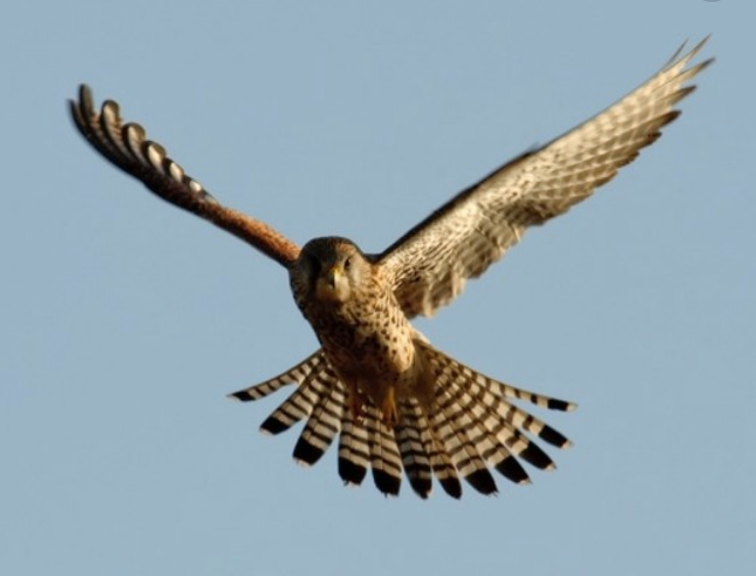
Another is the beautiful kestrel, the windhover, and we see them regularly over road verges, ditches and field margins. They can, apparently, spot a beetle at 50m. They need several voles or other small mammals a day to survive, and so there they are riding the storm, absolutely still before they plummet down to get their prey. A kestrel flies into, and at the same speed as, the oncoming wind. It extends its wing tips and fans its tail feathers, and in high wind may not even flap the wings at all – just kiting and gliding.

The construction of the Grand Design in the field next door continues, despite the weather. The demolition of the old house is complete, and heavy machinery moved in to start digging the footings.

They dug deep down into yellow Suffolk clay, and the trenches promptly filled with water. But work goes on with an army of builders, and much noise of diggers and banging and shouting and the beep-beep-beep of reversing vehicles. The lane is full of parked vans and cars, and huge lorries ply to and fro bringing loads of hard core. Mud is everywhere.

I last wrote on 31 January, and despite all efforts and demonstrations and fervent prayer, we have left the European Union. For the moment, during the transition period, nothing concrete has changed – a phoney war – except there is the taste of defeat. On the day itself and for several after there was the affront of the triumphalism of the Brexiteers – the jubilant bunting which appeared locally, the flying of the Union Flag (to my glee, often hung upside down in ignorance).

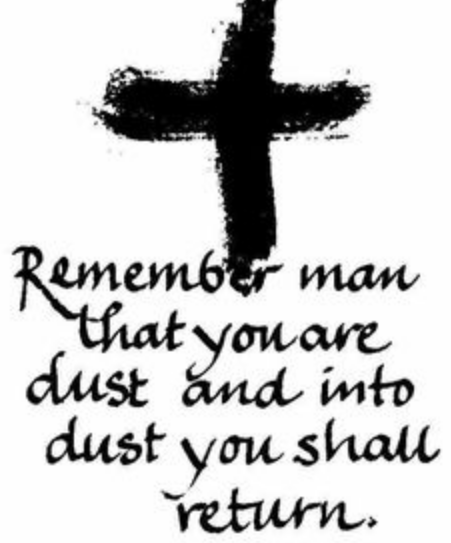
And so, as February closes, Lent begins. To Mass last night, with its repeated insistent intimation of mortality “Remember that you are dust, and to dust you shall return,” the funereal black smudge of ash marking us so we cannot forget that with every passing Ash Wednesday that fate comes nearer. Turn, repent, turn again, before it is too late.

Is not Protestantism so much the poorer without this? The repeated rite, the ritual of imposition, the intoning of the sonorous Miserere:

Have mercy on me, God, in your kindness.
In your compassion blot out my offence,
O wash me more and more from my guilt
And cleanse me from my sin.

 
My offences truly I know them;
My sin is always before me.
Against you, you alone, have I sinned:
What is evil in your sight I have done.

Those who read the Daily Office will know the psalm by heart, for every Friday morning comes the same reminder. Maybe Protestants with their “personal relationship with their Saviour” are in no need of such admonitions, for that relationship, they say, is sufficient to get them to heaven. I am happy for them.

Like the effects of Brexit, only time will tell, and no-one can know. Justification by faith or works is beyond the scope of this blog.


January 2020

31 January 2020

Let me find some positives in this sad month. There is the first glimmering of light in the sky when we go out now just before 6.30am.

The birds are beginning to sing – the robin, the repetitive great tit, the melodic blackbird, the raucous thrush and others, and in daylight I hear larks high over the open fields. There are snowdrops, aconites, and the first primroses – which witness to the enduring mildness of this winter.

I look for other signs of hope, and find few. One, which restores faith in humanity’s response to destruction and brutality, is the work of Help Refugees, among other aid agencies, in Calais and northern France. This work – demanding, strenuous, often dirty and thankless – is done in the main by dedicated and inspiring young people. I will return to this below.

In the dark early days of the month the paths across the field and through the woods were running with water or mired deep in mud from the continual heavy rain, and on rare dry mornings were silvered deceptively by a gibbous moon. Little has changed, save for the slow lengthening of the days. The rain and relentless grey go on.
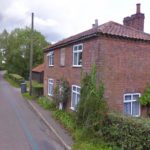
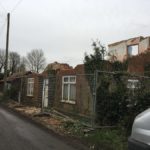
Along the lane my neighbours’ house is being demolished, brick by brick, by two Polish labourers. This pulling apart and tearing down seems to accord with the mood of this month. These elderly neighbours, long dead now, were the subject of the first chapter of this monthly chronicle, in July 2017. They sold their home of 52 years and the six-acre field with it in September 2016 so that he, terminally ill, could move to a bungalow in a nearby small town. He died less than a month later, and she – hating her fenced-in view – followed him to the grave after nine months. He wanted to call the new bungalow “Galanthus”, to remind him of the clouds of January snowdrops at their old house…a few of these remain among the ruins.

And in its place, set back from the road in the field, a Grand Design is planned – a glass and timber palace. I am told there will be “privacy planting” to shield the owner from my gaze, and I am also told (by others) that the plans have had to be redrawn – somewhat smaller.

Change and decay in all around I see.

There was one dry week, and one morning of sparkling iron-hard frost, but, reader, I missed it, for I was away in the grim fortress that is Calais. My regular readers will recall that in January of each year recently I have been to help at the Auberge des Migrants, which is under the umbrella of Help Refugees. My parish and other friends and family have been generous in their support, and this year was no exception. I had a car full of donated goods and some €725 in cash for them.
I am so fortunate that I can afford to rent a small (AirBnB) studio in Calais, so I can shut a door on myself in the evenings. There is warmth and hot water, and the possibility of heating up a meal. It overlooks the beach and the Channel, and on a clear night I could see the lights along the Kent coast. Inevitably it sparked thoughts of our place in Europe; we are so close geographically and culturally, and yet we in England are so stubbornly insular.

Sunset over the Channel (a metaphor?)

The Auberge des Migrants, which gives short-term volunteers the chance to work either in the Refugee Community Kitchen or the wood yard, is a place of inspiration. It has the same feeling as a walking pilgrimage – of working to a common purpose, of hope for a better future, of adventure even. These are young people who give up weeks, months or even years to run the place. Out of an apparent hippy chaos it works like clockwork. Wise after three years, I opted for the wood yard, for there – because of sustained physical effort – one can keep warm. The kitchen, open on two sides to the cold, chains the volunteer to a chopping station standing for hours on a wet concrete floor, then soaks him or her to the skin at a washing-up station, only to freeze again, immobile. The woodyard is fun: splitting logs, breaking up pallets, making kindling, bagging wood.
There has been an influx of refugees/migrants in Calais recently. Now there are about 1000-1500 (it’s impossible to quantify exactly). This puts a strain on resources. Last year the bags of wood had to weigh 13kg, and two tonnes were distributed daily. Now the bags can weigh only 6kg, rationing wood, four bags per “fire.” The distribution van goes out twice a day, after the regular clearances by the Police aux Frontières and the CRS (riot police). We couldn’t have a morning tea break (desperately needed by Granny here) till at least 150 bags had been filled and stacked ready. At nearly 73 I found the toll on the ageing body to be great. I am always the oldest volunteer. I hope that there may be people among my readers or friends or fellow parishioners who will take the baton and run with it.

While in northern France I was invited to a reception at Arras City Hall (the famous Beffroi). Why? you ask…For some months now I have been negotiating, on behalf of an organisation for which I am communications officer (the Confraternity of Pilgrims to Rome) a partnership with an umbrella organisation in France which serves pilgrims on the French section (nearly 1000km) of the Via Francigena (the ancient pilgrim path between Canterbury and Rome). The reception was an event where the Great of Arras present medals to the Good of Arras – in this case a woman who devotes her time to arranging accommodation throughout the Pas de Calais and beyond for pilgrims on their way to Santiago and Rome.

This lady, looking disconcertingly like Una Stubbs as Mrs Hudson in the BBC “Sherlock,” had helped me on my way to Rome four years ago. And so I went, as PR for the Confraternity, and sat through 75 minutes of speeches. And then lunch with French colleagues. Many years living in France have taught me the correct social dance of Anglo-French intercourse.

I miss France so much. Crossing the Channel had always a frisson of excitement and adventure, however frequently I did it. Because I am not speaking my mother tongue I have a sensation of being a different person, someone who can express different sentiments, be…not myself. I used to whizz past Arras on my way south, towards the sun and the red tiled roofs and what was for some years home, but I must admit to loving the north of France. The day I was in Arras was cold and foggy, and I walked through the great squares with their Flemish gables, their echoing arcades, their cobblestones. I drove through flat fields, occasionally glimpsing canals, distant rows of poplars…all was grey. Jacques Brel’s voice translates so exactly the essence of the north.

And this nostalgia brings me neatly to the elephant in today’s blog. Today is the day so long fought against, so dreaded. Today is Brexit day, and the feeling of defeat swamps me. No, I do not see a new dawn, and an exciting liberated future. No, I do not see the positive. I am overwhelmed with grief, and I have wept today.

I will end with a quotation from a recent edition of the New York Times: ” [Britain has] … a new prime minister whose track record includes overtly racist statements, some of which would make even Donald Trump blush, a Brexit project linked to native nationalism and a desire to rid Britain of large numbers of immigrants, and an ever thickening loom of imperial nostalgia…” No wonder I weep.


December 2019

“Bad men need nothing more to compass their ends, than that good men should look on and do nothing” – John Stuart Mill

My introductory paragraph, traditionally a report on the weather and observed trends in our climate, could this month be a repetition of November’s. The reader will forgive me, for in deeply rural Suffolk my daily existence is much ruled by what is going on out of doors.

And what has gone on out of doors, with very few exceptions, is heavy rain. And more rain, and unremitting dark skies; days of little light, and a universal cold damp dripping. And mud.

However, as we descended into the deep dark of December there was, as ever, the prospect of the midwinter festival – which is what Christmas has become – to cheer us. I don’t find that the commercial noise and bustle and kitsch glare distract me from a contemplation of the spiritual meaning of Christmas, and they do delay the slide into the depression that dark and damp bring.

In our villages competing light shows illuminate the night – whole properties, house and garden, given over to flashing snowmen, ho-hoing Santas, rooftop reindeer, dangling blue icicles. A transient rural East Anglian Vegas. I like the attitude depicted below (which is not, alas, from Suffolk):

In our farms the preparation for the food fest of Christmas takes a different turn. One regular early morning walk takes us near a farm which sells free-range geese and turkeys, and during the autumn months I hear every day the geese wake up with much raucous honking and screeching. A few weeks before Christmas suddenly a deathly silence falls. The geese are no more. Instead a powerful security light illuminates the dark fields. A gang of Romanian workers walks the miles to the farm to pluck and dress the poultry. Where will farms find labour next year?

On an early December Saturday, one of the rare dry days, I spent all day at the Guildhall with its spectacular view of the City of London skyline, in a meeting of trustees of the charity for which I am communications officer and editor, gathered to decide on our three-year strategy. It was unexpectedly productive and good-tempered…until a colleague, our previous chairman and a former Reuters chief correspondent, surprised us all by an outburst calling current concern over climate change “hysteria,” a myth to which we should give no credence, and a Marxist totalitarian conspiracy (according to a book he subsequently ordered me from Amazon in order to contradict me. My 15-year-old granddaughter took a look at it, and her pencilled-in marginalia demolished the illogical diatribe as only a teenager can).

It is more than disturbing to hear this sort of rant from a respected colleague, or indeed from anyone. Neither he nor I are scientists, but to my lay mind it seems the huge consensus of scientific opinion is that human beings are responsible for the changes we are witnessing in climate, and that the perhaps debatable fact that we have not yet reached a point of no return, does not mean that we never shall. Of course I understand that projections are not facts, but if there is the slightest chance that these projections show us the face of the future then I believe we must act now.

It requires drastic behaviour change, which – we all know – is a difficult process. A headline caught my eye this month: “Being obese creates long-haul flight’s worth of emissions.” A study, published in the journal Obesity, alleges that the extra food consumed by the world’s 600 million obese people has a carbon footprint on a par with the whole UK, and their increased metabolism means they breathe out extra CO2 equivalent to Sweden’s annual output. I know insufficient science to rebut this, and have not seen the relevant statistics, but none of us should be smug about what we do or don’t eat, and where we do or don’t travel, and by what means.

I do know that weather is not the same as climate, but it is certain that over time repeated patterns can be an indicator. Here, on what passes for high ground in Suffolk (50m), I am safe from floods, but nearby the entire flood plain of the Waveney is under water, one long lake from Diss to Beccles. One night at Syleham Mill I was forced to reverse the car down the dark lane by what looked like an endless sheet of water overflowing from the mill race, the river slapping and gurgling against the parapet of the bridge. Driving over the Common is like going along a causeway across a lagoon. On Boxing Day a daughter and I found our traditional walk via Minsmere Sluice deserted, and soon discovered why: vast tracts were under water. The dog, bounding ahead, disappeared in the depths, all but the top of her head and her nose swallowed up. Not wishing to turn back, we waded knee-deep through icy water, boots wet and squelching for the next five miles.
The Sluice in drier times

It is a favourite walk, which takes us from Eastbridge to the sea, then north past the RSPB  reserve to the Coastguards’ cottages and the National Trust, and back through heath and birch woods. These Minsmere Levels are the flood water catchment marshes that drain the area of land either side of the river Minsmere that runs  through the New Cut and out to the sea via the sluice. This tidal sluice collects water from three channels before discharging the flow into the sea, between Dunwich and Sizewell. The rains throughout the autumn have been too constant and too heavy for the drainage channels to cope.

My regular readers will know that I cannot allow December to pass without mentioning the political situation which has concerned me over the past four years in ways it never has before. Through Advent the readings which prepare us for Christmas are taken from Isaiah, from the beautiful prophetic poetry of Deutero-Isaiah foretelling an age of peace, of restoration when wrongs will be righted and justice will reign:

He has sent me to bring good news to the poor, to bind up the broken-hearted…garlands instead of ashes, oil of gladness instead of mourners’ tears”.

On the evening of 12 December, as seconds counted down to 10pm and the release of the exit poll results, I knew that these would be the final moments of hope for a better future. The Conservative party won a huge majority – thanks to our first-past-the-post voting system – for sufficient of my compatriots voted to “get Brexit done’ (a meaningless but obviously effective slogan, which somehow persuaded people that their future would be rosier if we could get on and sever our ties with the EU). It cannot mean better. The days of the sovereign nation state are long gone; we cannot recapture them, if that is what is meant by “getting our country back.” It is incomprehensible to me that people cannot understand that unity – community – is better, more productive, safer than standing alone, grasping for illusory better deals, trying to shut our doors against all comers.

What voters seem to have forgotten is that historically the Tories are the party of “I’m all right Jack,” and that election promises of bonanza cash, which wooed and seduced and ultimately broke  the Labour “red wall” of the North and Midlands, will not materialise into prosperity, that workers’ rights will not be preserved, and broken post-Brexit Britain will mean more poverty, not less, for we shall be the poorer outside the EU. Poorer economically, politically, culturally, morally and spiritually.

Truth was the victim of this election, and already we see the consequences for democracy. Has the executive power grab which immediately followed really gone unnoticed in the pre-Christmas frenzy  – or do we not care? Look – really look – at what has disappeared from Johnson’s notorious Withdrawal Agreement “deal”, the metaphorical piece of paper (in fact 600+ pages) proudly waved after last-minute negotiations in October:

  • The clause giving MPs the right to approve an extension to the transition period.
  • The clause 31 requirement for parliamentary approval for negotiations on the future relationship. Under the old bill, the House of Commons would have had to approve the negotiating objectives of the government in the next phase of talks. The parliamentary approval process for any future relationship treaty subsequently negotiated with the EU has also gone.
  • The removal of clauses pledging alignment with the EU on workers’ rights. Legal protections for refugee children reunited with family members in the UK have been watered down. The bill removes, via clause 37, obligations in regard to unaccompanied children seeking asylum in the EU with an obligation to make a statement within two months of passing the act.
  • The promise that the government’s position on negotiating the future relationship will be in line with the political declaration that accompanied the withdrawal agreement.

I am writing this on the 849th anniversary of the martyrdom of Thomas Becket, St Thomas of Canterbury. He took on the executive power. He too lost.

Candle at the site of Becket’s assassination in Canterbury Cathedral

And so the old year fades with failure and the dismal decade dies, and with it much hope for our future. I am fortunate and privileged, and I am unlikely to go hungry, protected as I am by a pension and the ownership of my home, and I am blessed with the love of daughters and friends. But next in Maslow’s famous hierarchy of needs comes a sense of connection. That is going, has disappeared with any voice or agency I might once have had in this country, any influence on our future. The Black Dog is coming ever closer.

(“Bad dog’, painting by Austin Clarke)

____________________________________________________