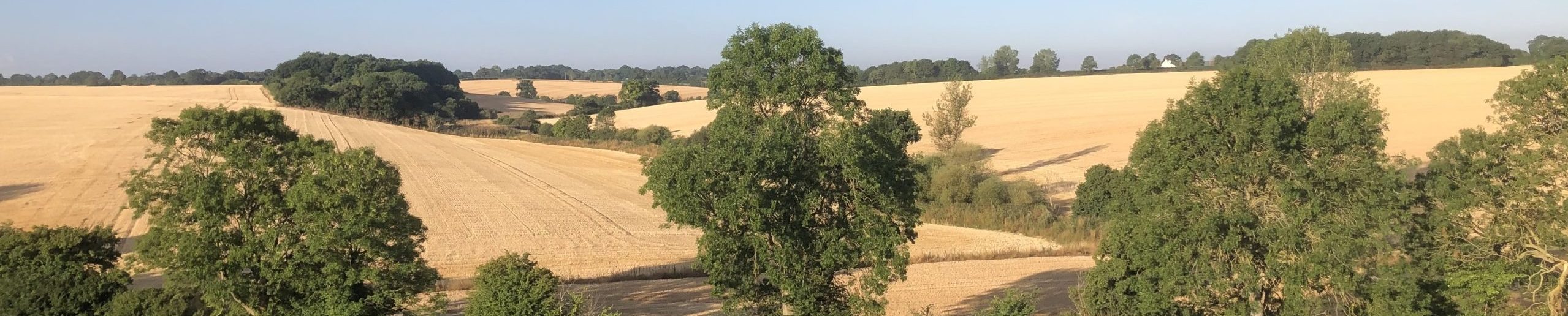
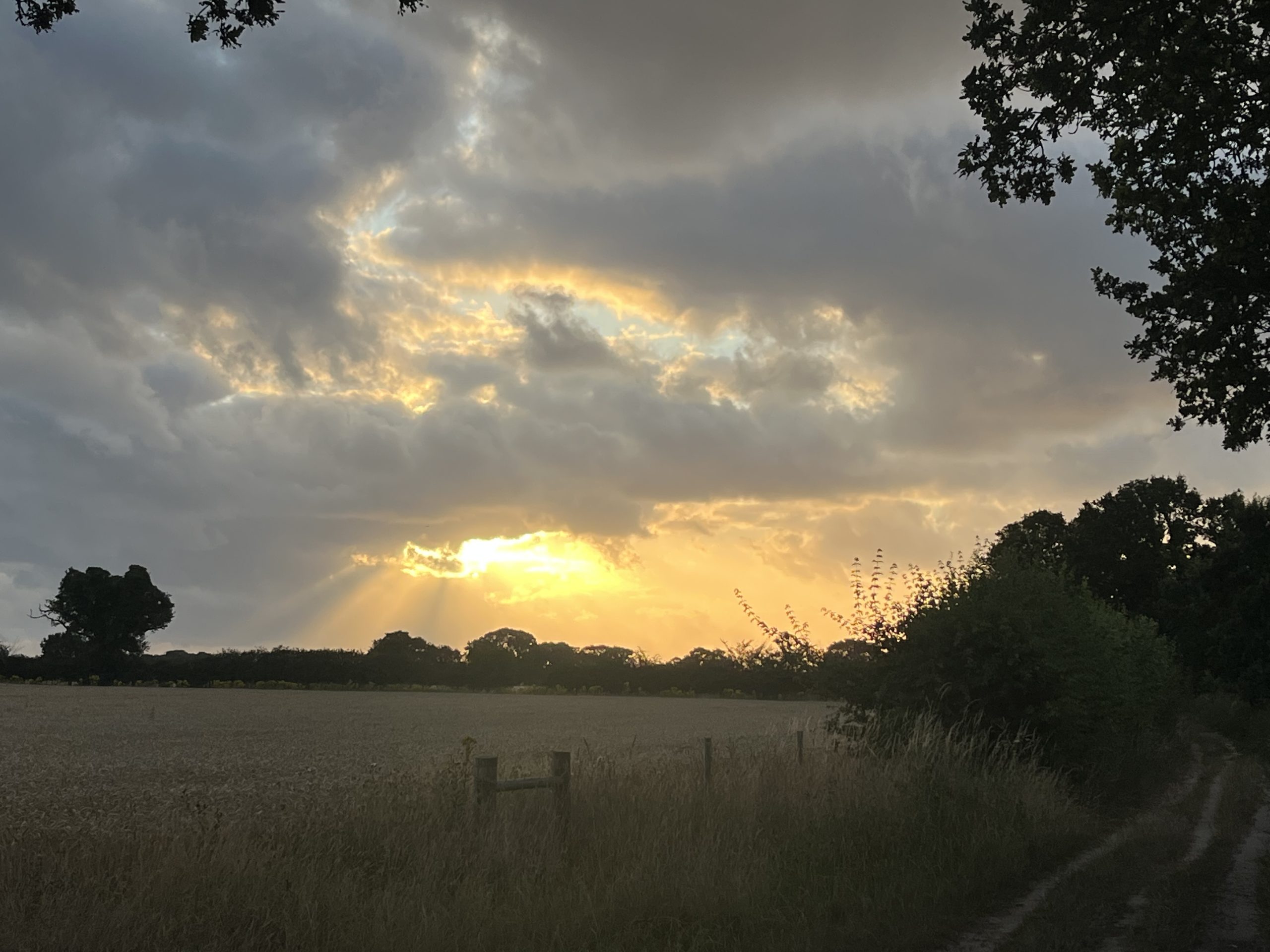
You might be forgiven for thinking that this photo portended the possibility of a brief shower at the very least. But you would be wrong. Wrong, wrong, wrong. Not a drop. Wave of heat has succeeded wave of heat. A friend in Dublin writes to me of a “lovely” summer’s morning at 15°. I laugh. “Add on another 20 degrees for Suffolk!” I tell him.
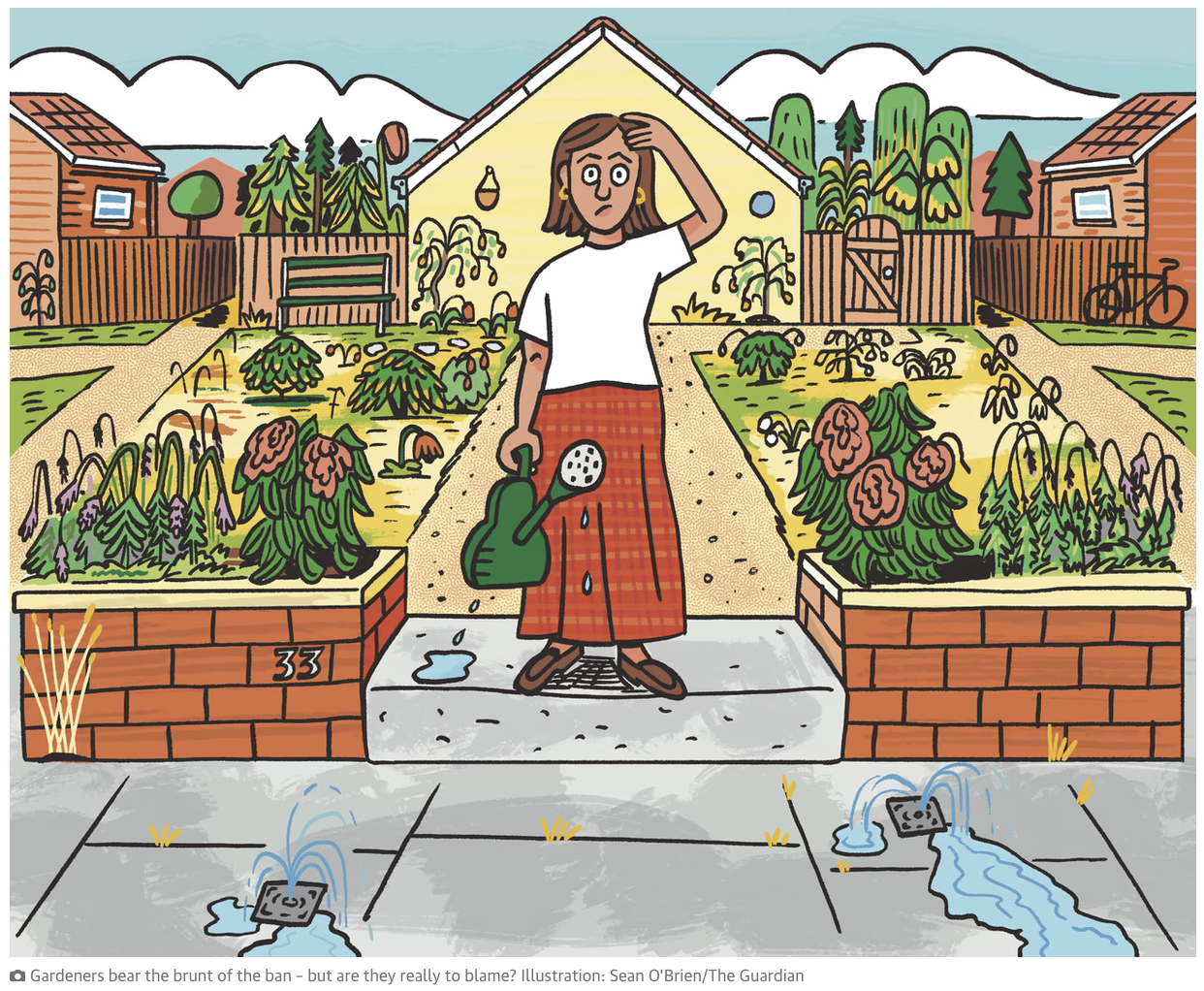
Most of England and Wales is in the same predicament, but here in East Anglia we are acknowledged to be in the driest part of the country. Drought has been declared, and with it a hosepipe ban. Social media is alive with cries of “Why should we not use our hoses when there are so many leaks?” I rather think the anwer to that is contained within the question, but I can understand the grumbling. A leak outside a local Tesco’s could not be repaired (and still has not been) until scaffolding can be dismantled. Water gushes day and night…

I think I have not known such desiccation, such tinder dryness, even in that historically hot summer of ’76 when there were standpipes in the streets and we were enjoined to bath with a friend. The sere dead brown grass of my ‘lawn’ crackles under my feet. On the Common the mares, two with foals at foot, have no grass and precious little water. Each year the sun seems to burn with a more ferocious intensity, caused by the thinned ozone layer which lets more harmful ultraviolet radiation reach the Earth’s surface. This year it is more fierce, and more fearsome, than ever. Back in 1976 few of us knew what was coming, or cared. Many still appear not to.
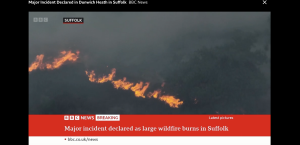

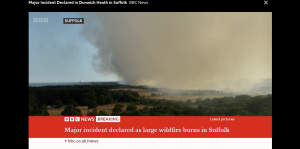
Close to home, as I write, the devastating fire on Dunwich Heath still burns. Even if it cannot be compared to the infernos we witness nightly on our televisions in France, Spain and elsewhere it demonstrates the fragility of nature in a heating planet. Nightingales, nightjars, Dartford Warblers, a myriad birds and animals inhabited the now charred landscape, where at this time the open heathland would be a vivid royal purple with heather. My lifetime will not see it restored.
It’s a sombre way to begin this month’s chronicle. Here’s a lighter note, though one which still rouses householders in this part of the county to righteous indignation. I reported last month that our rural backwater seemed to have escaped the chaos of changed refuse and recycling collections. Ha! No sooner had the blog been published when the bin rounds were reorganised. New crews were unfamiliar with our lanes – apparently – and for some weeks uncollected bins decorated our gateways. Occasionally what we used to call a ‘dustcart’ would appear on the wrong day, but it was hit and miss. The worst was what they call ‘food waste’. I don’t have food waste as any vegetable matter is composted for my garden, and anyway I was taught not to waste food. But I thought I should oblige, bagged some chicken and lamb bones, and put out the caddy. And there it remained through the torrid heat of July with the sun beating down upon it. I dared to open the lid at one point, and just before the smell hit me, saw the decomposed biodegradable bag sitting in a pool of stinking deliquescing matter.
I am pleased to report the caddy was collected – eventually. But not before the local news had featured the fiasco of THE BINS.
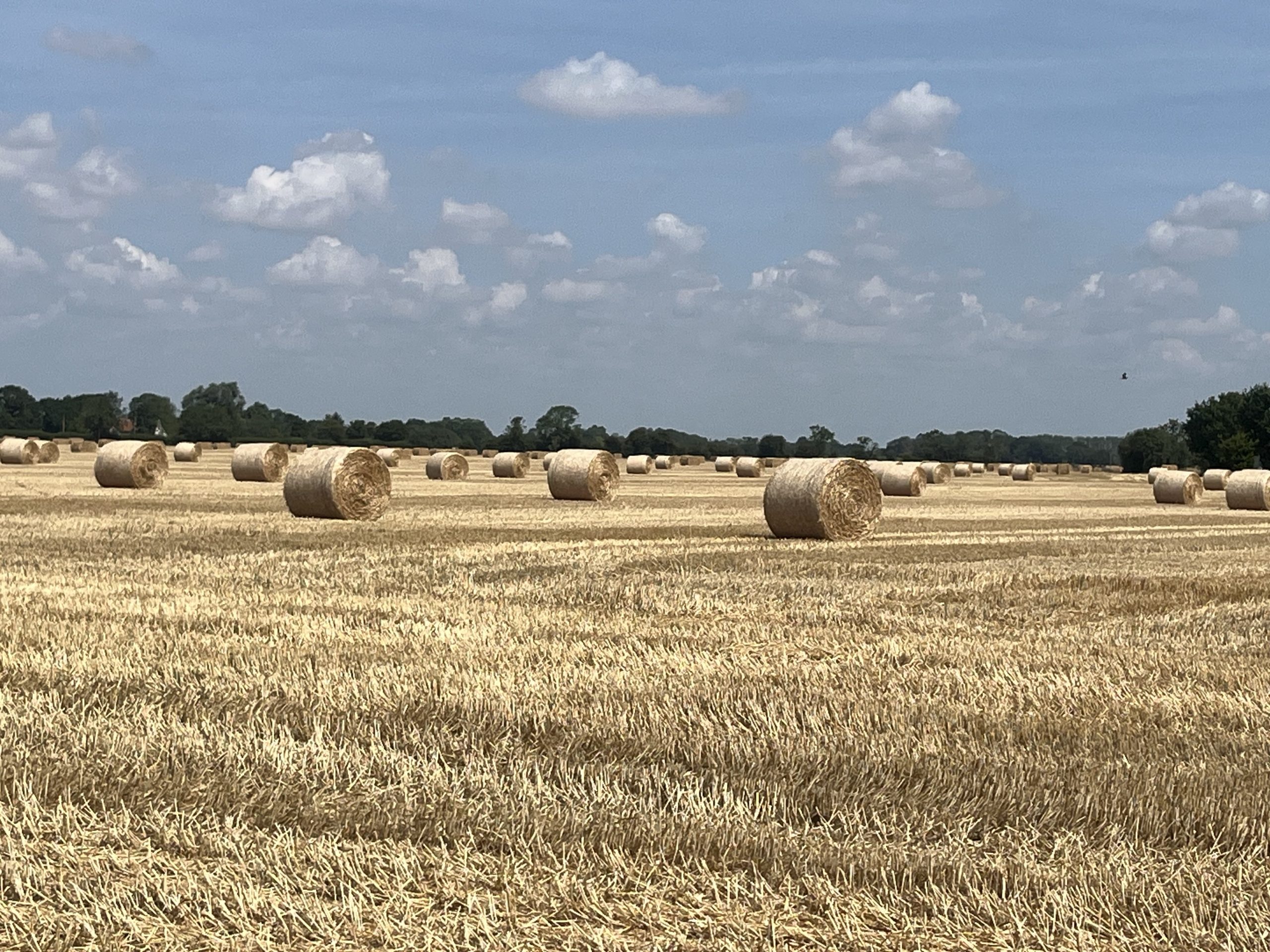
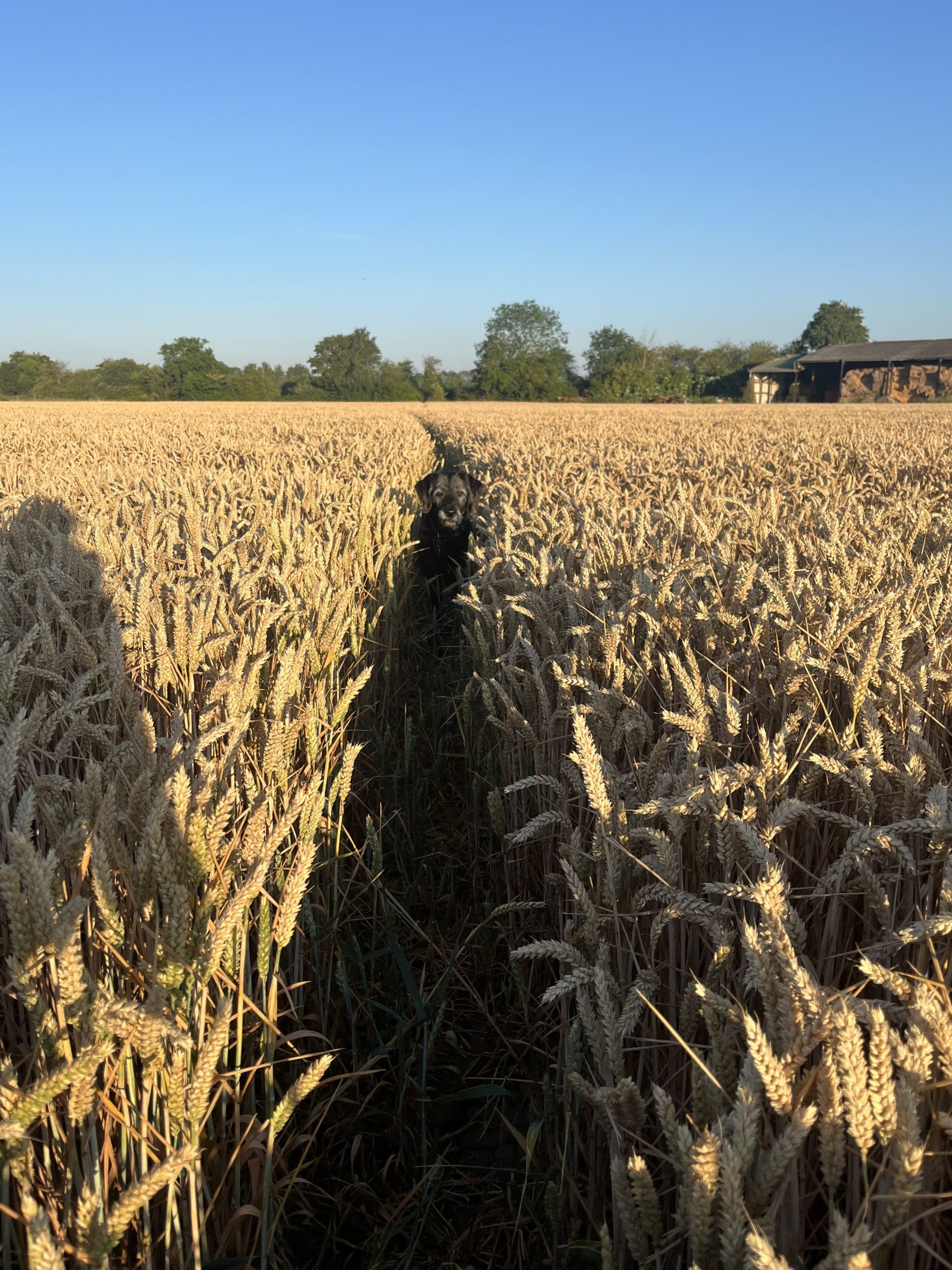
Another effect of this long, arid and blistering summer is an early harvest. Usually the race is on to cut crops and get them in before rain comes, with combines roaring across the countryside late into the night, and grain wagons rattling and bumping at speed up the lane. As I lie in bed I know whether the trailer is empty or full by the bang and clatter as it hits a slight dip in the road. But this year…why the hurry? A friend provides the answer: “The habit is ingrained.”
Click to see the combine devour our field
Driving down a narrow lane which is the old Roman road I stopped when a shimmer of blue caught my eye. Borage! which locally is pronounced ‘burridge’. Its seeds are pressed for oil, the richest natural plant source of GLA, used in dietary supplements, cosmetics, and pharmaceuticals, and it acts as a deep-rooting break crop that leaves a friable seedbed and helps suppress weeds like blackgrass before winter wheat is drilled. Bees love it. It rippled like water in the breeze, a small lake of blue among a golden landscape.
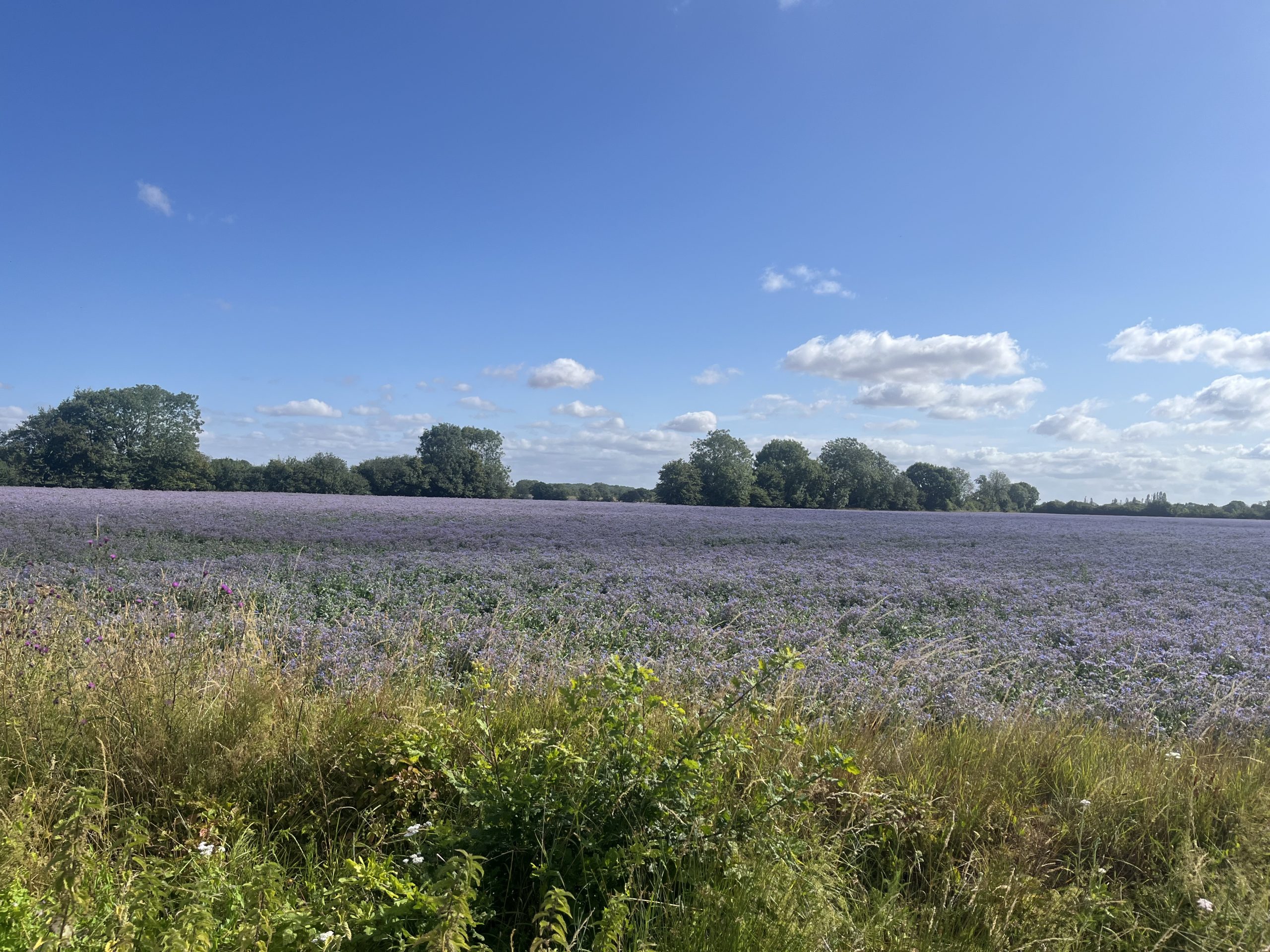
And so I look out over the stubble field once again, bleached by the sun, and white under the full moon and the summer stars, with Arcturus blazing high in the western sky. The mornings are heaven – cool, misty, golden when the dog and I go out at 5.30am, but by the time we are walking back we feel the heat of the day bear down on our backs. High summer melts into a dusty late summer. The stressed trees begin to shed their leaves. The birds fall silent. Some fields have already been broken up by the cultivator (no plough could get into the concrete earth), and autumn does not seem so far away, and then the cycle will begin once more.
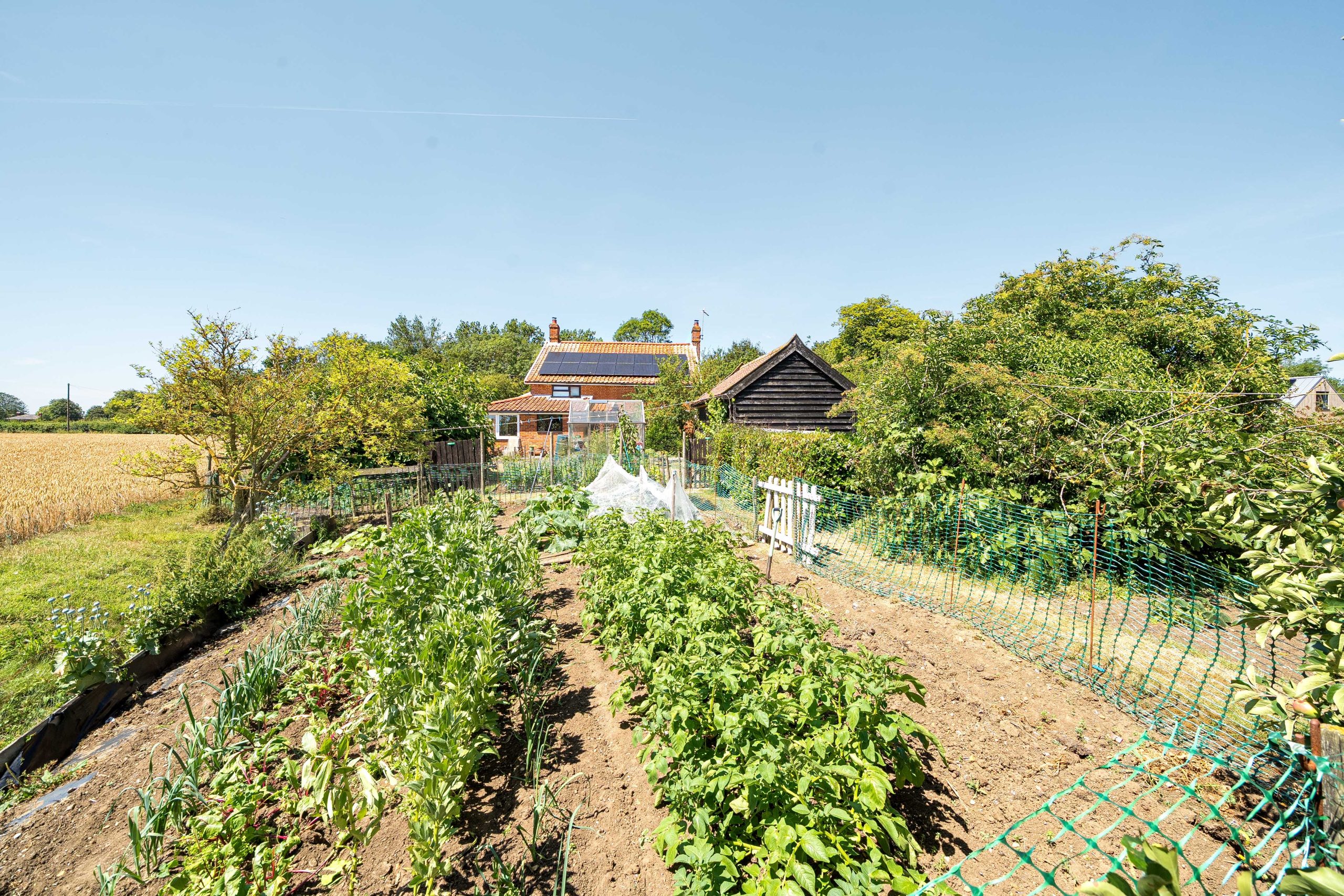
My own crops have suffered from heat and lack of water: main crop potatoes are skin set and have been dug early; the leeks for the winter thin and wispy. But such is the lot of the gardener. This photo was taken early in the month, but four weeks on it is a waste land, a parched desert.
Good things happen. Early in the month one half of the family came to visit, having gathered in Cambridge for the graduation of the older granddaughter, after four years gone in a flash of time. As a child at primary school she declared her intention of going to Cambridge and getting a first. Job done. I feel pride, though I had no hand in the achievement. After too short, but sweet, a time they were back to Northern Ireland, leaving boxes of cooking utensils here to be stored for her future use.

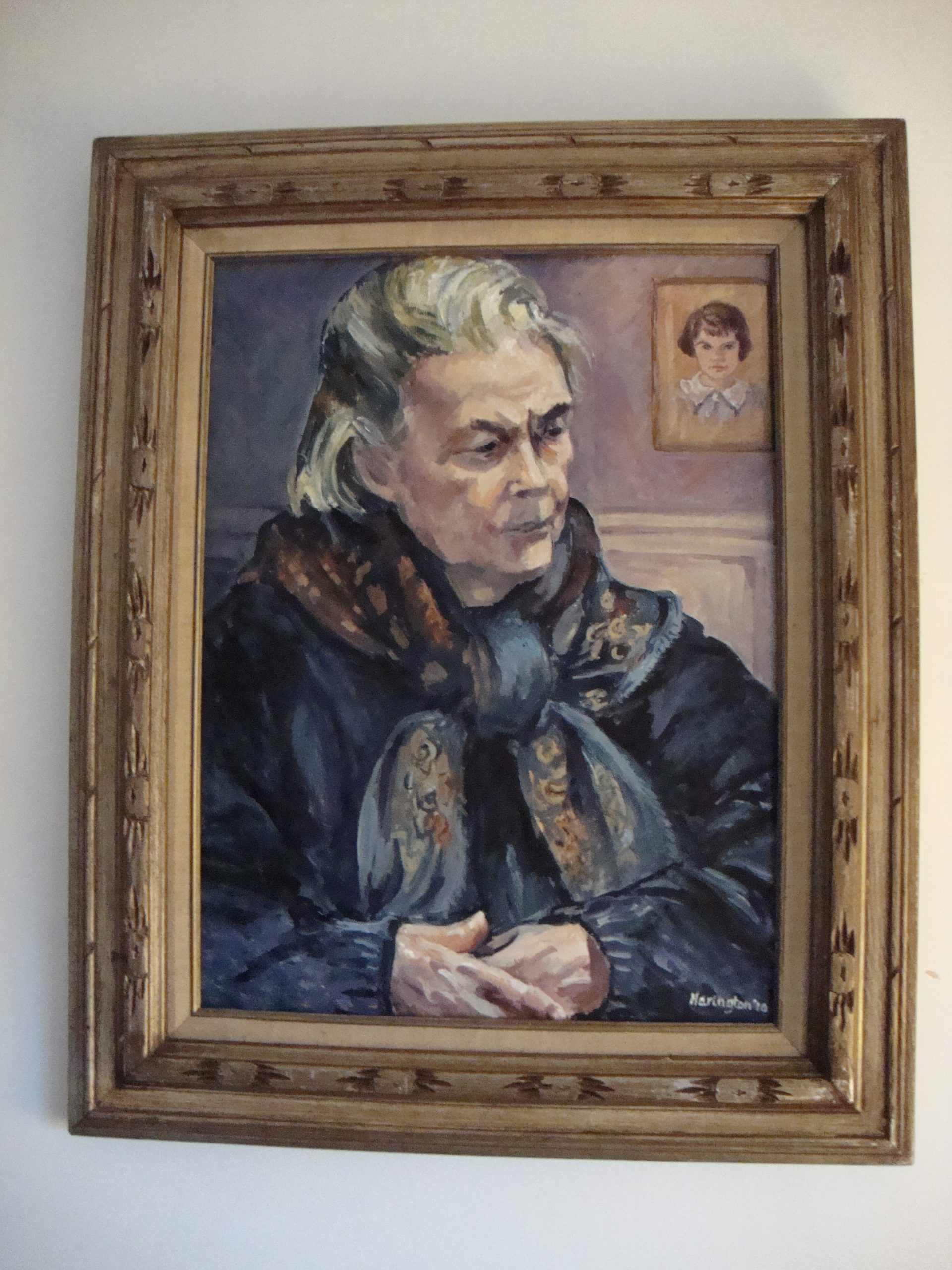
Another funeral this month. This time the subject was 99. Some 16 years ago she commissioned me to paint her portrait. I was gratified it was displayed at the church.
What else? Very little… life continues: the garden, the house, friends, the dog, walking, painting, pétanque, and enough work to keep the wolf from the door and supplement the meagre pension.
But oh yes! It’s not every day that an independent investigator upholds a complaint against an institution which has both caused and dismissed an individual’s pain, and recommends a formal reprimand, requiring apologies in person from those concerned. It’s a sad reflection that this should cause surprise. That meeting has not yet happened but the recommendation has been accepted, so watch this space!
21 September 2026: On rereading the review report, I have corrected the paragraph above. The review upheld my complaint, recommended a formal reprimand, and recommended apologies in person, and the Diocese accepted those recommendations; that account stands. But the words “victimisation” and “misogyny” were mine, not the reviewer’s. What the review found about gender was that my “personal feelings may have been overlooked partly because of gender,” that the earlier report “reads like a report written by a man, for a man, and for delivery to a male audience,” and that “greater attention should be given to how female parishioners are supported and protected.” The reviewer also recommended that, “where appropriate, the Diocese consider involving a woman in the preparation of similar reports in the future.” Those findings and that recommendation were about how my complaint was handled; the review made no finding of misogyny about the priest I complained of. I should not have presented my own words as the reviewer’s, and I withdraw them as a description of her findings. It remains my own view that my complaint was handled in a way it would not have been had I been a man; the reviewer’s words are set out above, and readers may judge for themselves. I also referred to two individuals by their offices, which could have led to their identification, and I have removed those references. I apologise for both errors.