April 2021

There are two or three commonly-known but often misused quotations about April. Eliot’s ‘The Waste Land’  probably comes top –

April is the cruellest month, breeding

Lilacs out of the dead land, mixing

Memory and desire, stirring

Dull roots with spring rain.

The next, Browning’s “Home-Thoughts, from Abroad’:

Oh, to be in England

Now that April’s there,

And whoever wakes in England

Sees, some morning, unaware,

That the lowest boughs and the brushwood sheaf

Round the elm-tree bole are in tiny leaf,

While the chaffinch sings on the orchard bough

In England- now!

The third literary April I will come to later.

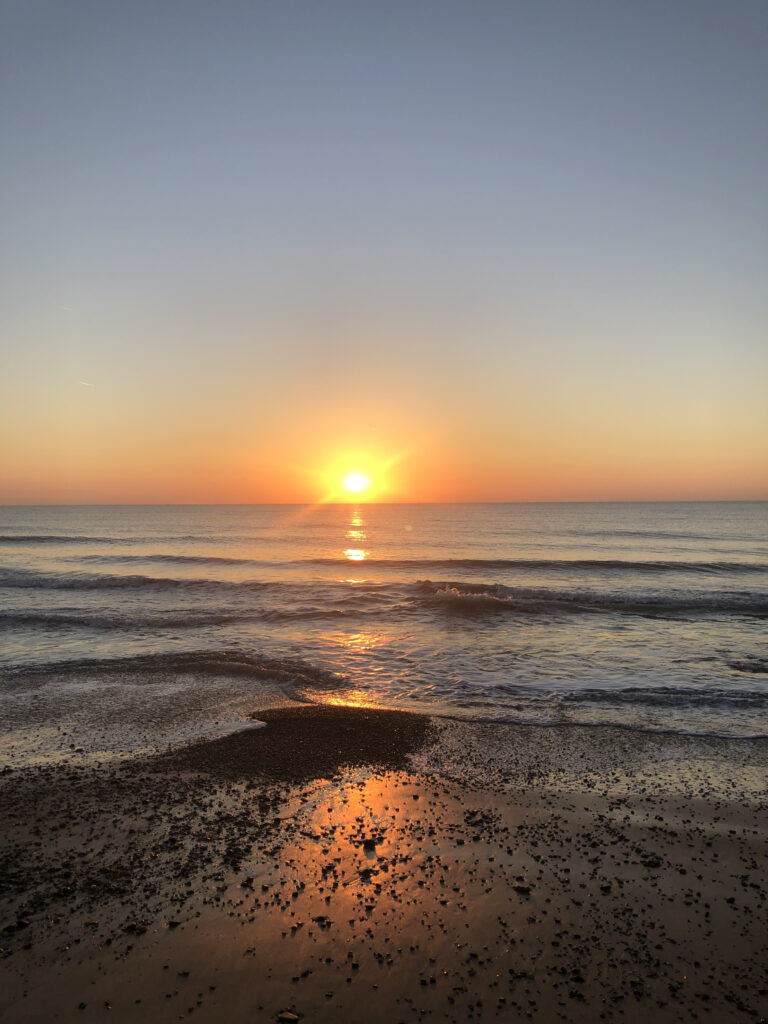
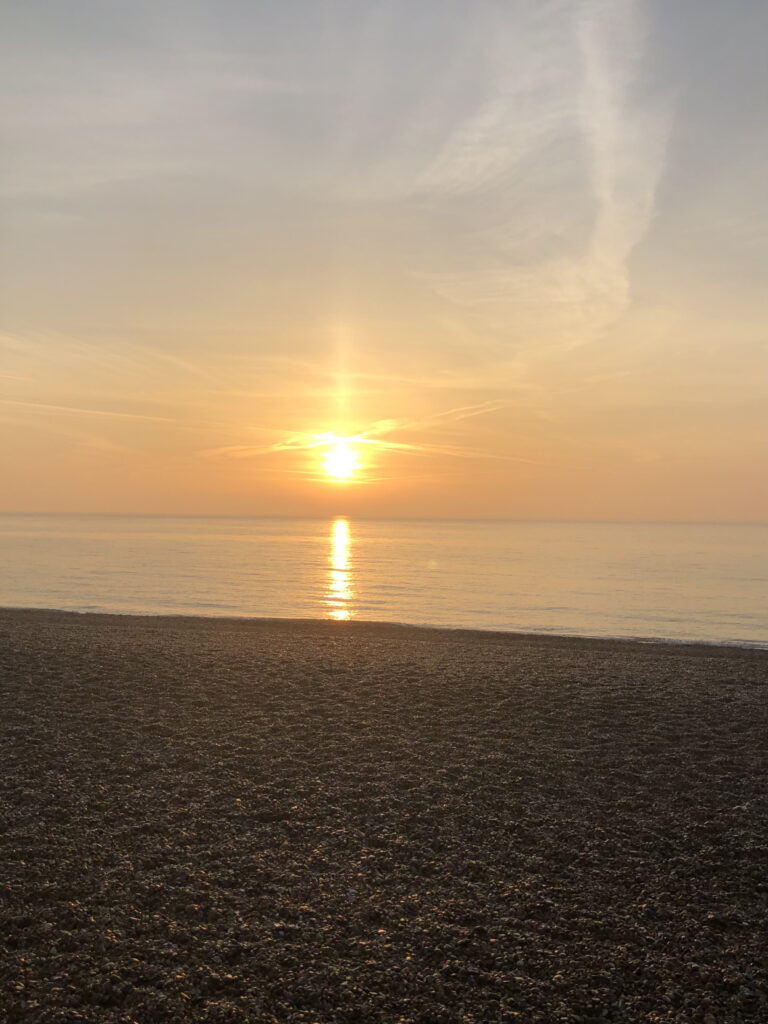
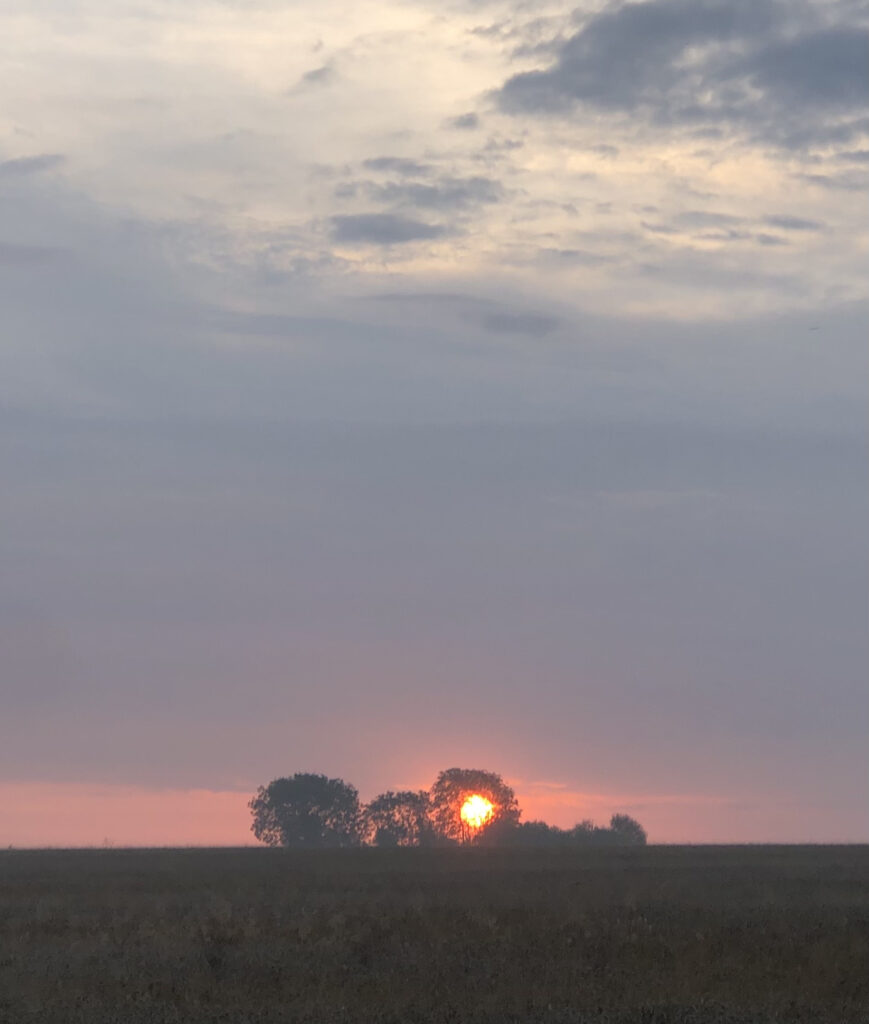
Even though here I am in England in April and in the country, these lines of Browning still wake a longing inside me: just stop, stop and hold April back a little longer, so this perfection of spring might last, so that the world stays new-born a few weeks more.

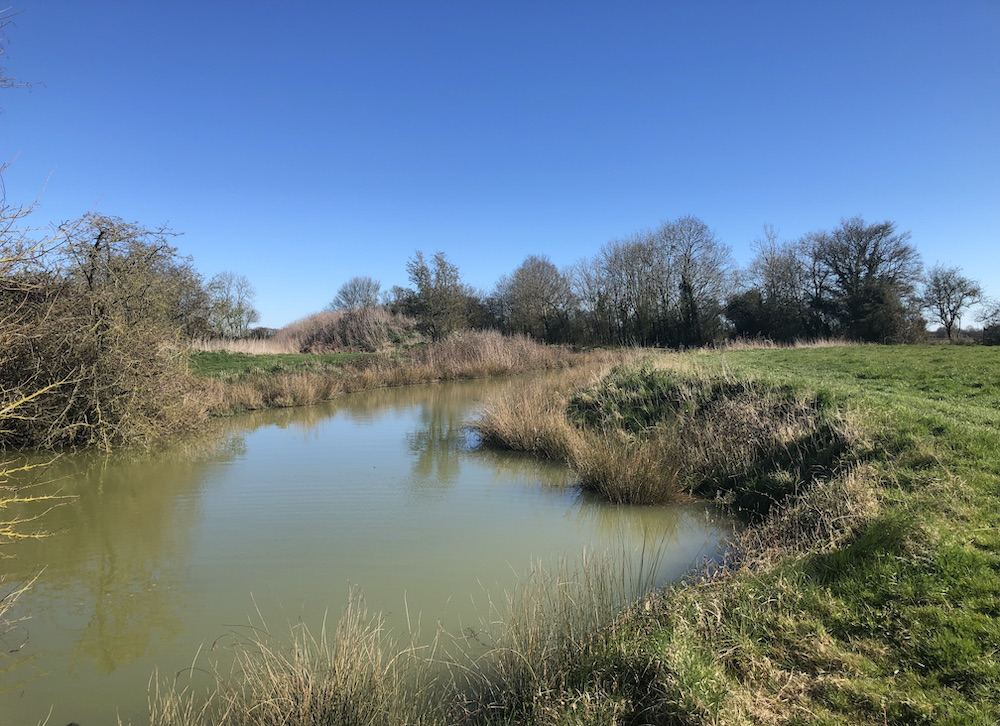
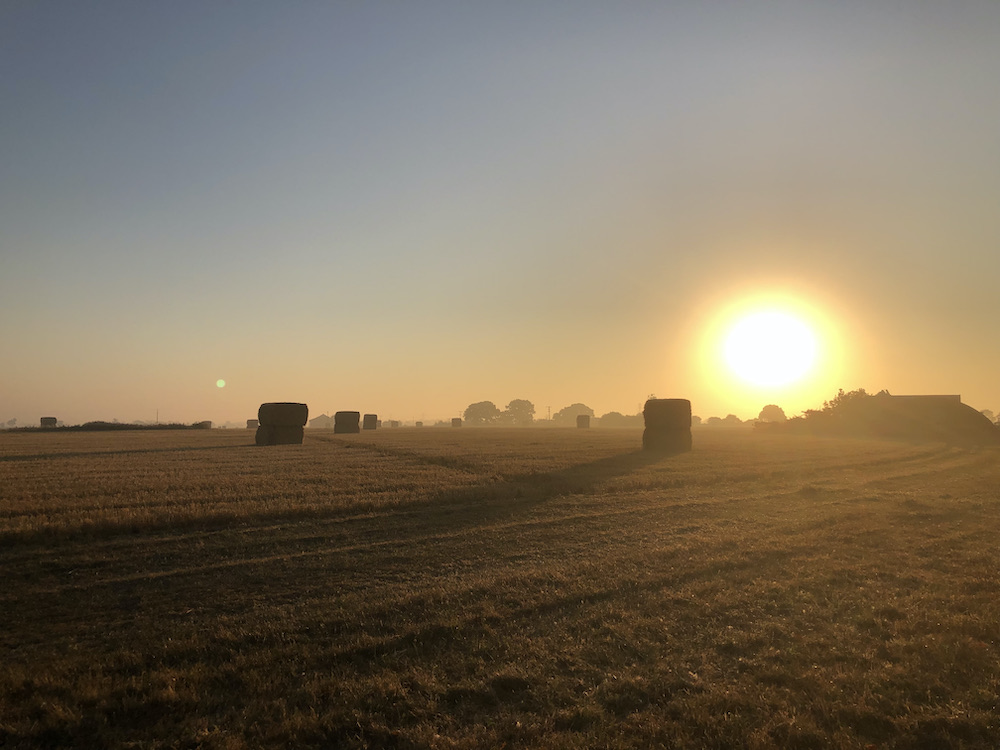
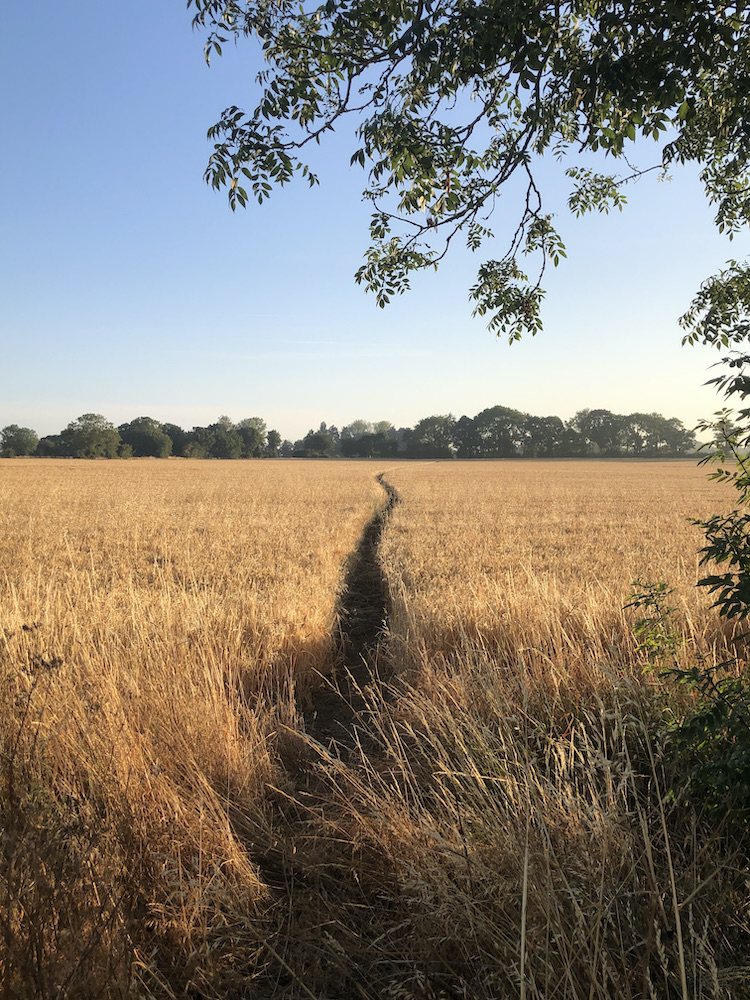
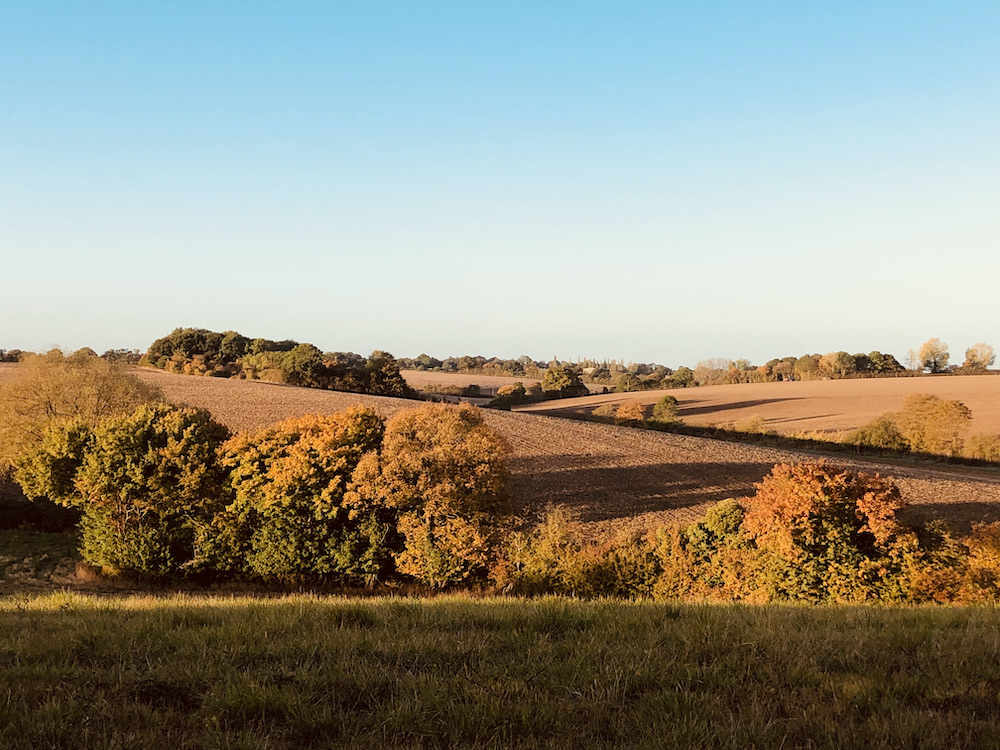
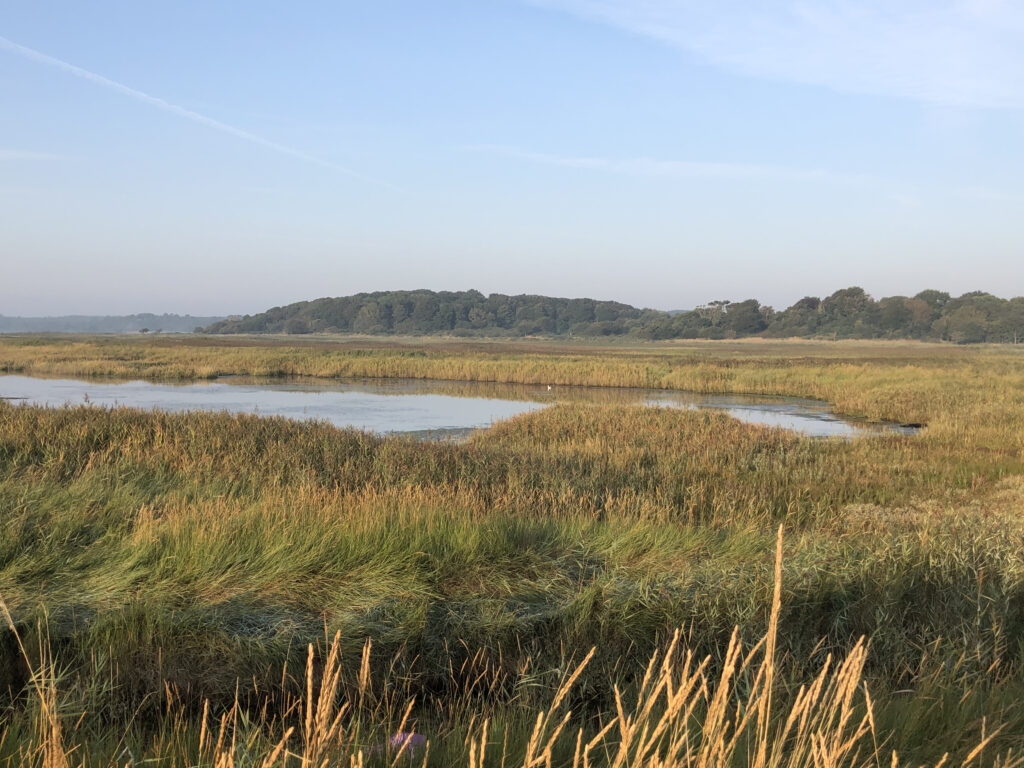
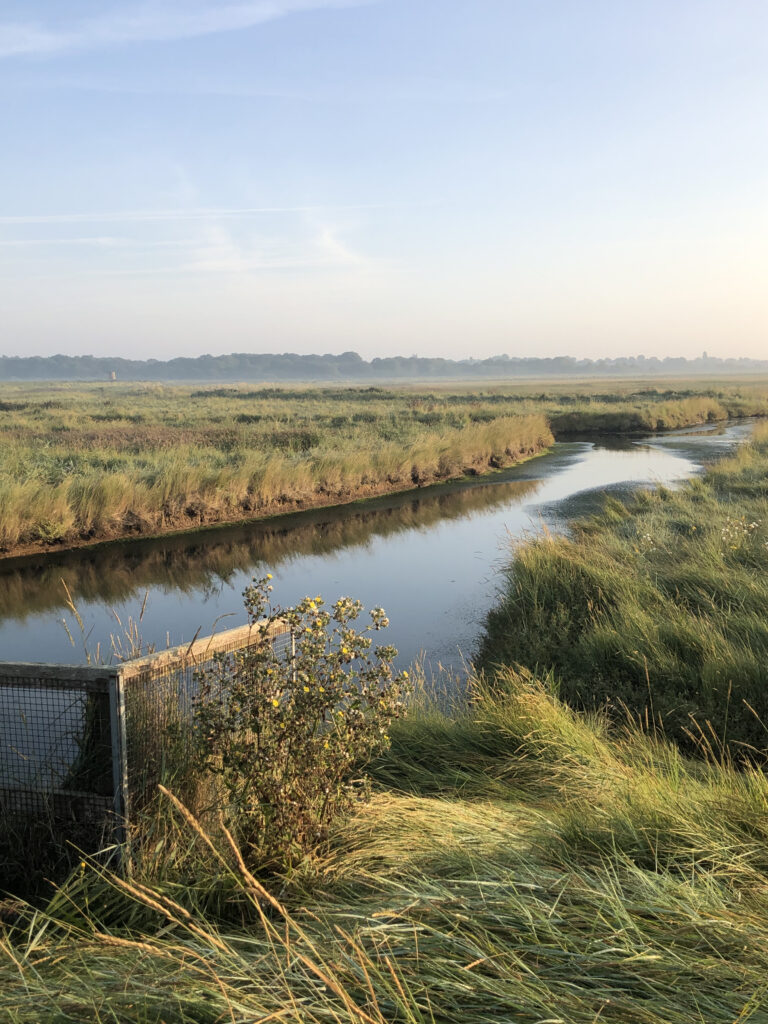
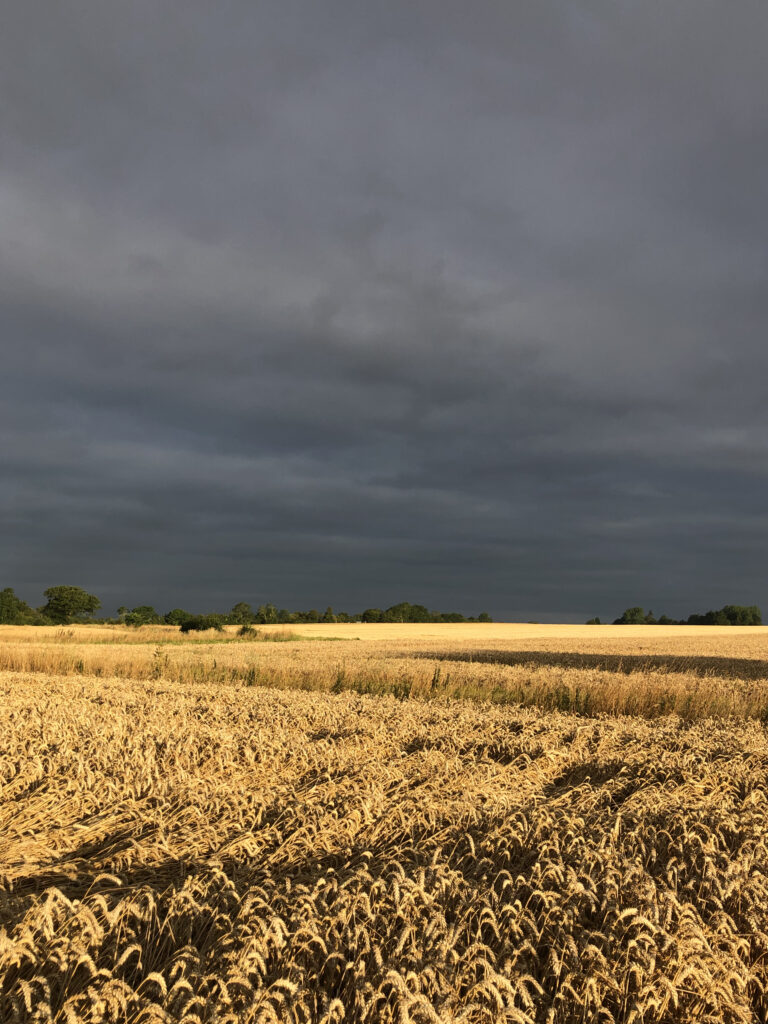
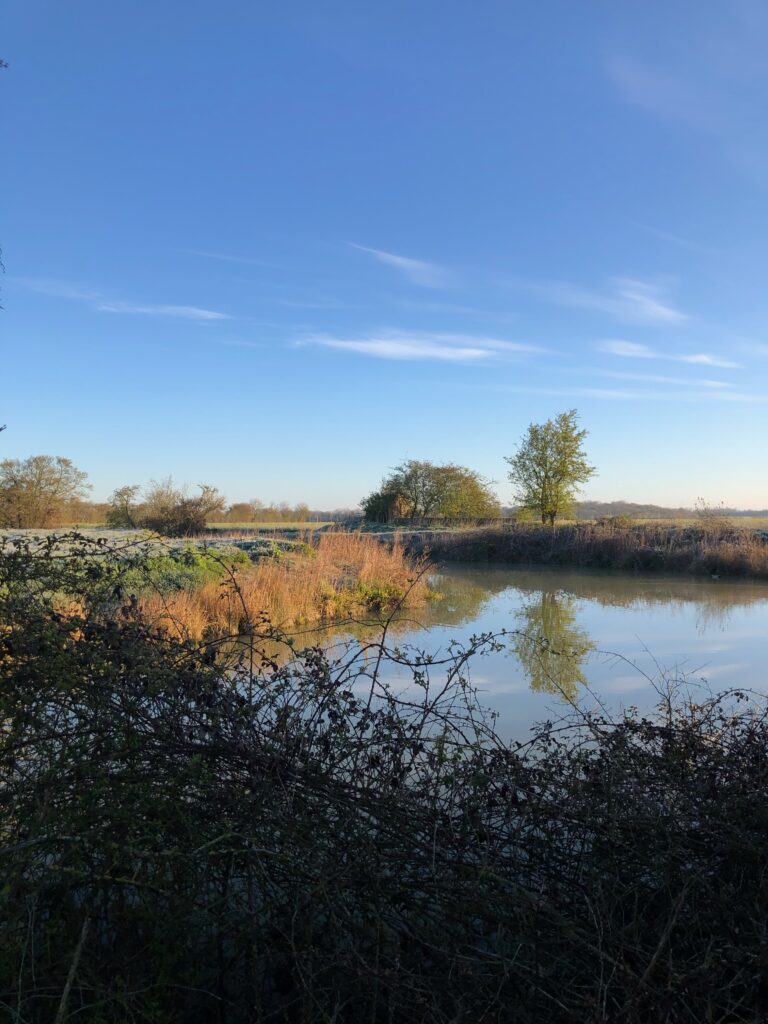
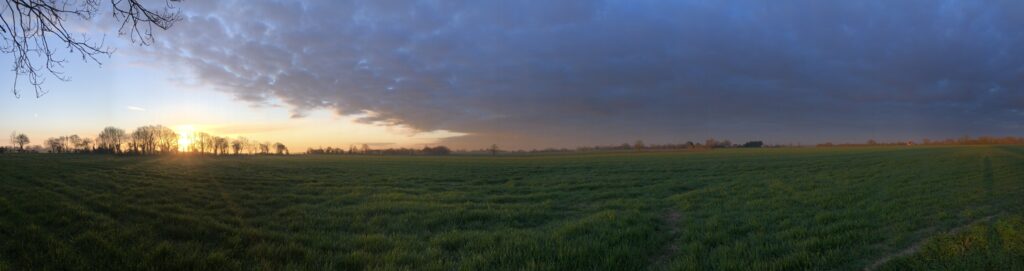
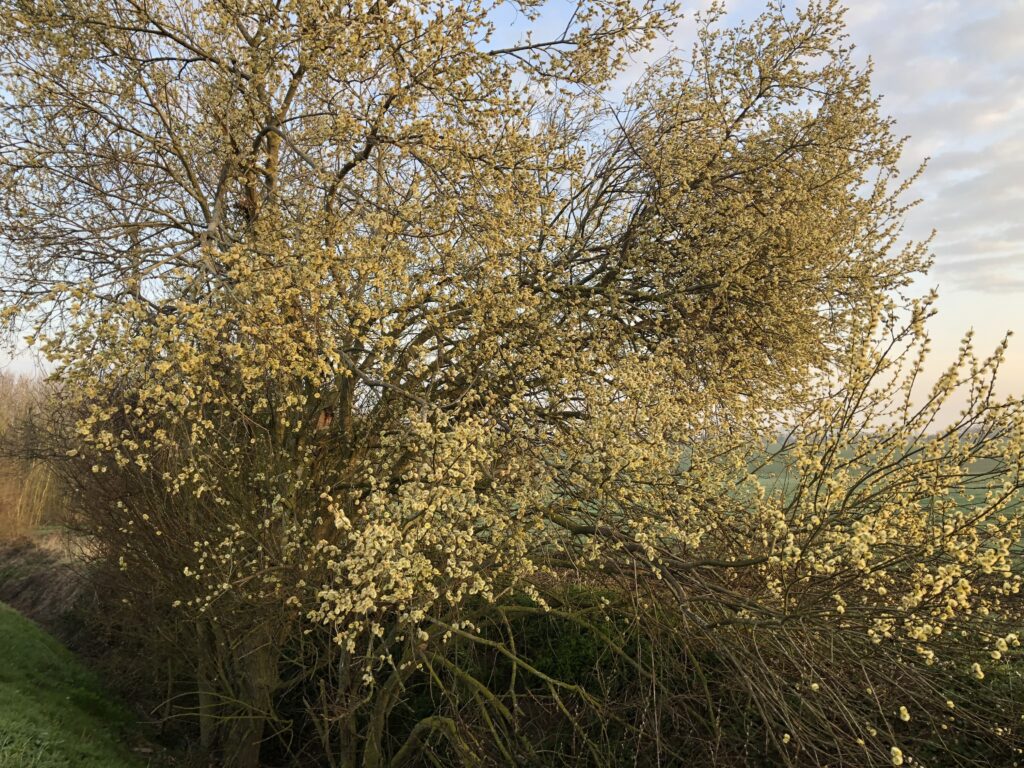
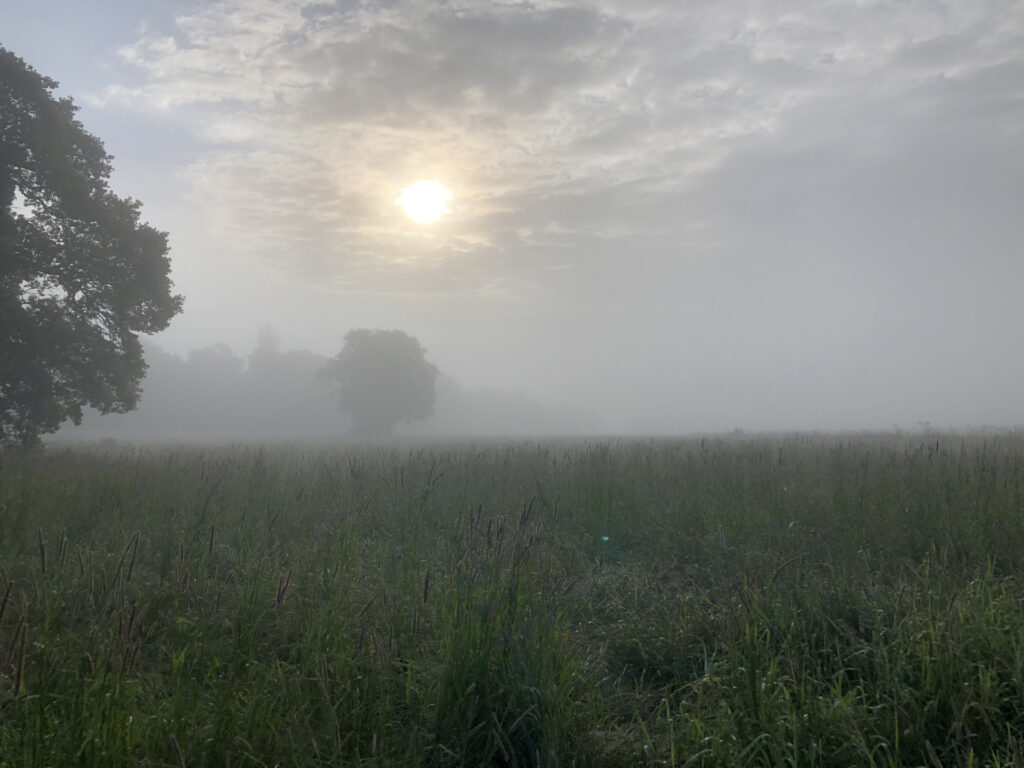
The weather seems to be going some way towards granting this wish. The month was characterised by a commentator on the BBC as “bright sunlight and brass monkeys.” The sun has shone gloriously, consistently, relentlessly from an azure sky, but the cold has been bitter, especially here in East Anglia. Each day the wind swings between north, east, north-east, north-north-east, east-north-east, always from the North Sea, and blows hard and icy across our flat fields. The strong April sun which should advance all the spring growth finds its efforts thwarted by this cruel cold.

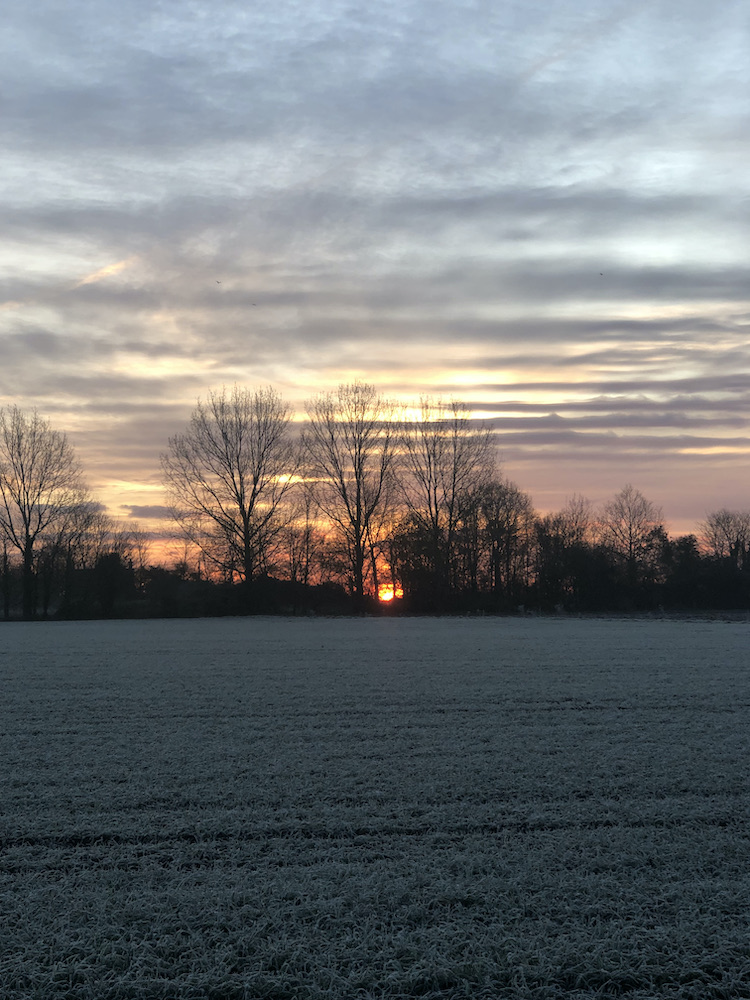
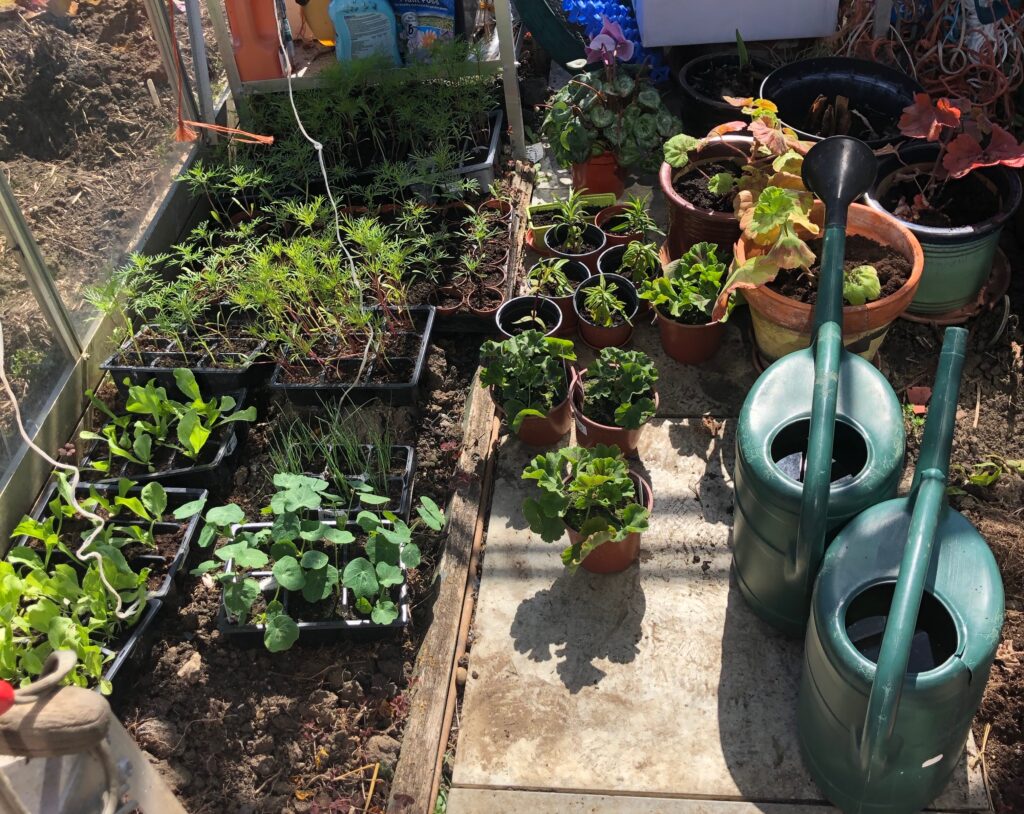
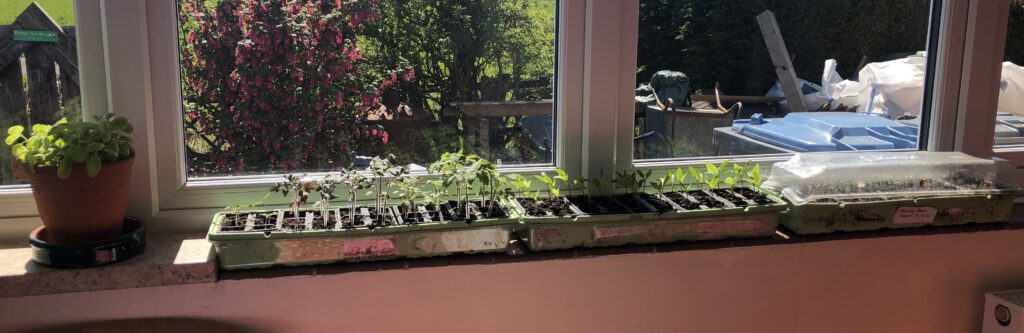
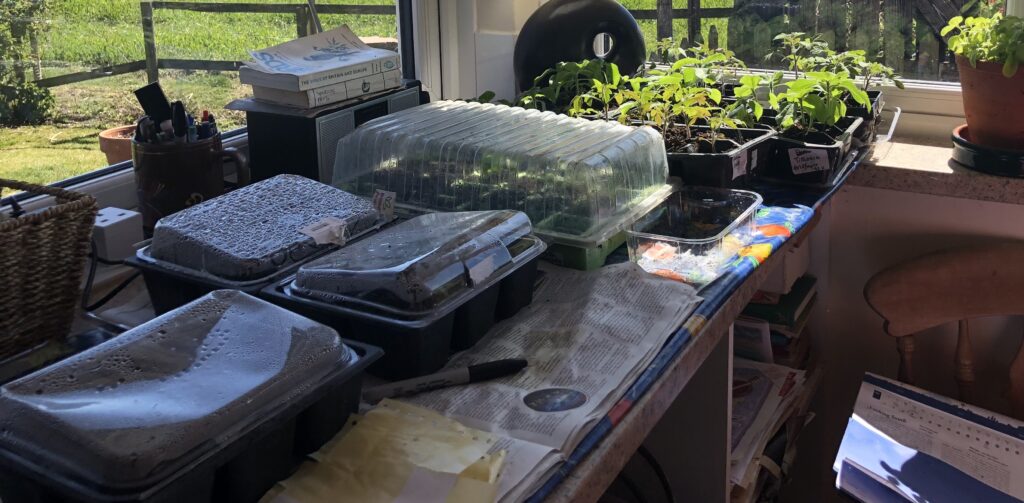
The nights have brought sharp frosts, the sort which freeze water hard and thick, and turn the ground into iron. Spring planting is on hold, for no tender plant would survive the nights, and the earth is too cold for germination. Every available space and surface indoors and in my greenhouse are given over to the requirements of the nursery.

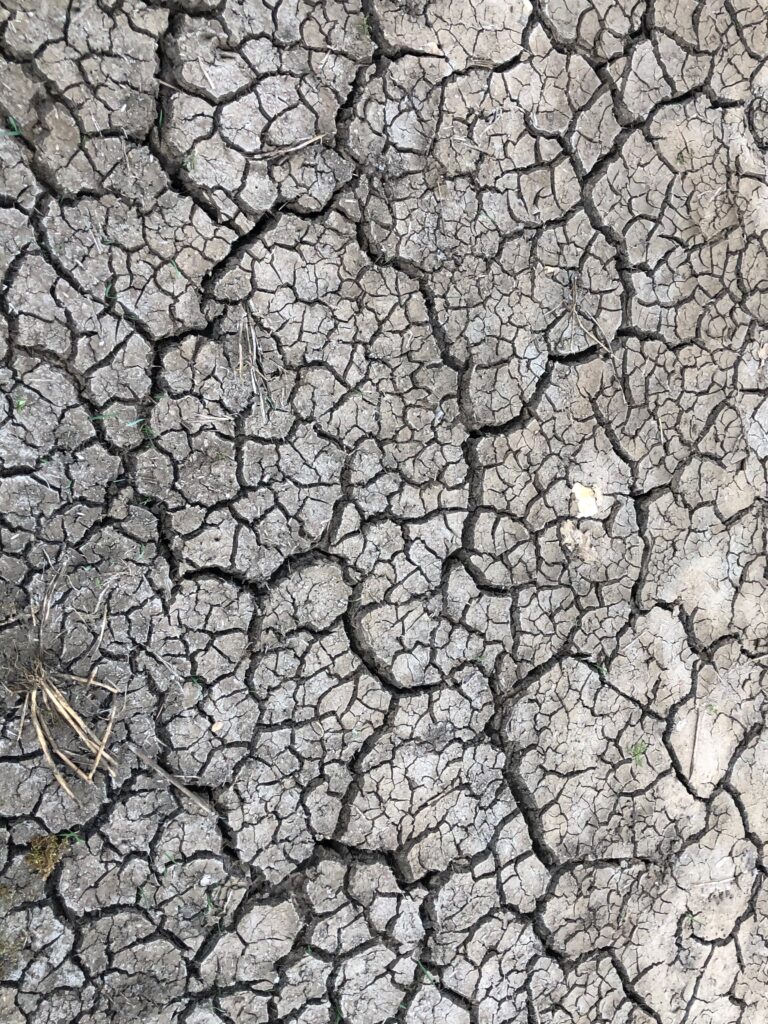
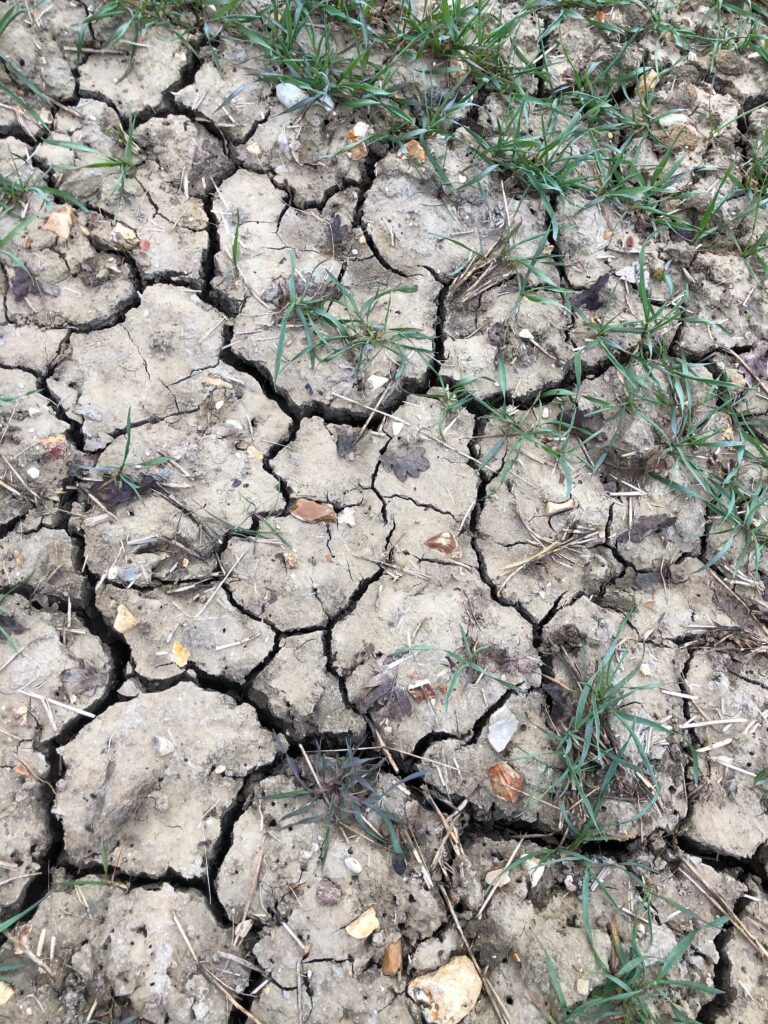
And in all this, not one drop of rain. A regular reader of these annals may be forgiven for thinking I am never satisfied. No sooner have I stopped the moaning about mud and constant wet than I start to say – in common with every gardener and grower – we need rain. We so need rain. The land dried swiftly and is now cracked, concrete hard. A spring drought is nothing new here, but this one perdures, exacerbated by the strong winds. What happened to April showers?

Whan that Aprill with his shoures soote

The droghte of March hath perced to the roote.

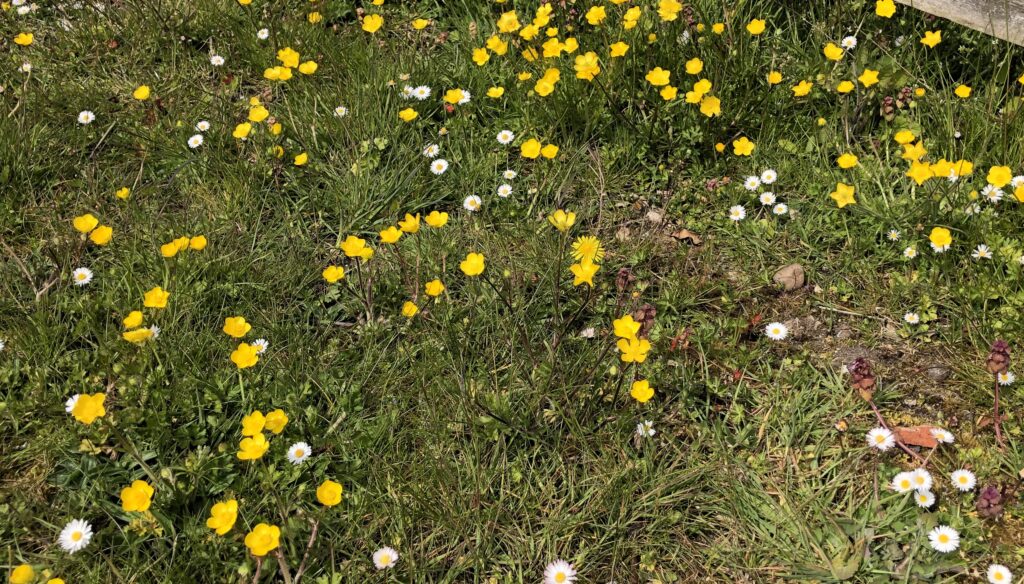
But the rains of winter have produced bright jewels.

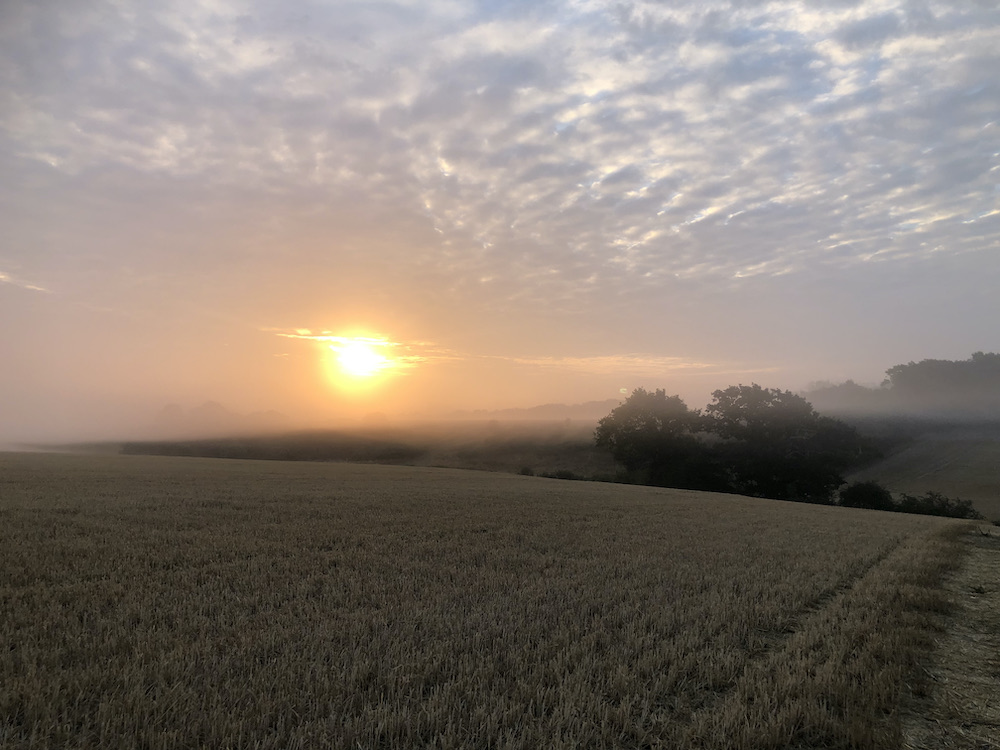
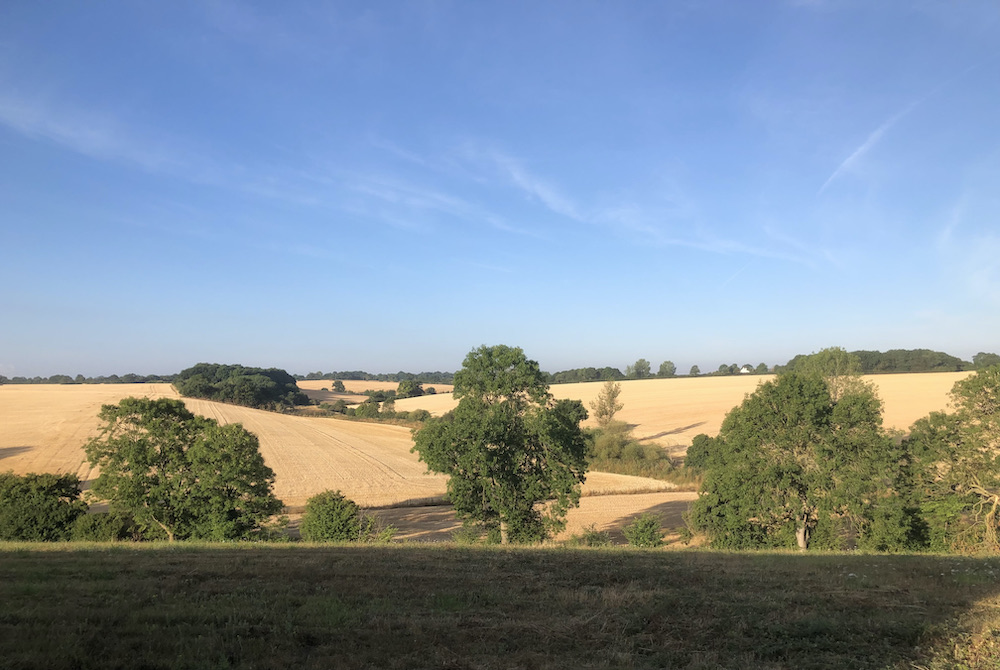
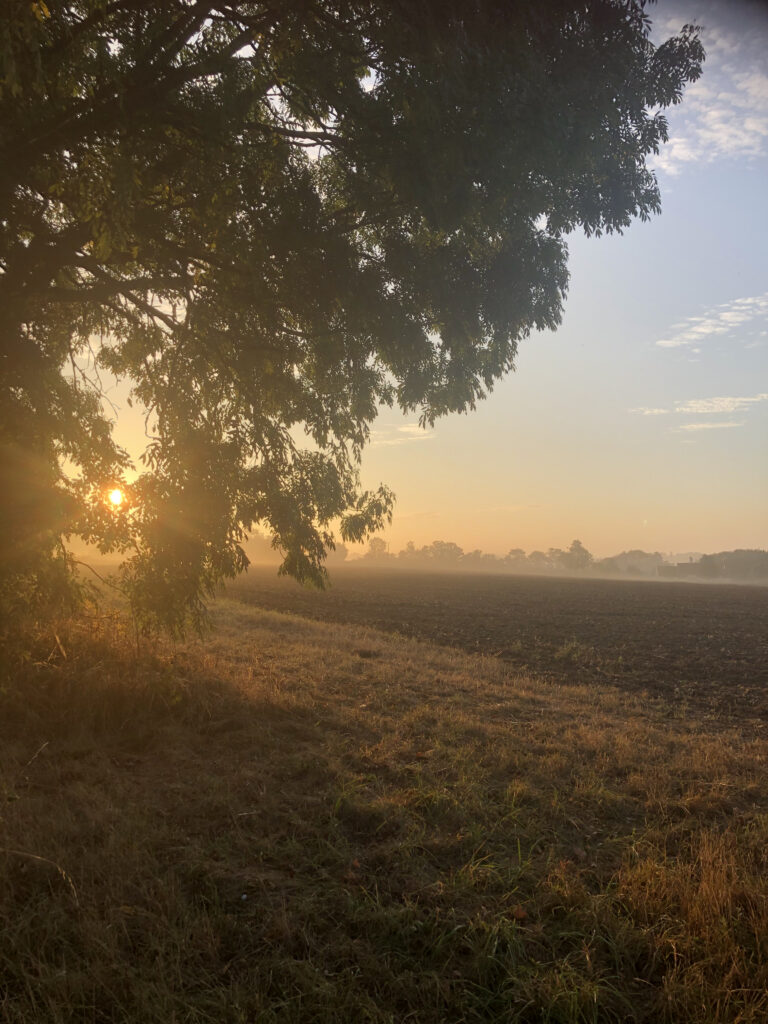
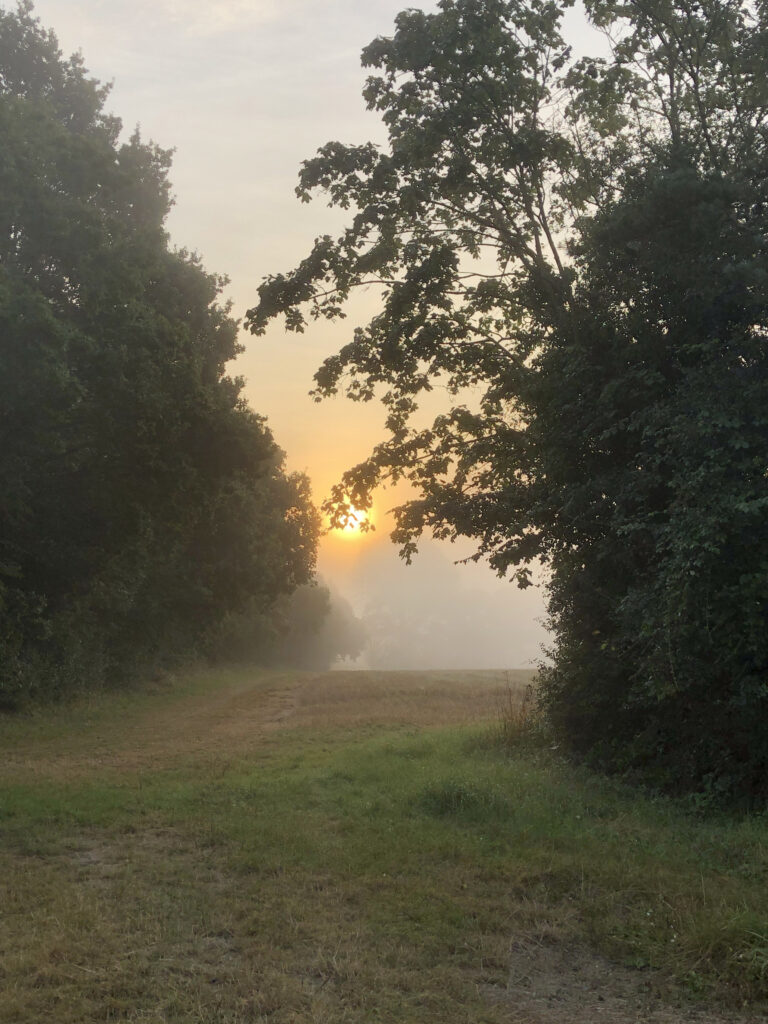
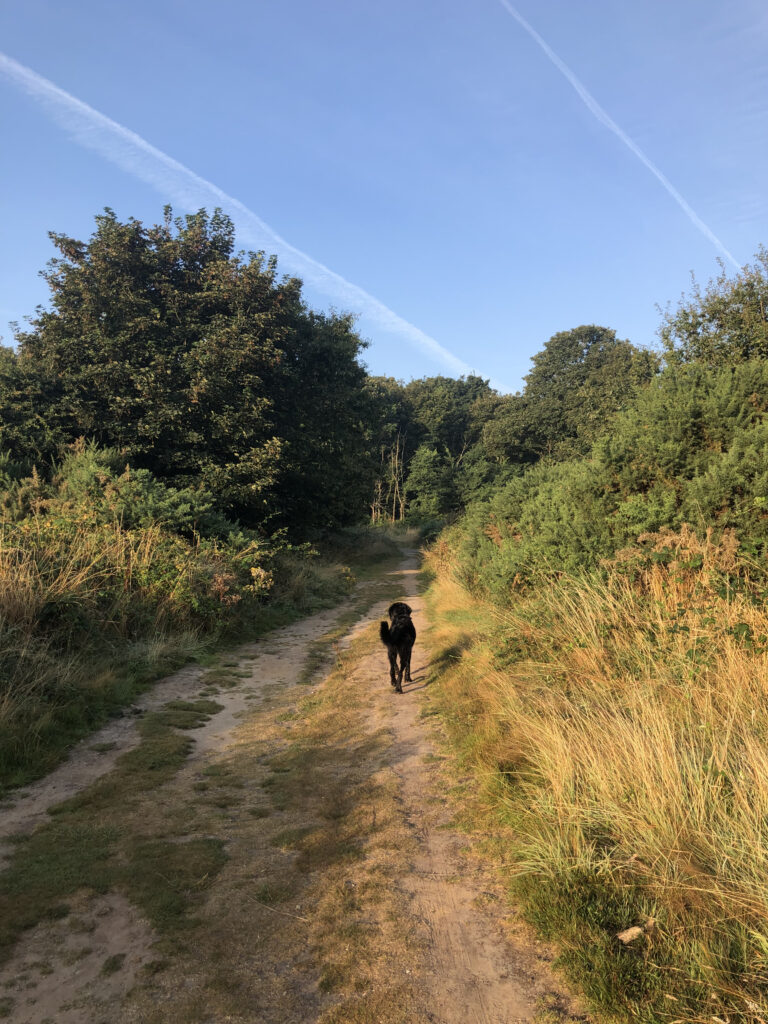
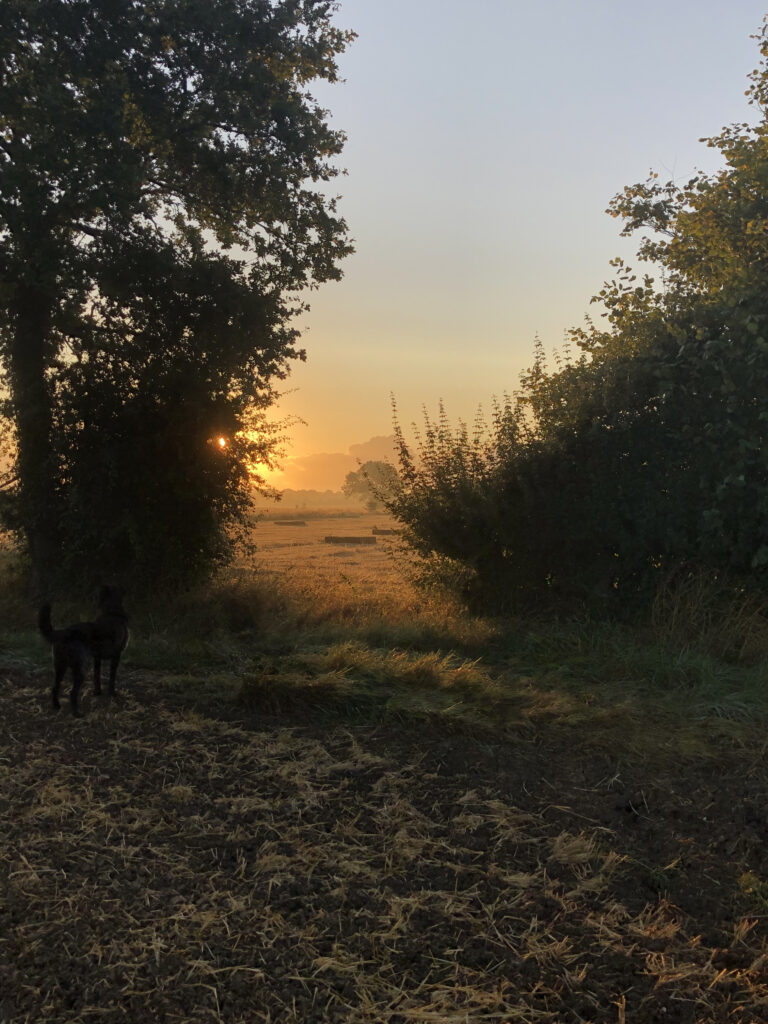
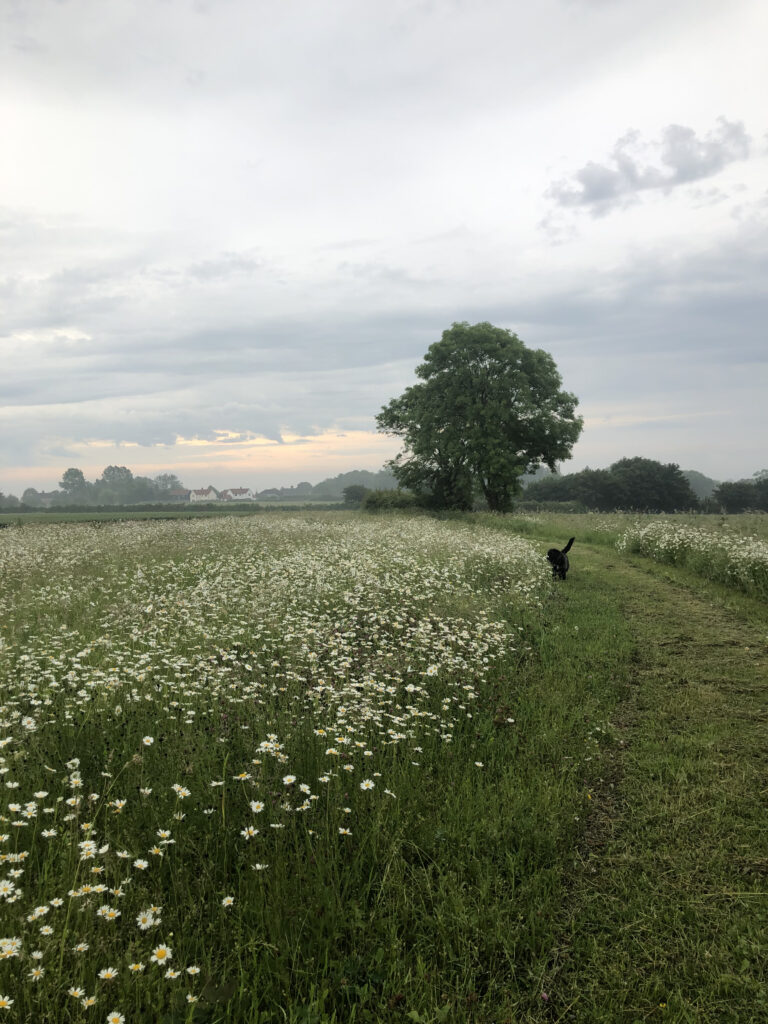
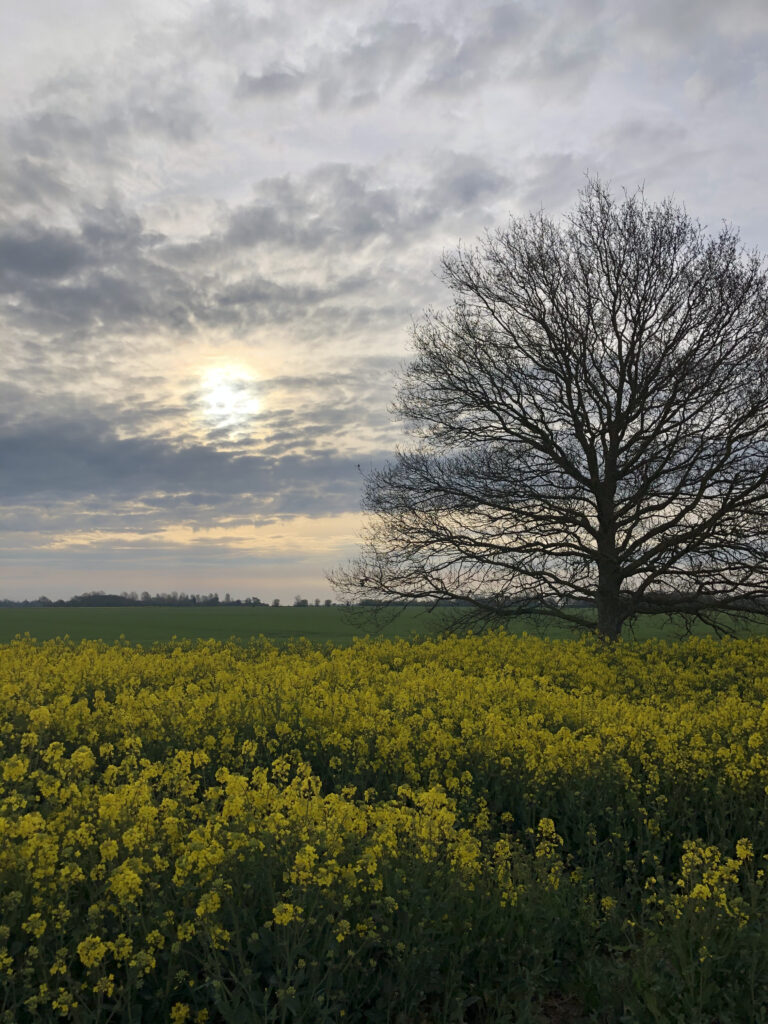
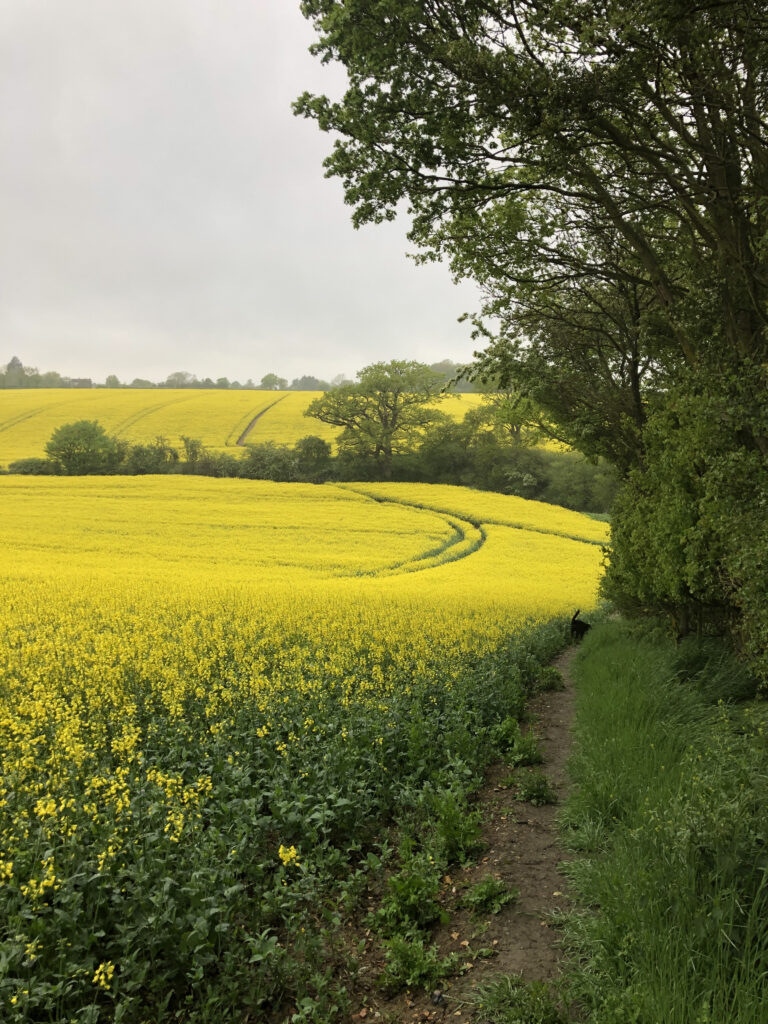
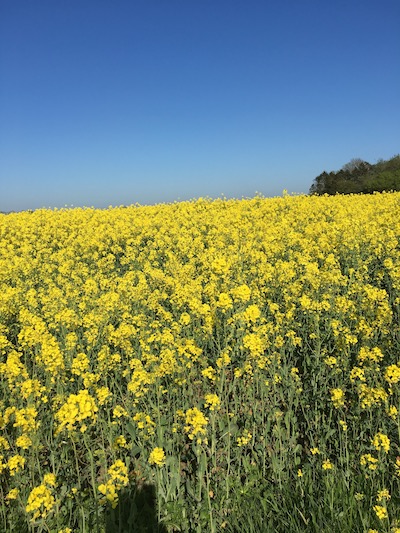
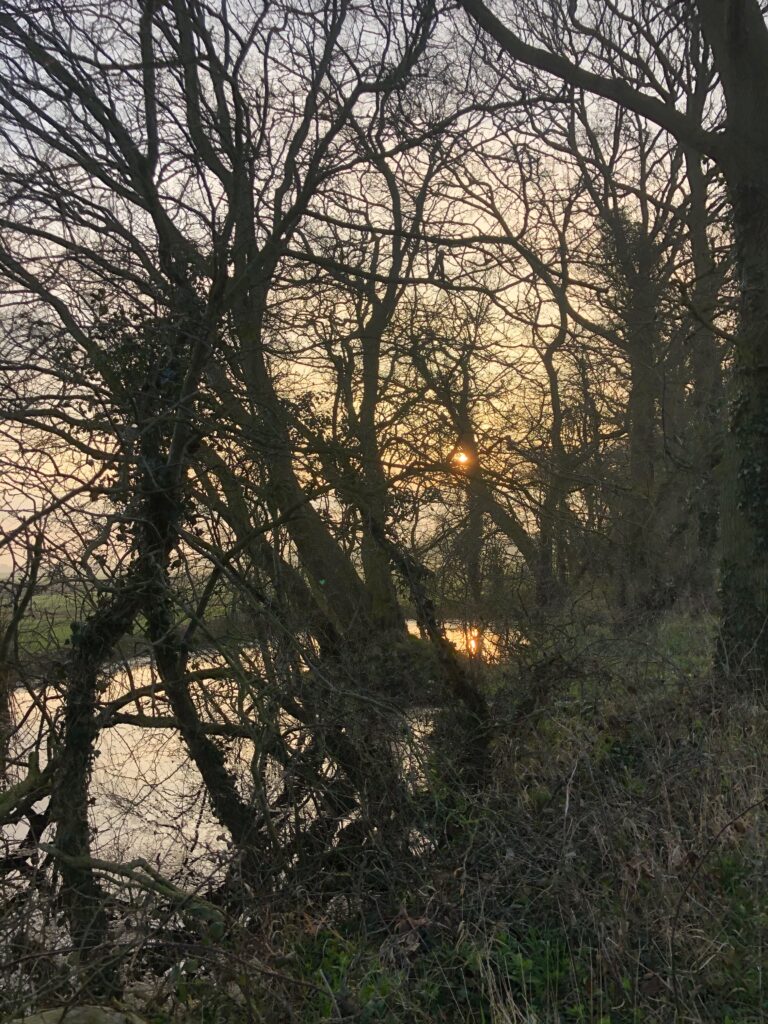
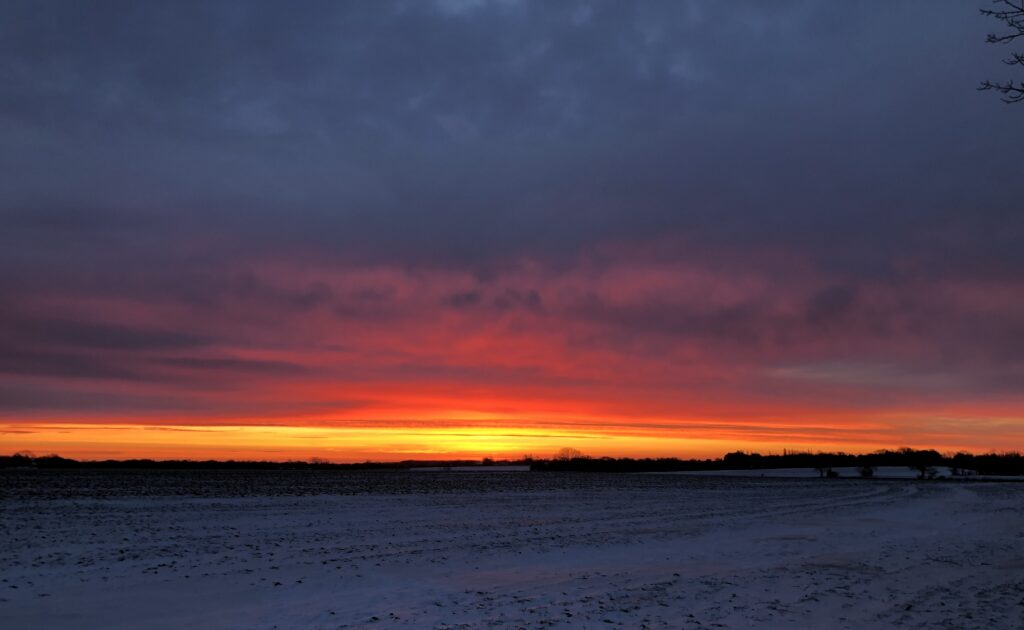
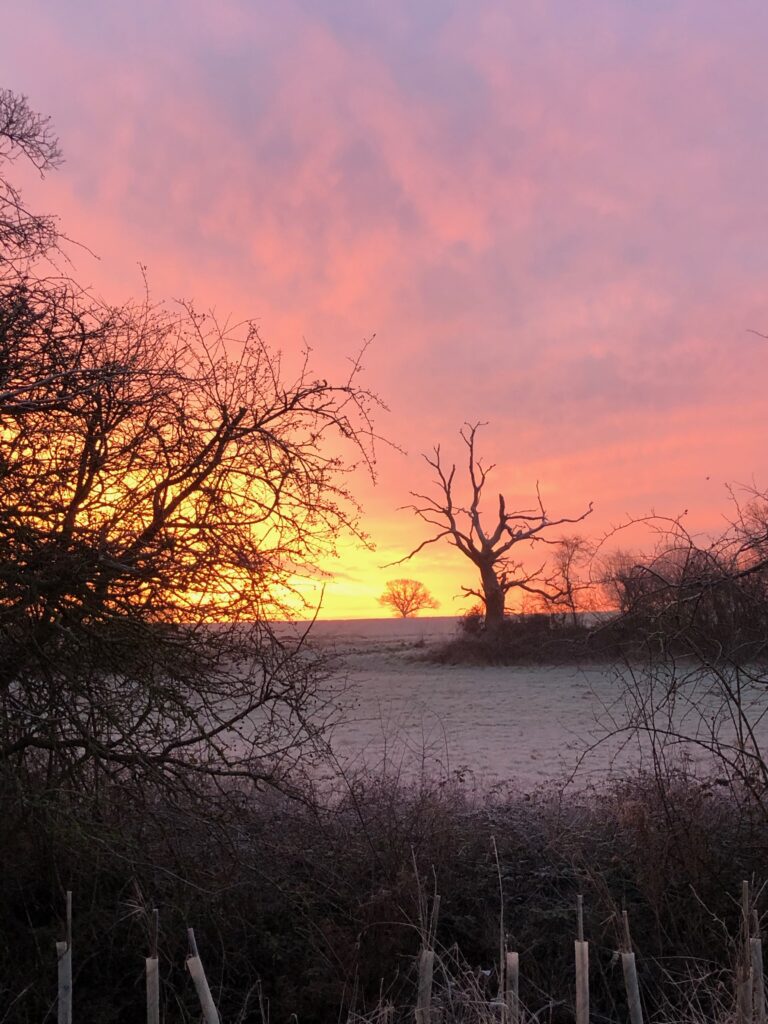
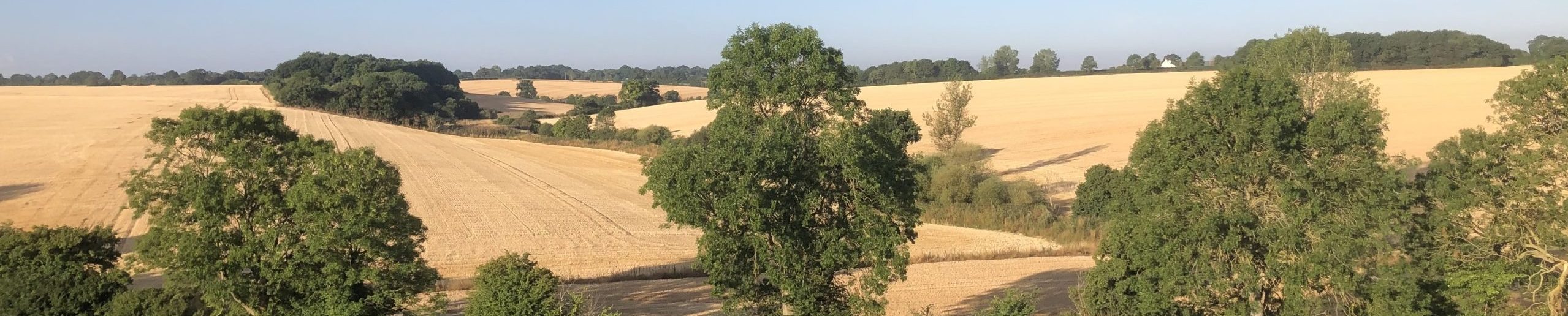
But set aside the frost and drought, and wrap up warm in a winter coat, and set off at sunrise, and the beauty of the morning, the pastel purity of the light, the innocence of the new day, the Magnificat that is spring birdsong, the flowers after the months of monotone, all this will kindle joy even in a wintry old heart. As the morning progresses and the sun rises higher the palette becomes a child’s poster paint set: the young crops deep emerald green; the sky sheer cyan; the endless fields of rape bright chrome yellow.

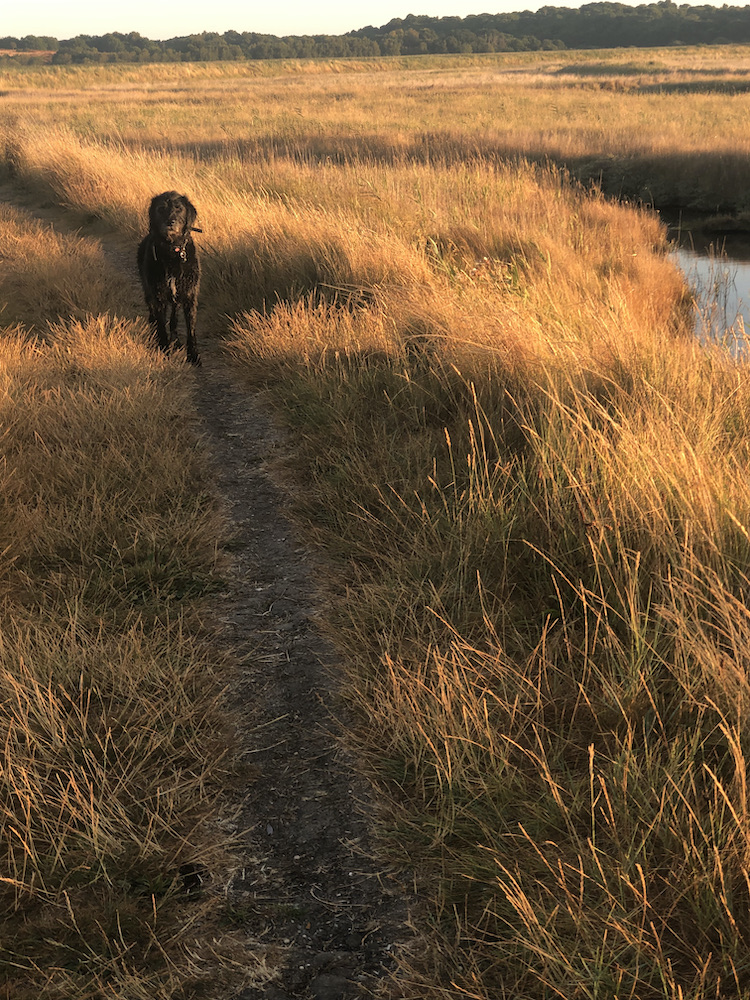
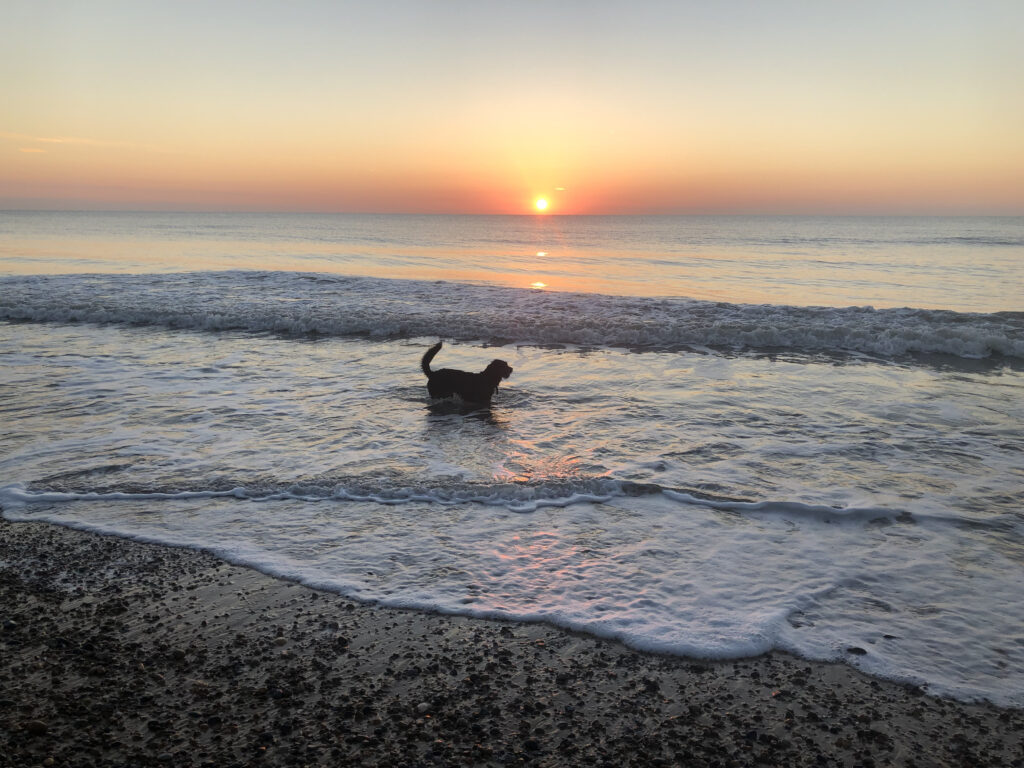
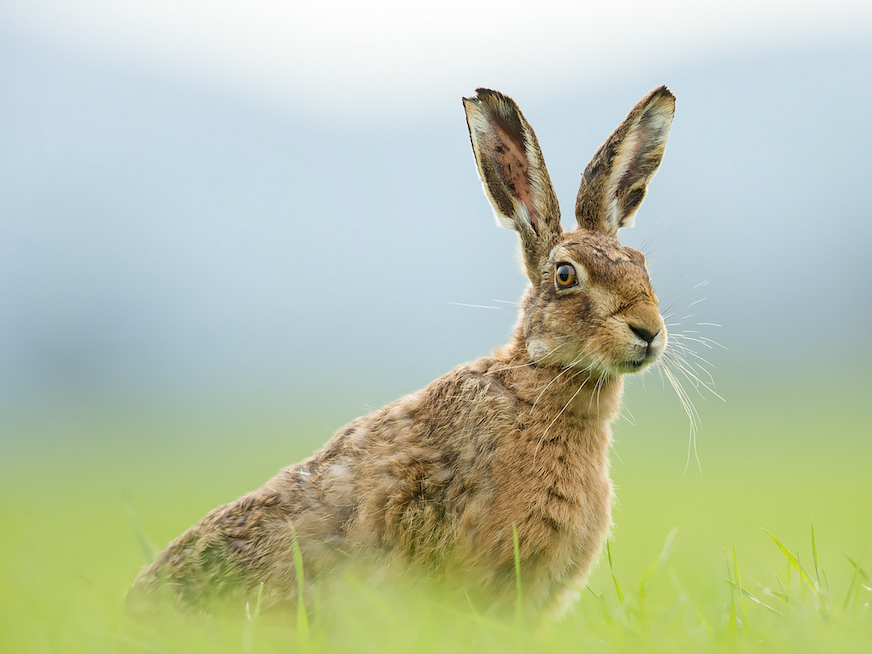
These sunrise walks bring sights that I think are not granted to those still in bed: a family of nine brown hares in a field, parents and leverets, the young playing as the young do – chasing and racing. My dog’s antennae twitch; she stiffens, her muscles tense, then she quivers. But she is on a lead…

The brown hare (lepus europaeus) is common round here, and regarded as a pest by farmers. They can be shot at any time of year including during the breeding season – and are – but they proliferate. In action they are beautiful, reaching 45mph at full speed. The dog wouldn’t stand much chance, though she is fast.

Last month I said that the passing of the seasons can be seen in the sky as well as in nature. The month’s frosty nights have been of a clarity through which the stars have blazed – Arcturus, Regulus, Procyon – companions of spring nights as I look to the south and west.

Looking upwards in daytime brings its rewards: a buzzard seen off by rooks, or four buzzards wheeling high. One descends for a closer look, and the late afternoon sun illuminates the underside of its wings into pure gold.

In April at Easter Tide
When flowers in grass spring to life
The lark at break of day does rise
And sings away with true delight,
With the sweetness of fresh greenery.
Early one morning I did rise,
And heard a little bird on a tree
His own song carolling on high.
I lifted my head to spy
What sort of bird he might be:
In the twinkling of an eye
Flocks of birds descend on me.
Orioles I hail,
And the nightingale,
Chaffinches I view,
And the merlin too,
God knows how many in the air,
Whose names I am lost among,
That roosted on the branches, there,
And began to sing their song.
I walked through that blossoming

Listening to love’s joy ring.
Over the meadow, riding slow,
I saw the god of Love pass by
.

(English translation of the Old French “En avril au tens pascour”)

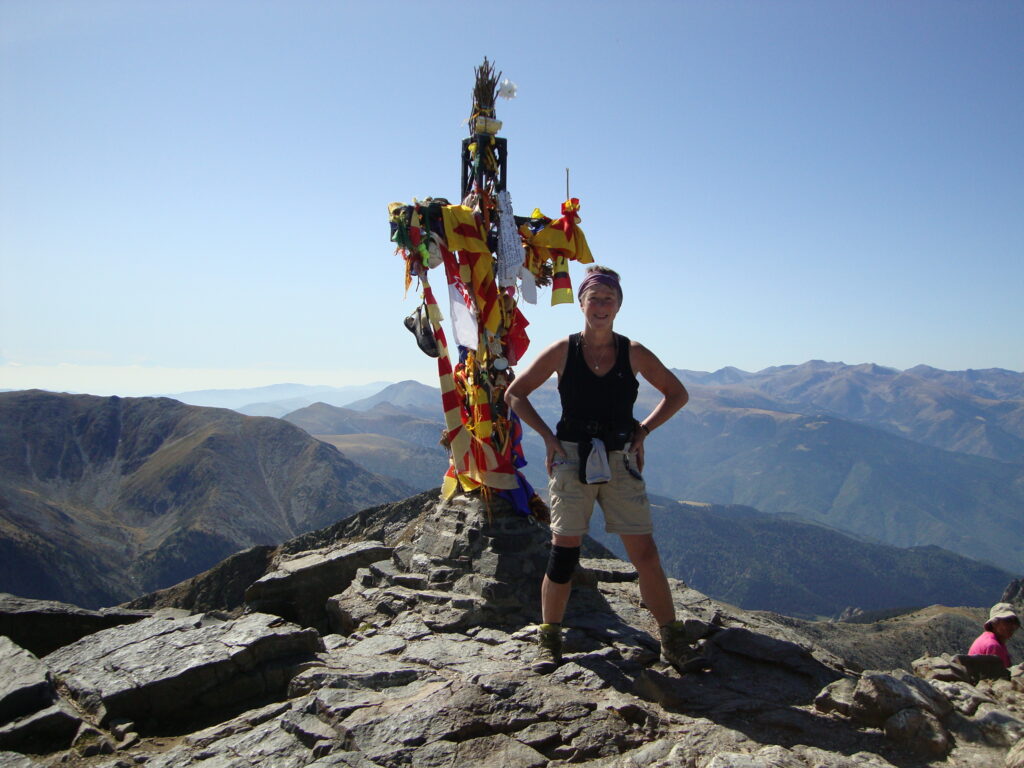
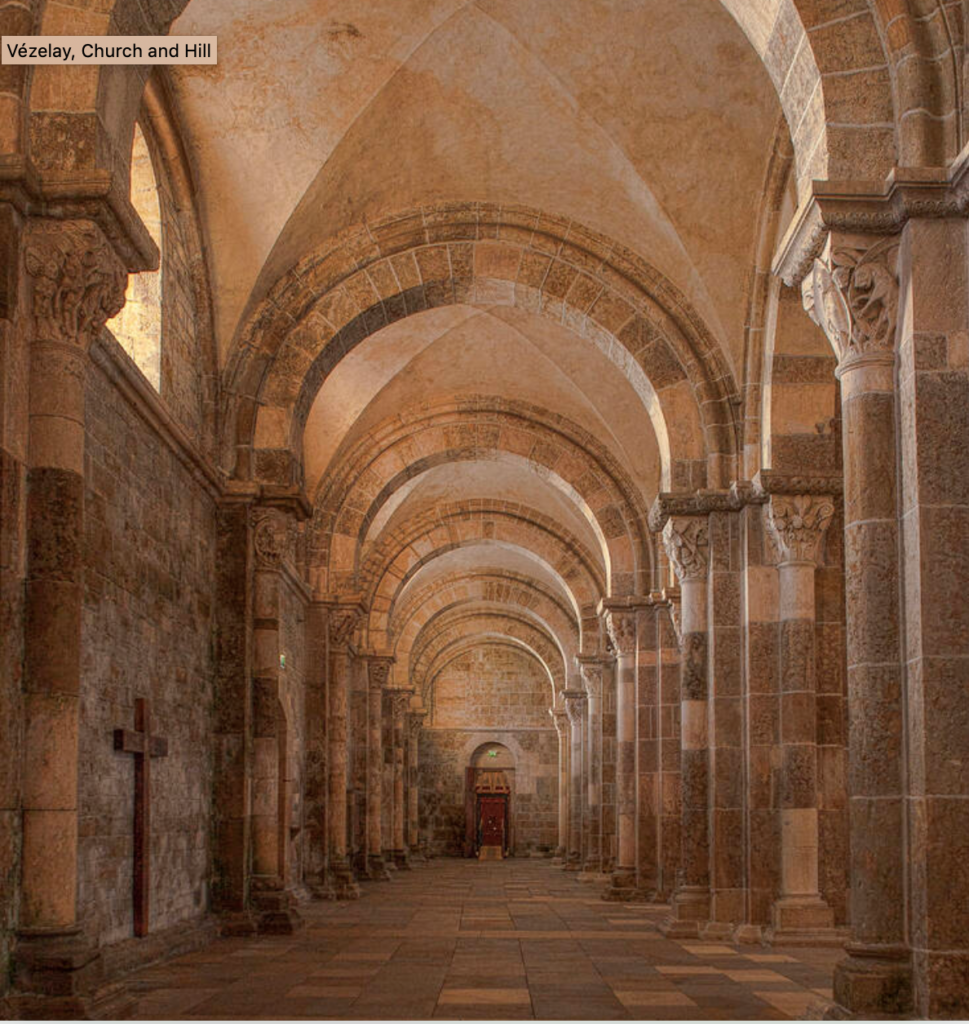
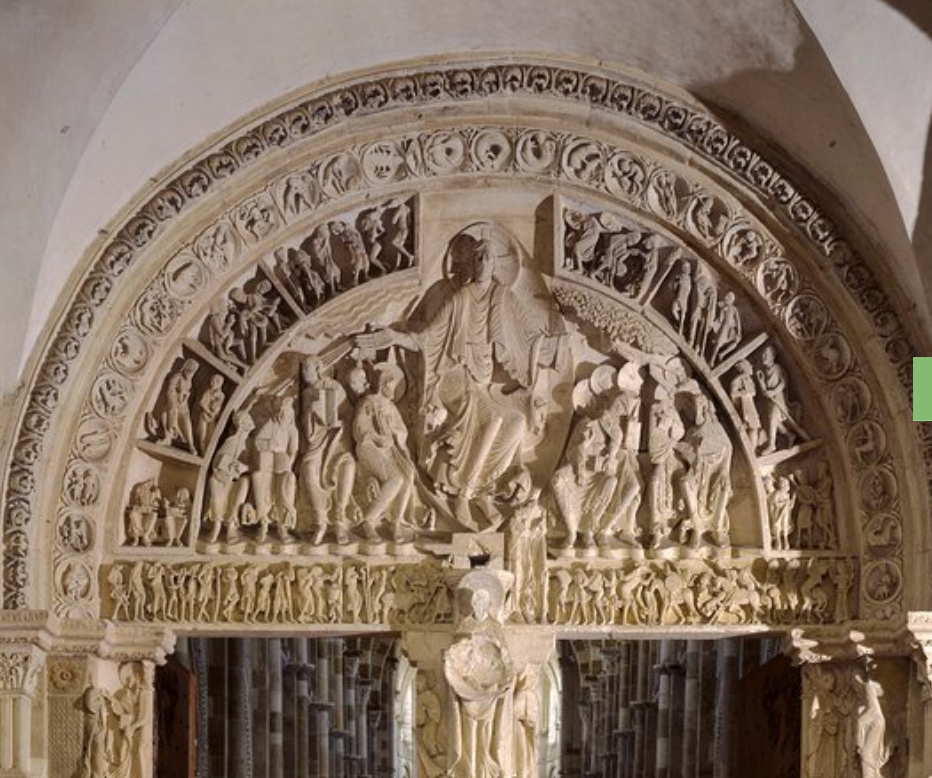
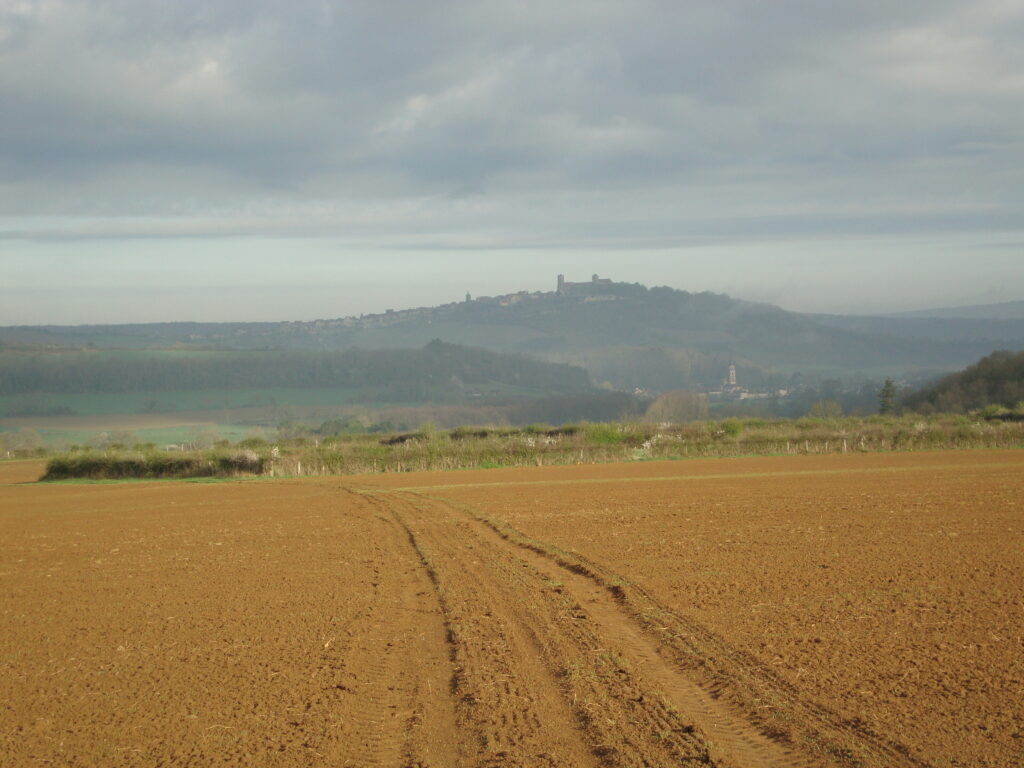
Ten years ago on the fourth of April, my 64th birthday, I set out down a stony track from the hilltop town of Vézelay in Burgundy. Vézelay, where St Bernard preached the Second Crusade; Vézelay, one of the medieval gathering places for pilgrims journeying to the shrine of St James in Santiago de Compostela; Vézelay, with its renowned Romanesque basilica dedicated to Mary Magdalene. One of my favourite places in France, in the whole world.

I too was on my way to Santiago, some 1900km distant. It was a long-held dream, ever since I had discovered the ancient way across the north of Spain some 40 years before, and it was a retirement present to myself. For the first three weeks or so my way was completely solitary, and I met no other pilgrim. I walked through a glorious spring, in my inexperience carrying far too much on my back, encountering for the first time the hospitality and kindness of strangers that is, and always has been, a characteristic of the walking pilgrimage. I walked through the very deepest of la France profonde, its beauty and its ways of being little changed since I first set foot in France some 60 years before. For the first time I knew the excitement of each day’s adventure, the exhaustion of each day’s endeavour, the sacredness of putting my feet in the footsteps of so many down the ages, the liberty of the mind to reflect, think and pray, the peace of being, literally, in another place.

Vézelay, looking back after the first hour’s walking

Later, further, I met two French women, and we walked together as far as the Spanish border, and I learned the companionship of the Camino, the shared experiences of accommodation which ranged from château to the concrete floor of a village hall, of meals ranging from five courses to a shared packet of soup. Into Spain and I was bewildered by the sudden flux of crowds of pilgrims, everyone heading the same way. It seemed to me that this is what the kingdom of heaven must be – everyone with a single goal, different nationalities, races, languages, ages. There is an equality I have found nowhere else. Deep bonds are formed quickly, confidences exchanged, prejudices dissipate, mutual aid trumps self-reliance . In this atmosphere, so unlike the daily run, mindsets change. The journey assumes more significance than the destination. As in all life, the process is what counts.

I thought that this pilgrimage, planned over half a lifetime, would get it out of my system, but I had yet to understand that it becomes addictive, and each year the lure of the open road would call me back for more. And so, through my sixties and early seventies, I clocked up many thousands of miles through France and Spain, across Sicily, and in 2016 along the Via Francigena from Canterbury to Rome, a journey which has changed my life in many ways.

And this brings me to the third April quotation, from Chaucer:

Thanne longen folk to goon on pilgrimages

And palmeres for to seken straunge strondes

To ferne halwes, kowthe in sondry londes

(Then do folk long to go on pilgrimage,

And palmers to go seeking strange strands,

To distant shrines well known in distant lands)

And I, too, this April long for the adventure, the openness to providence, the liberty, the distant shrines in distant lands. Alas, Covid put paid to any plans for one last Camino in 2020, and now – whatever course the pandemic takes this year – I fear my days of walking 25 miles in a day over mountains (or even 20 or so on kinder terrain) are probably over. An old knee injury, never properly healed, plus worsening arthritis, pain scarcely tolerated, and, well, anno domini combine to ground me. Must we accept these losses that come with old age?

…And yet, and yet…maybe one more? Sometimes I think I would crawl on my hands and knees to have, just once more, what those who have never lived it cannot know or understand.

But I think the dog might miss me.

March 2021

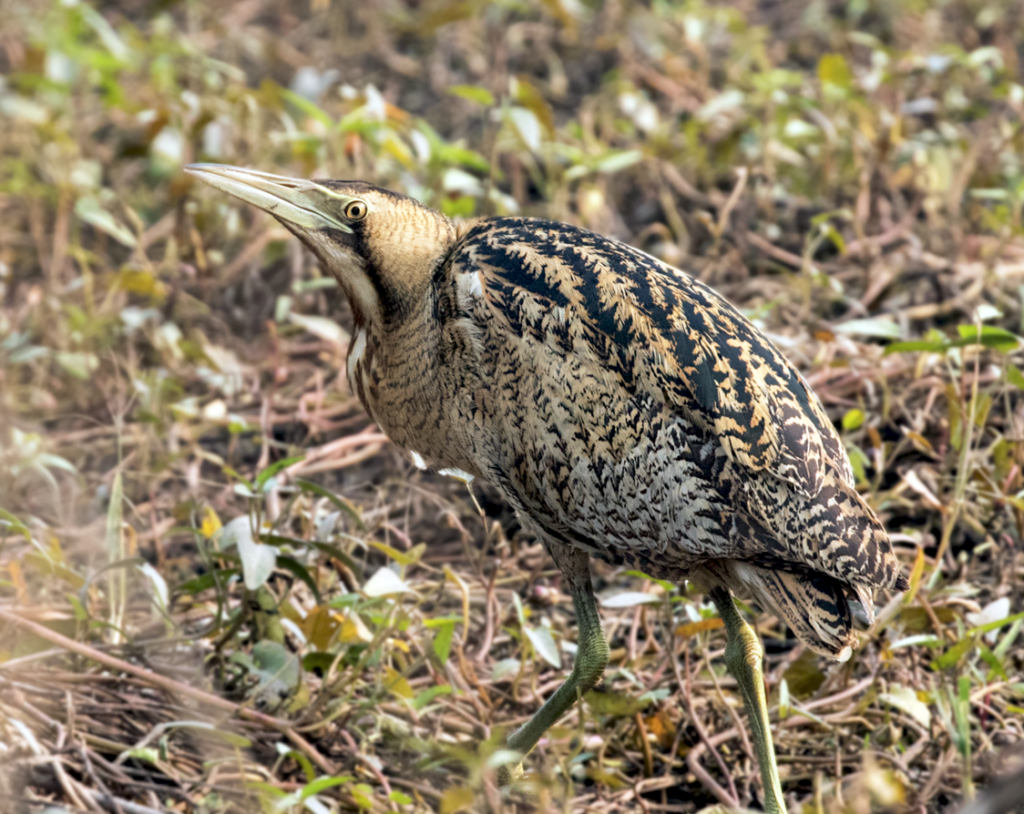
This is a picture of liberation. It was taken at Minsmere just after 6.30am on 29 March, the day the injunction to “stay at home” was lifted. Throughout the long and dark winter of relative imprisonment I have longed for a different horizon, and accordingly I set off with the dog the moment we could to the tiny hamlet of Eastbridge (whose tranquillity is soon to be despoiled by Sizewell C construction), and walked to the sea, then north along the coast – the Southwold light winking in the distance – and back through woodland and heath.

We saw not a soul, but our arrival was trumpeted by the boom of a bittern. I am a not infrequent visitor to this magical place, but had never heard a bittern before. I have certainly not seen this shy bird, and the photo may explain why, for it is a master of camouflage. Bitterns are members of the heron family with all-over bright, pale, buffy-brown plumage covered with dark streaks and bars, perfect for blending into the background. It flies on broad, rounded, bowed wings. It moves silently and secretively through reeds at water’s edge, looking for fish. The males make this remarkable and far-carrying booming sound in spring, like the far-distant report of a big gun or foghorn.

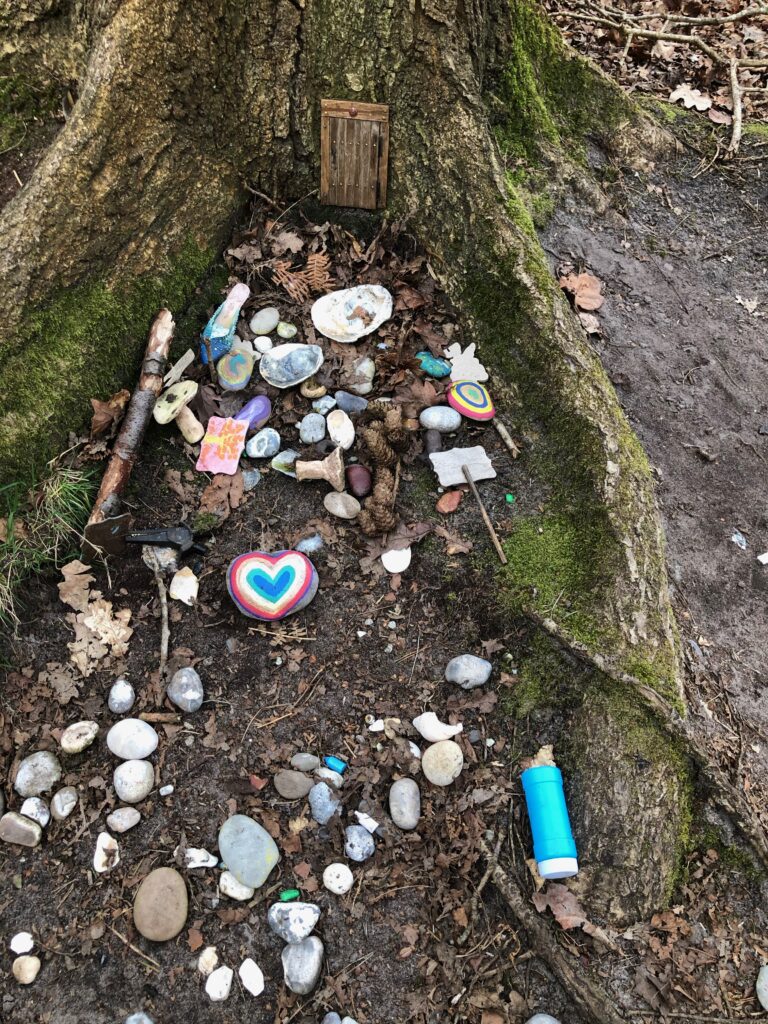
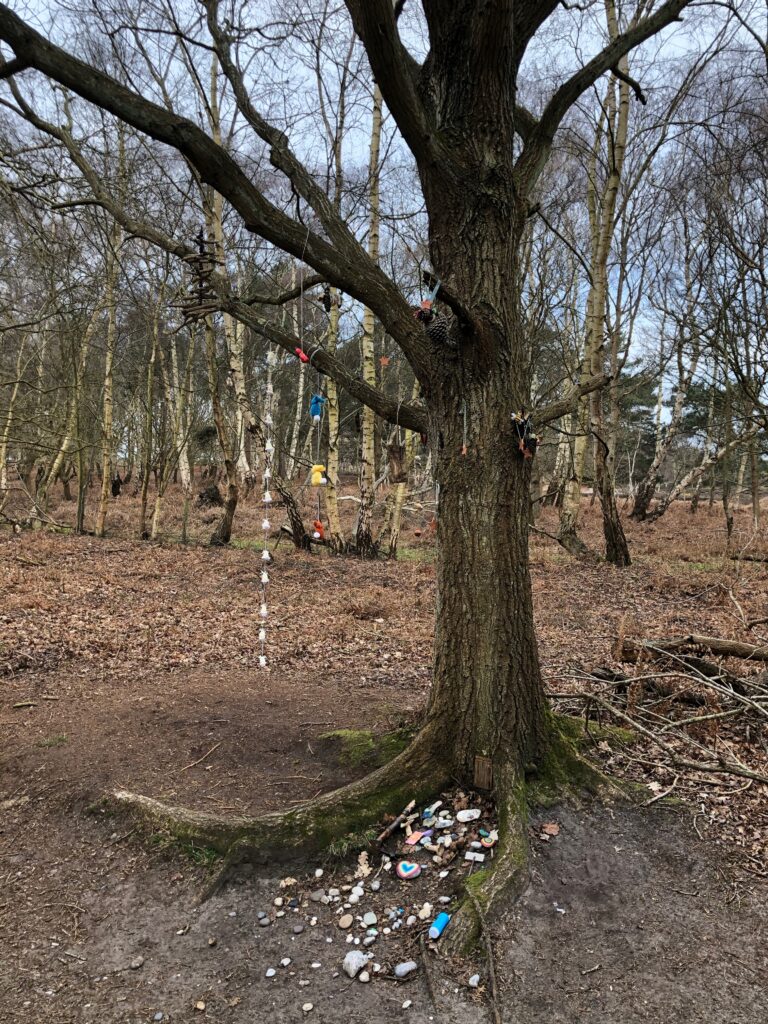
Walking back, we stopped to see how the Little People were getting on with their tree home, but alas it seems to now have become a receptacle for all sort of mementos, and its branches similarly adorned. Soon it will rival the Groby Tree.

March has showed us both its leonine and its lamb-like character. Early in the month fierce gales blew in, and blew out two 1m50 panes in my greenhouse, showering shards of glass all about. I was unaware of all this going on, being laid low with a virus (not the virus), and in bed for a week. This rare indisposition, which leached all energy from me for some weeks, is my excuse for the paucity of content in this month’s offering. However, I have been lately restored by a few days of exceptional beauty and warmth, which gave us the hottest March day for half a century.

This warmth and the lengthening days have caused spring to spread across the landscape in a great rush of greening. It would be impossible not to be moved each year by this explosion of nature and colour, the burgeoning, the bursting of buds, the intensity of birdsong each morning. The sun now both rises and sets north of east. This year all this has come together with our partial liberation from lockdown, combining into a feeling of hope and exultant joy.

It is not only the daylight, the fields and woods, the flowers and birds which tell out the glory of spring, but the night charts the advance of the seasons too. When the dog and I go out at night our prospect is south and south-west, and I see the steady progress of the winter constellations – Hydra, Canis Major, and above all Orion westward across the sky. Soon they will be gone, to emerge once more in the east in the autumn:

“The heavens declare the glory of God, the vault of heaven proclaims his handiwork, day discourses of it to day, night to night hands on the knowledge. No utterance at all, no speech, not a sound to be heard…” (Psalm 19).

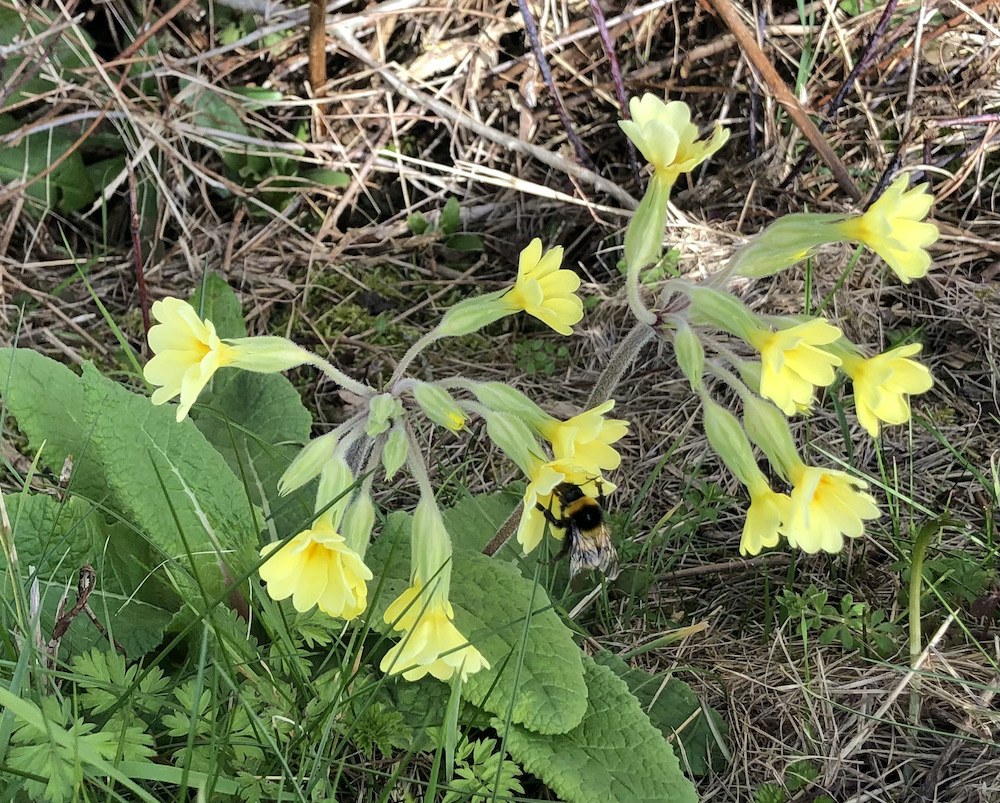
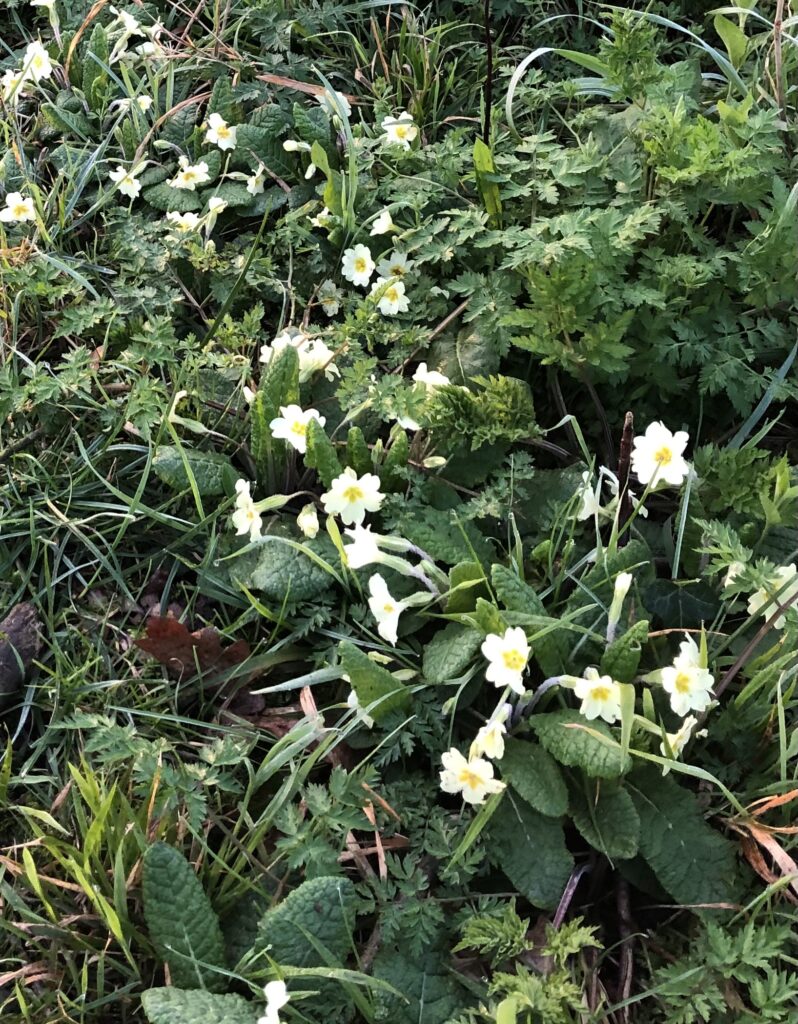
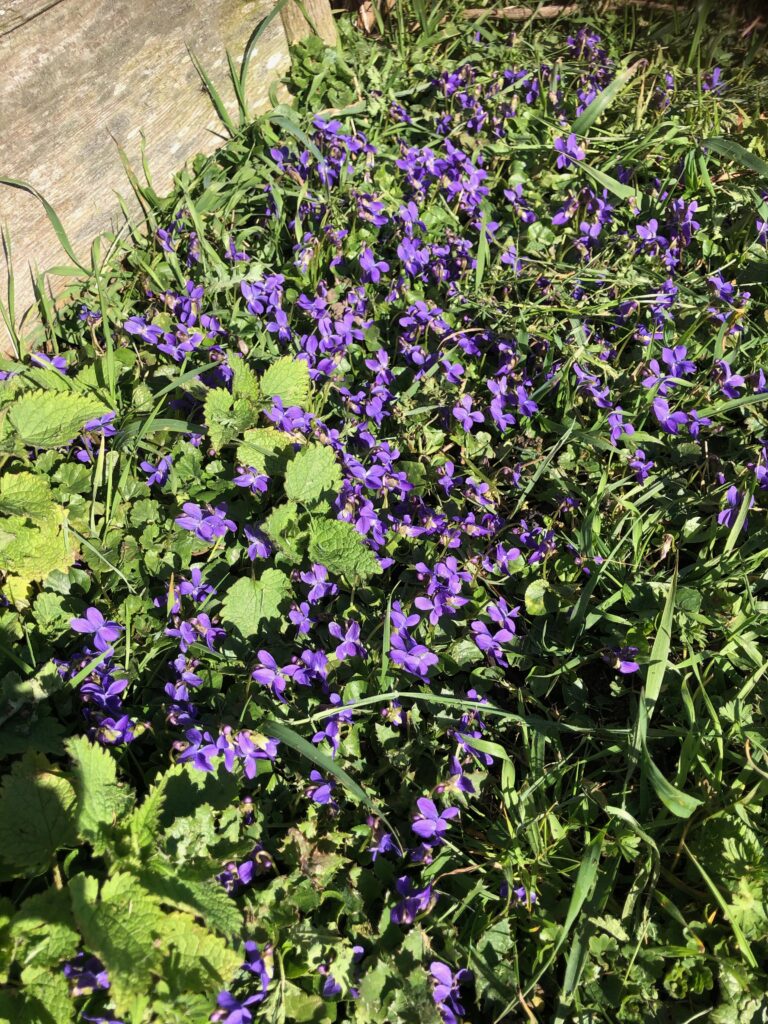
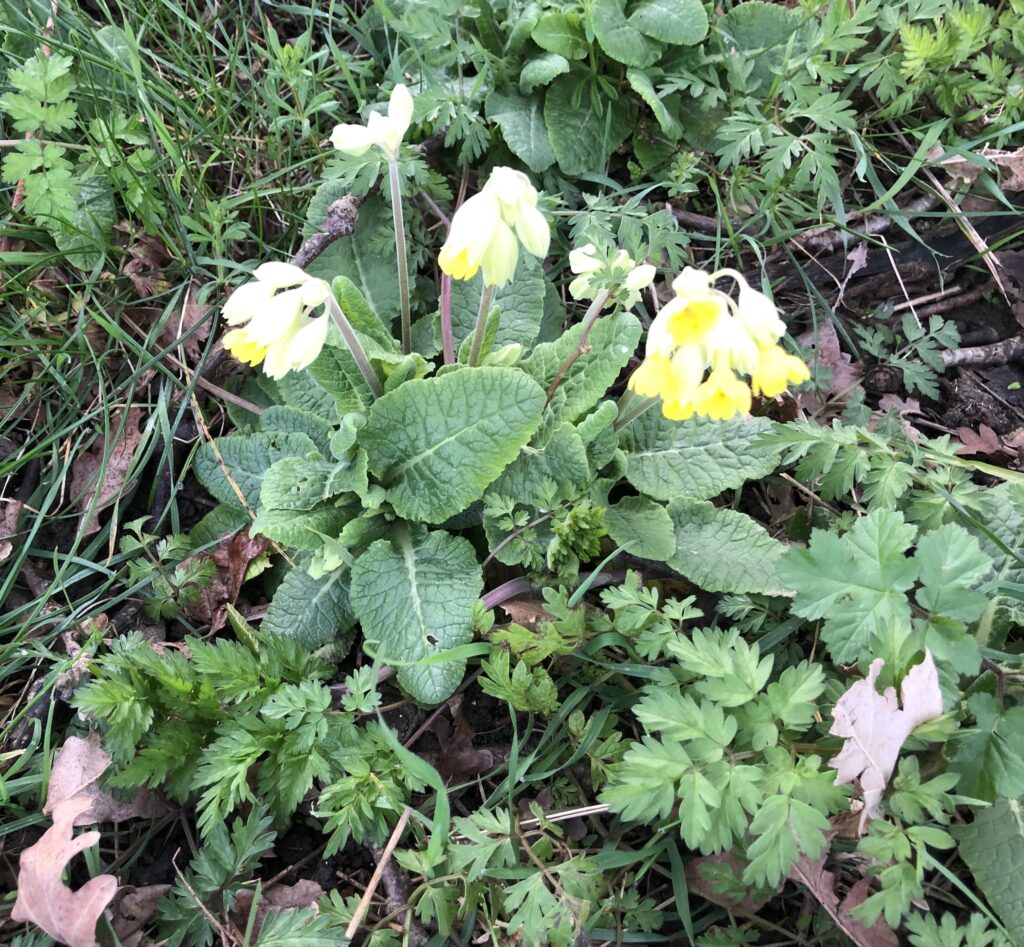
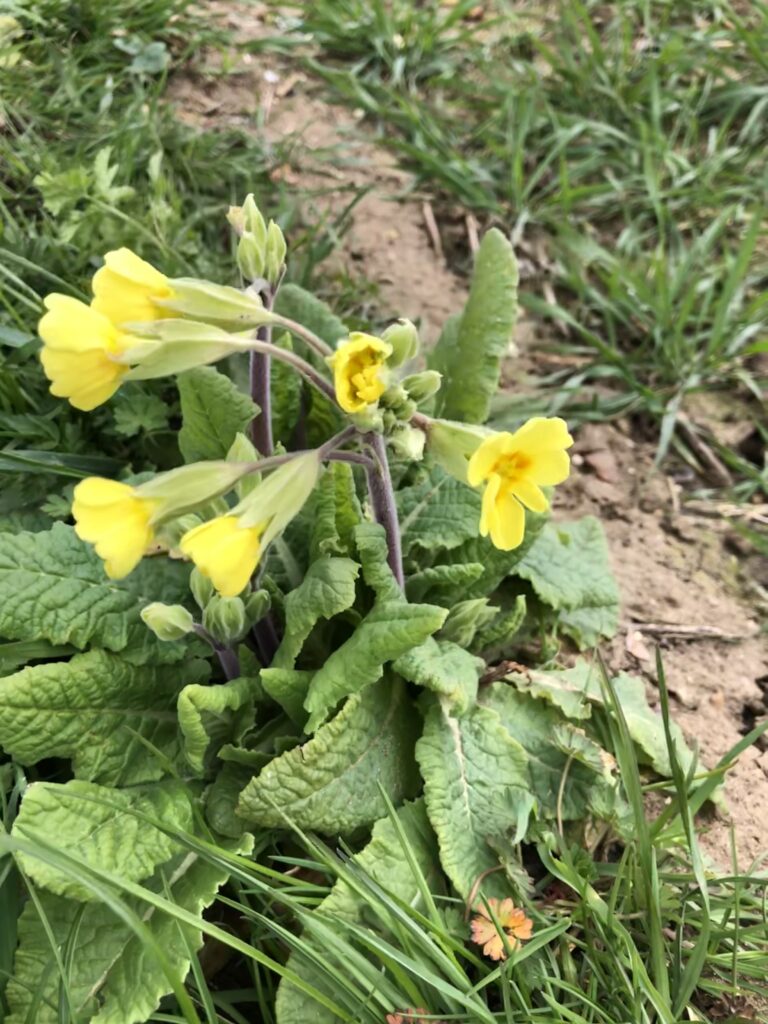
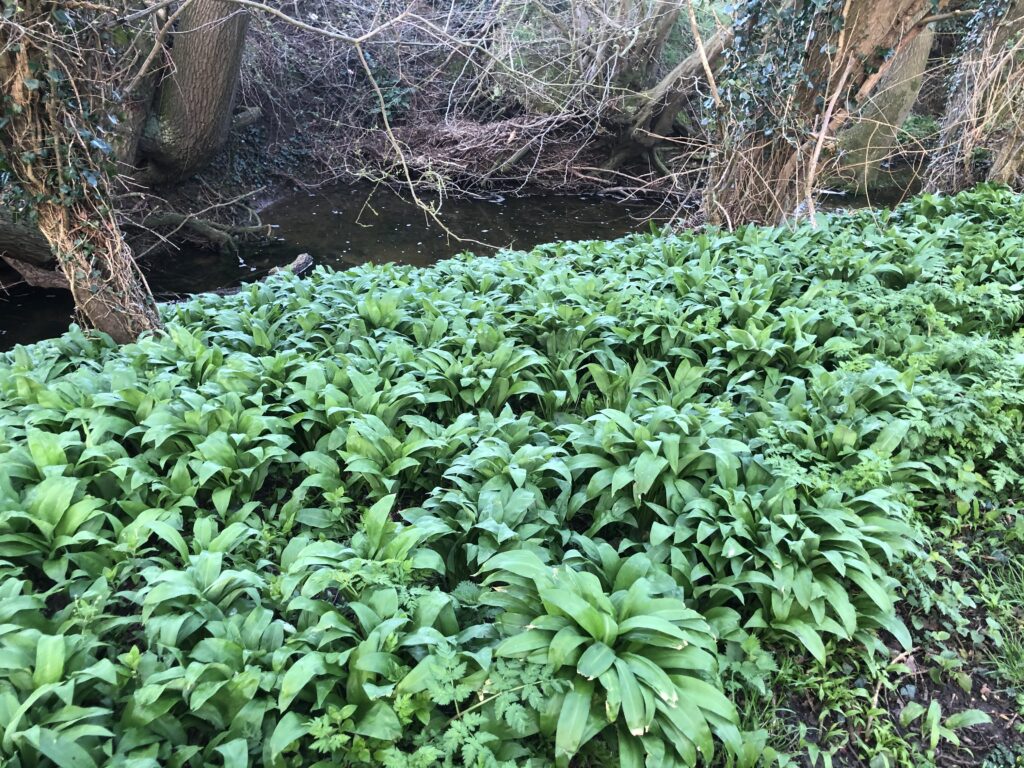
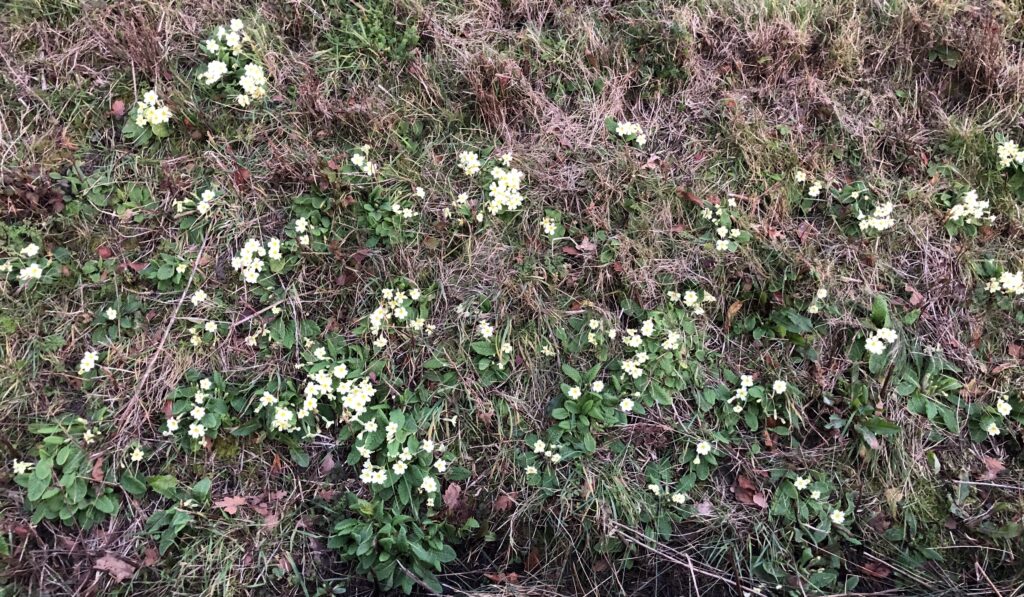
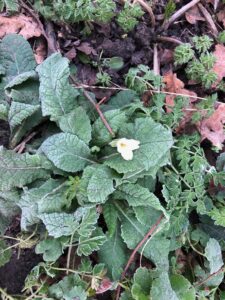
Already the pale primroses, in flower since January, are being engulfed in a rising tide of green. Each year I think they are even more prolific and more beautiful than before. They must profit from wet winters… the violets too. On more open ground there are already cowslips and oxlips, and in the woods the dark green pungent leaves of wild garlic are thick beside the paths.

I say frequently at the end of a month’s chronicle that surely I must draw them to a close soon. In March the combined effects of an enforced eremitical lockdown existence and an even profounder withdrawal from the world brought about by whatever virus knocked me out, mean I have even less to say than usual. My life has shrunk. I can only hope the advent of summer and greater liberty to meet and speak to others will expand it again.

February 2021

It is one of those old country saws that as the days get longer, the cold gets stronger.

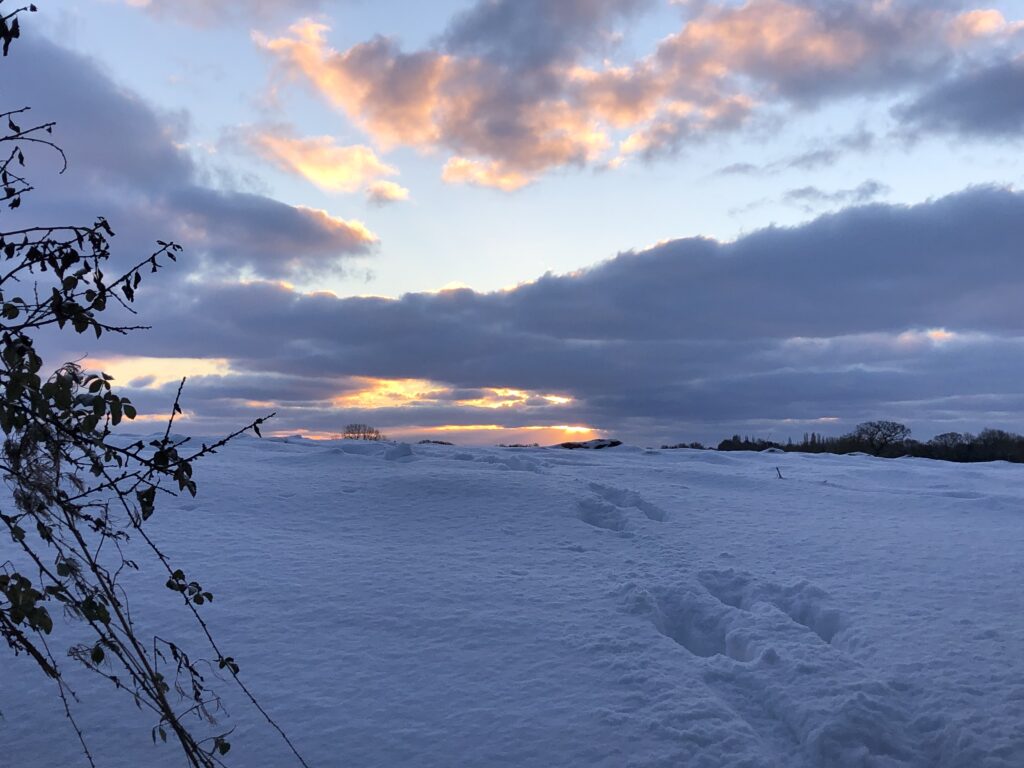
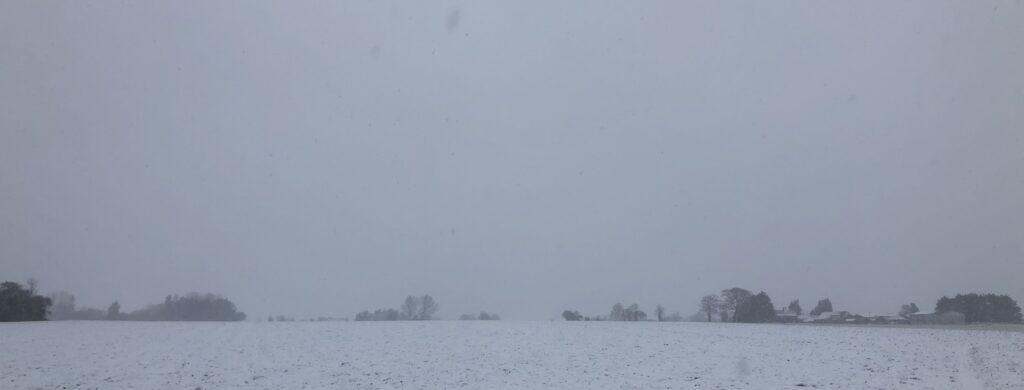
I had longed for snow, real snow, not just a wet covering here today and gone tomorrow. This is a yearning for the excitement of childhood, heedless of those who cannot get to work, or whose obligations to travel are thwarted. Snow changes not just the exterior but our interior landscape as well. Rules do not apply: fires can be lit during the day, sloe gin can be drunk at coffee time; in other words – school is out.

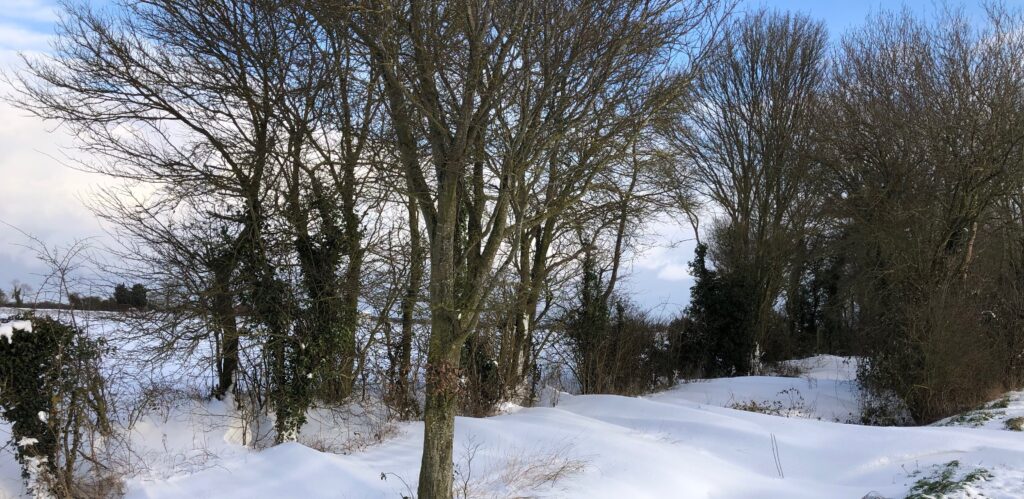
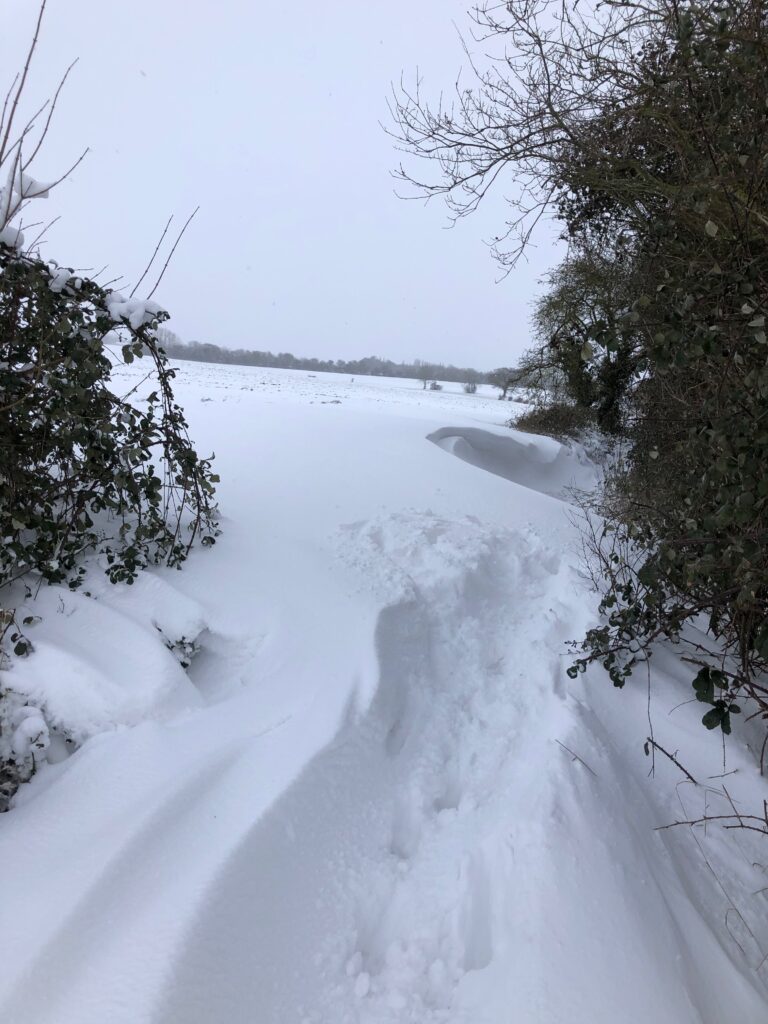
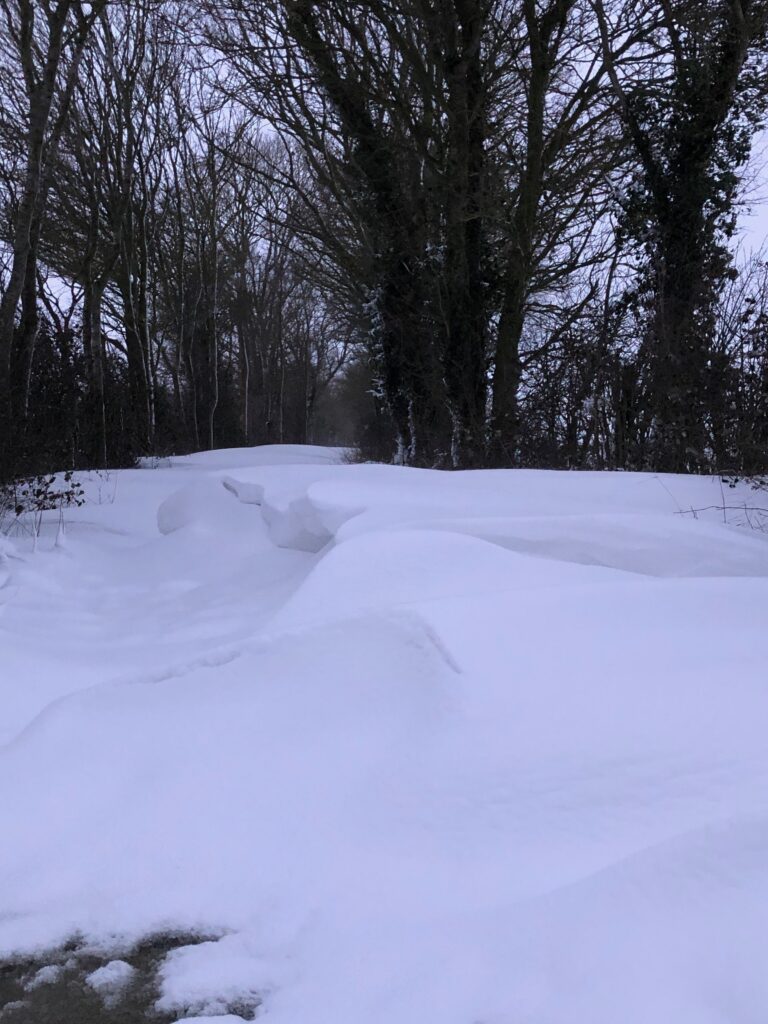
My wish was granted, and an amber warning for the easternmost parts of Norfolk, Suffolk and Essex heralded a whole week of what felt like a holiday. A holiday from rain, from mud, and from the monotony of the quotidian. Snow came from the east, swirling, sweeping, wind howling. Thirty-six hours of it. Drifts formed immediately, closing the narrow lanes. These drifts were sculpted by the gale into fantastical shapes – castles, crenellations, cumulonimbus, battlements, billows, pillows, marshmallows, waist-deep and higher.

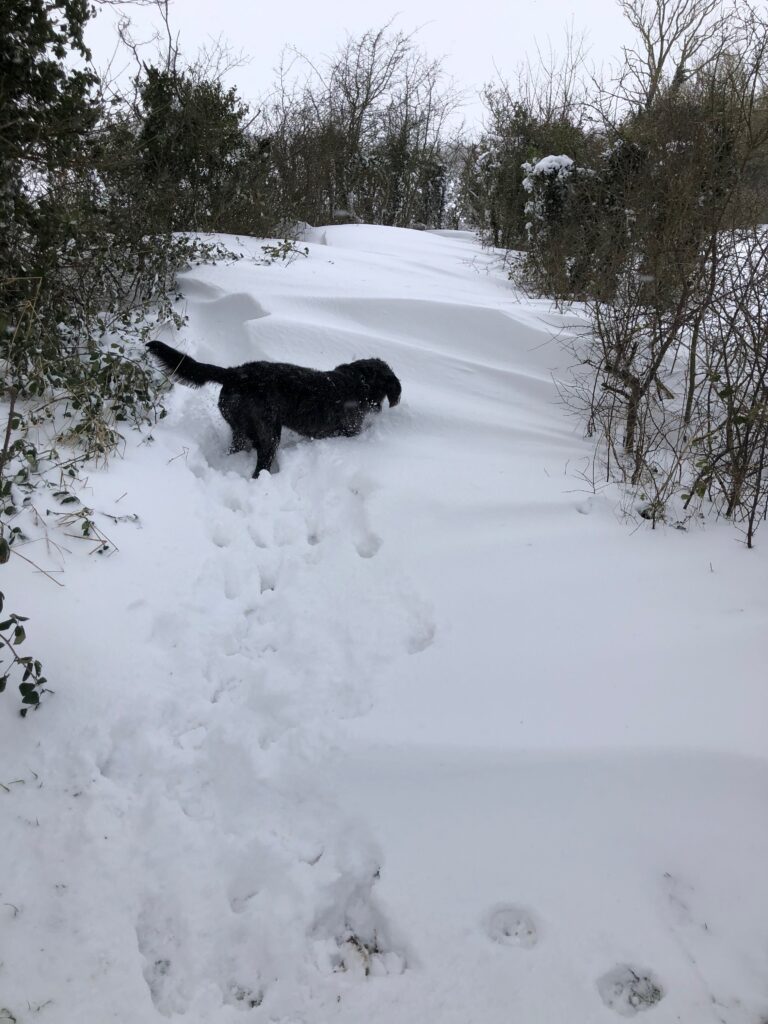
Round here ditches are deep, and the banks the height of a man. The first morning, when the snow is still soft and wet, the dog charges across what looks like level ground, and disappears, a good five foot down. She is lost to sight for a minute or two. I panic. Finally she scrabbles her way out. I’d have found it almost impossible to get down and rescue her, and then climb out myself. By the end of the week I too can walk across ditches on compacted snow.

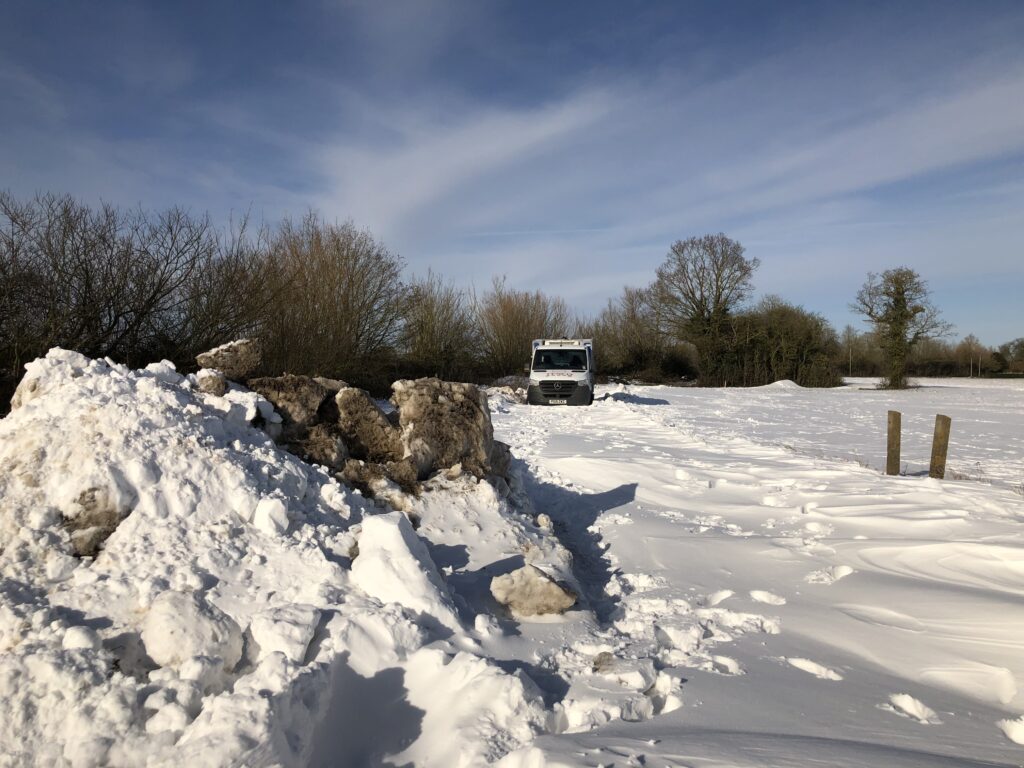
The farmers come out with their JCBs to clear the lanes, and scrape the roads to a fine icy surface, impossible to walk on. They pile the snow high into walls either side, where it remains for a week or so, long after the thaw, getting grubbier by the day. The 4x4s creep cautiously along – the real farming battered 4 x 4s , not the shining four-wheeled fortresses, those must-haves of those new to country living. Towards the end of that week the wind rouses itself again to close off our roads with more drifts. A Tesco van is trapped; a John Lewis van is towed backwards to safety by a tractor. As I write, three weeks later, there is still snow in the ditches.

Walking is difficult, every step an effort with the cold gnawing at the throat and chest taking the breath away. The snow creaks under my boots. I see animal tracks – hares, rabbits, deer, and – alarmingly – all round the chicken enclosure unmistakably those of a fox.

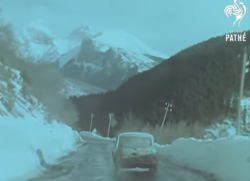
from Pathé News

Those of us old enough to remember will tell those who are not that of course it is nothing like the infamous winter of 1962-63, when snow started to fall on Boxing Day, and the thaw did not set in till early March. The snow banks on either side of the roads were higher than the cars, reminiscent of scenes in the Monte Carlo Rally, which held us enthralled each winter on our little television sets in the Sixties. The lake near my home froze solid, and at weekends there were crowds out skating. I was 15, nearly 16, and I remember cramming my feet into Victorian skates with their dainty buttoned boots, belonging to my grandmother.

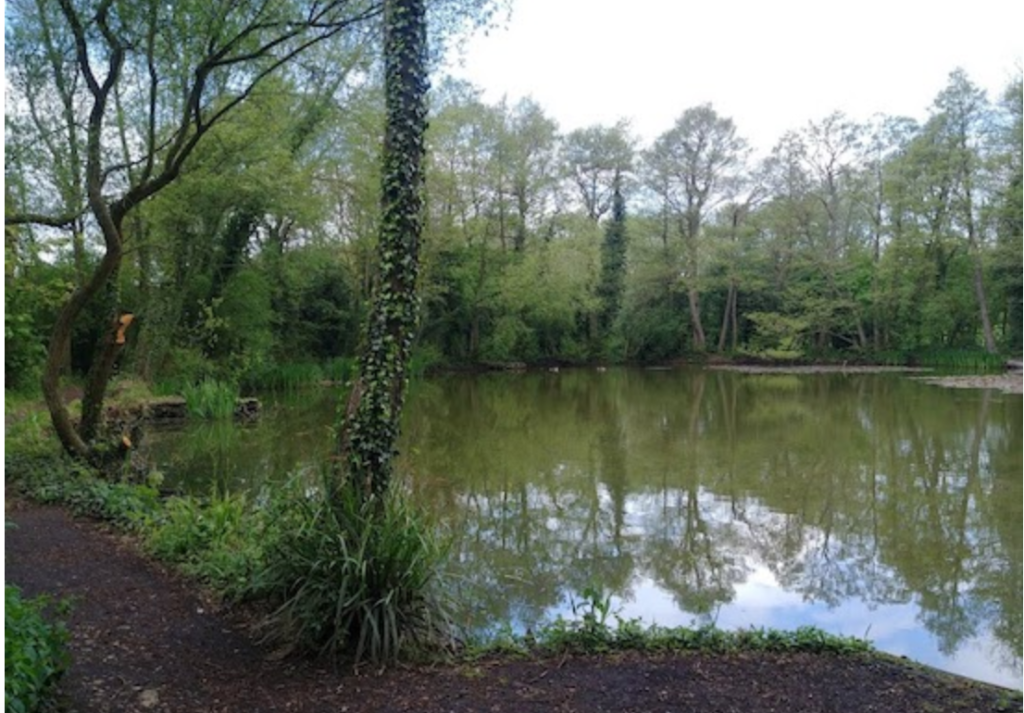
Gobions ‘Pond’ (photo: North Mymms News)

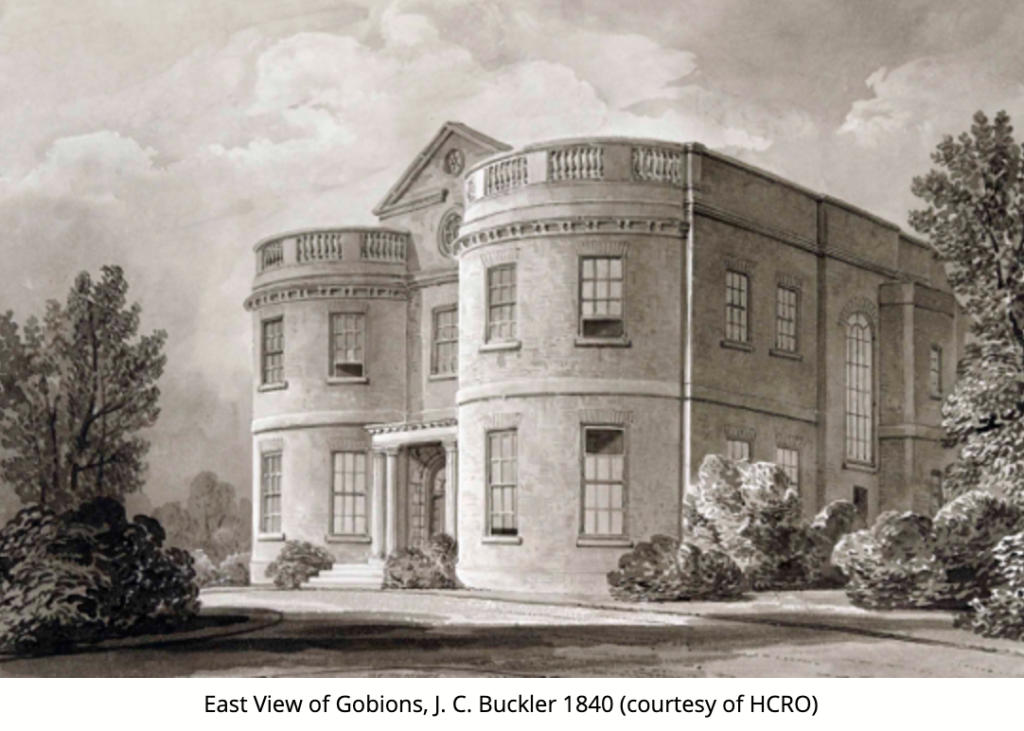
That lake had belonged to a a great house, Gobions, which had been a residence of the More family, and it is thought that Sir Thomas More, Henry VIII’s Lord Chancellor, probably wrote “Utopia” there, then called More Hall (also known as “Gybynnes,” then “Gubbens”, then “Gobions”). After More’s execution in 1535 the estate reverted to the Crown, being restored to the family in 1607. Basil More sold the estate in 1693, it being purchased in 1708 by Sir Jeremy Sambrooke (d 1754), who made major improvements to the property. In 1730 Charles Bridgeman, the Royal Gardener (d 1738), was employed to make a ‘Pleasure Garden’ in Great or Gobions Wood. The wood – where I played as a child – contained various formal features, including a bowling green and canals linked by straight walks, enclosed by avenues crossing the adjacent fields and parkland. The lake on which I learned the basics of skating that winter was part of it. James Gibbs designed, c 1740, a temple facade to terminate the largest canal, together with the large Folly Arch, a three-storey gothic gateway, to terminate one of the main avenues at the southern boundary of the estate. Daniel Defoe, ten years later, called the place “one of the most remarkable Curiosities in England.” I well remember Folly Arch, which I cycled past on the way to buy bread in nearby Potters Bar. In my childhood what is now suburbia was rural.

If you are still reading, here comes one of those amazing six-stages-of-connection coincidences.

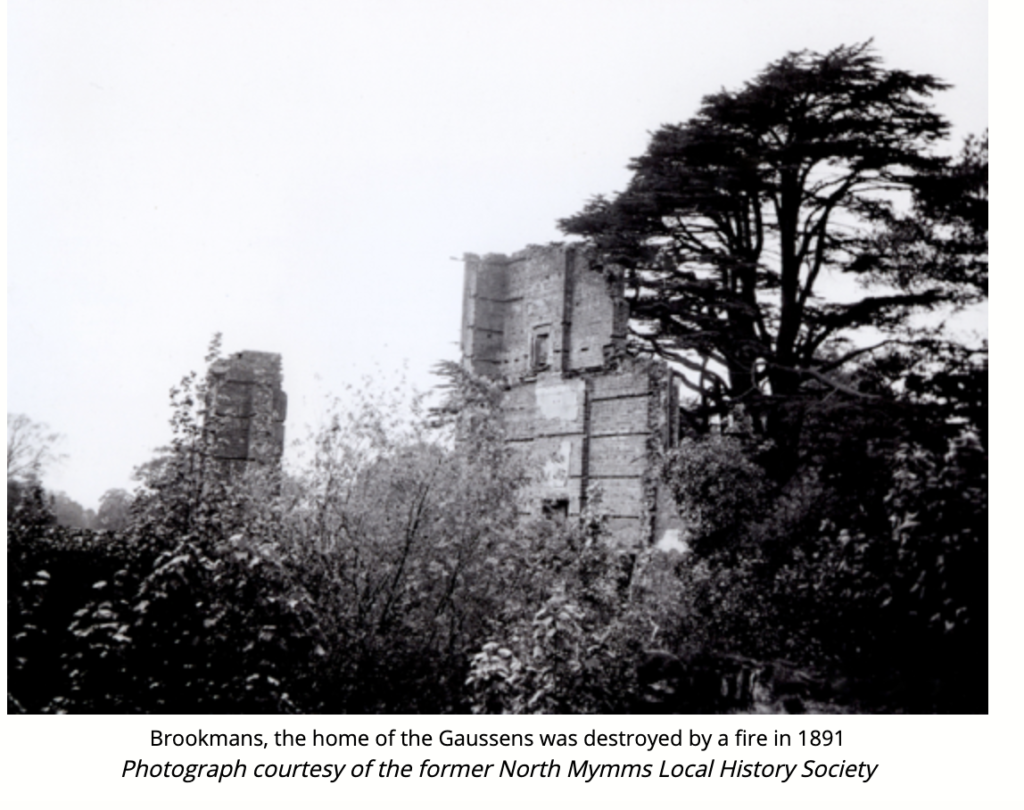
In the summer of 1968 a friend and I, having just graduated, were hitch-hiking round France. In Provence, in the Var département, we had had a lift with an elderly gentleman, who invited us to his beach-side house in Six-Fours-les-Plages for a meal with his wife. These things happened back then, and innocently. During the meal they of course asked where we came from, and I mentioned Brookmans Park, assuming they would have no clue other than my saying it was north of London. “Ah! come with me,” said the gentleman, and he led me into a dark backroom where an ancient lady sat in a chair: his mother, whose age he said was 100. As a girl this woman had been in service in the great house in the Gobions and Brookmans estate, belonging then to the Gaussens family, which had burned down in 1891. She named the landmarks for me, and remembered that lake where I had skated during the long cold winter of 1963. I remember nothing more of her story, save for this coincidence. Being so young myself I didn’t think to ask how a teenager from the Var had come to work in a grand house in Hertfordshire.

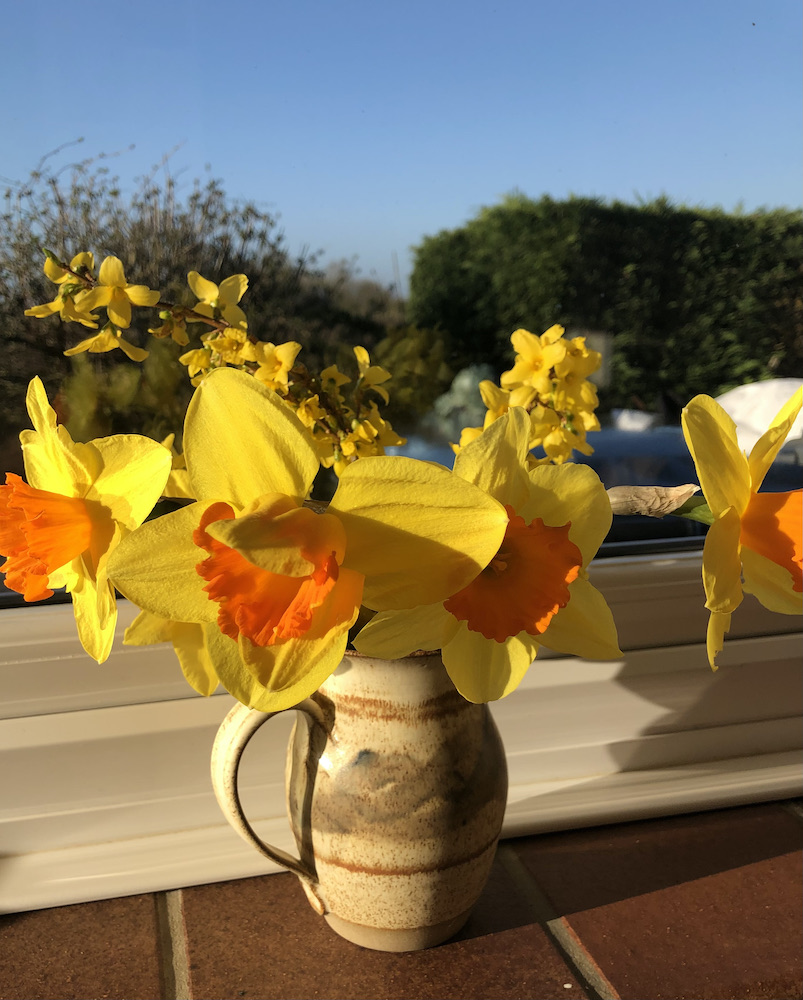
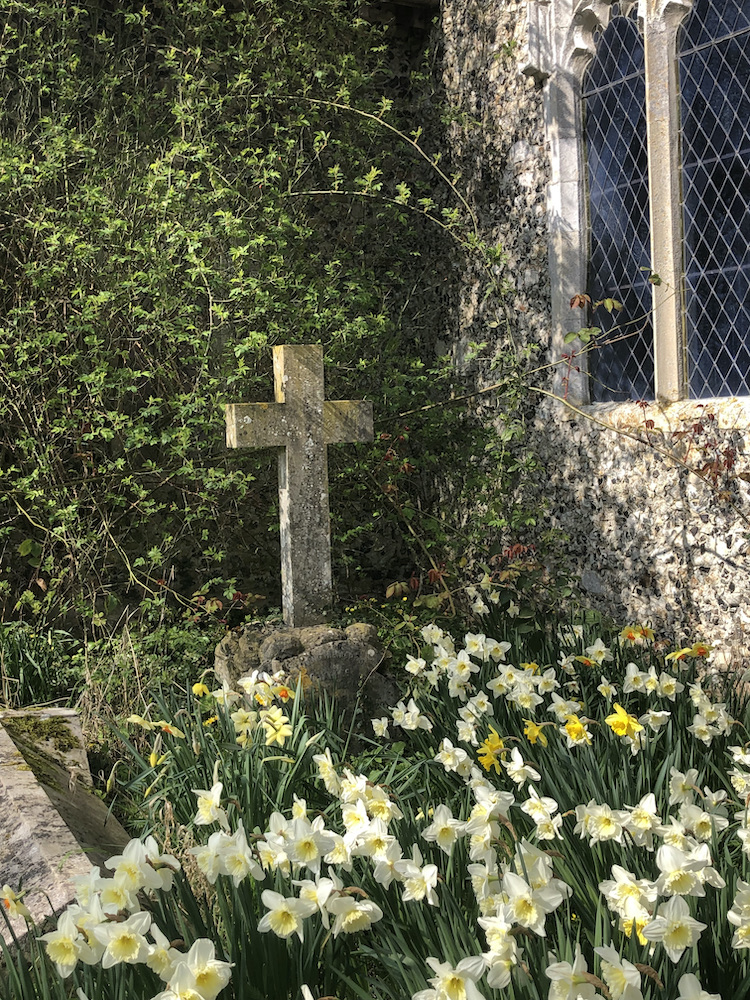
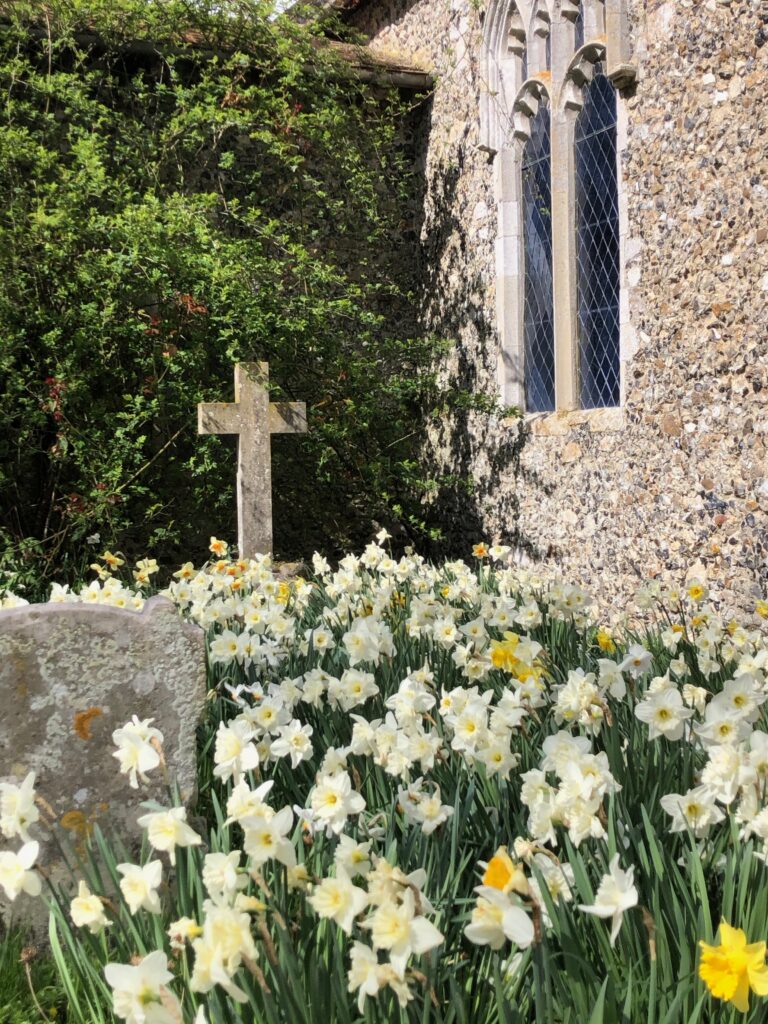
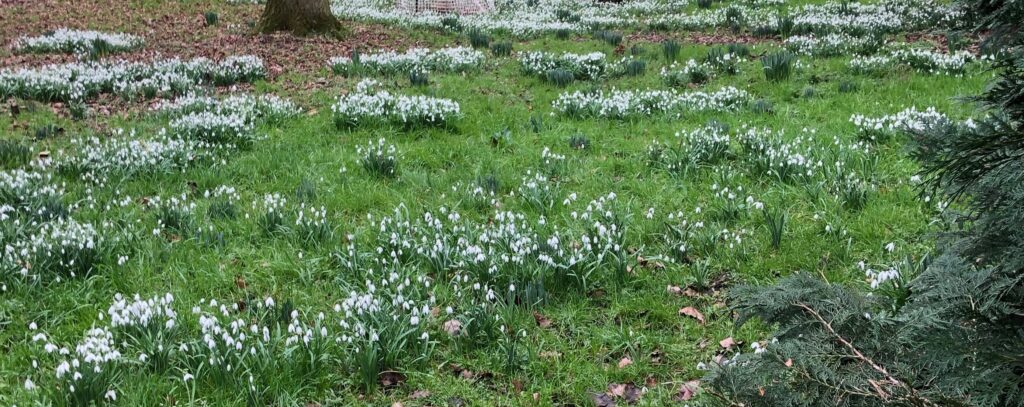
And now, suddenly, it is spring. After the snow the temperatures soared. The snowdrops are nearly finished; banks and ditches are star-spangled with primroses; daffodil trumpets proclaim the change of season, and daily the morning orchestra of birds swells and grows. The sun appeared after what seemed like months, and remained in a radiant blue sky for some days waking the energy in the earth – and in me. A spark of hope was lit, and flickers. There’s a long way to go yet.

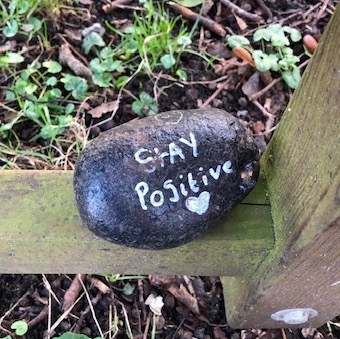
I leave you with a stone found on one of our walks under a bench in the churchyard at Wingfield (see September 2019). I note the message.

January 2021

A late offering, for which I apologise, and a hastily written one. There have been many calls upon my time, too many of which involve peering at a screen.
Reasons to be cheerful

1. January, drear, dark, dry, sempiternally long January is at an end. When I say ‘dry’ I mean in the sense of abstinence from alcohol. Certainly, and emphatically, not dry meteorologically.

2. There are signs of spring. Towards the end of January there is a shift in the light which tells us we are past the deepest darkness. At last the mornings are growing lighter apace with the afternoons. Although my snowdrops are not in flower, their dark green pointed leaves have broken the surface of the saturated ground, and the usually later primroses are already blooming on south-facing banks, and even beside the paths through the woods.

3.The birds are singing; not the full territorial spring symphony of mating and nesting, but the over-wintering residents are tuning up in the mornings. There is a particularly noisy song thrush in the trees opposite, two insistently repetitive great tits, my garden robin and wren, the melodious blackbird, and many others. Flocks of fieldfares settle on the fields and fly up again in one swooping movement, and a lark rose high over me as we walked on the flat and windswept airfield. Rooks circle and caw, and the crows’ “parp parp” sounds like ancient klaxons.

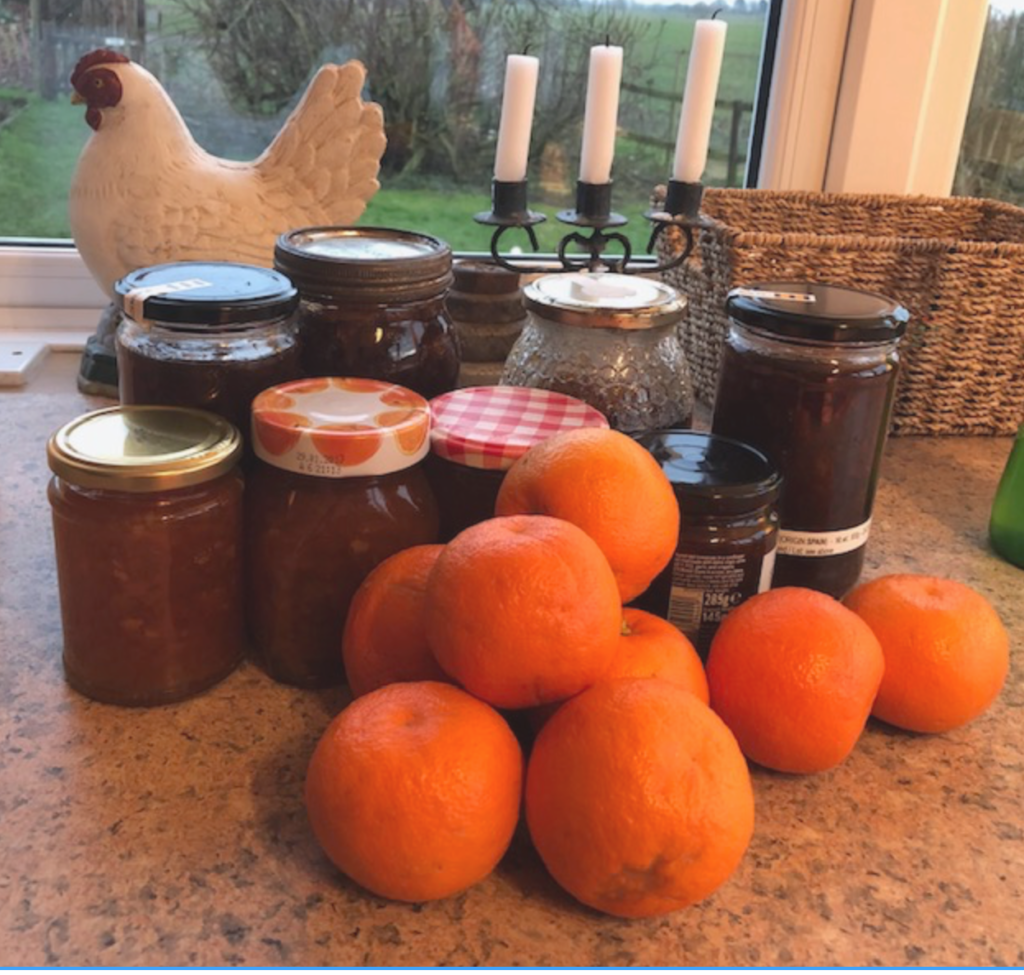
4.Making marmalade, the annual new year treat that fills the house first with the sharp tang of cooking citrus, and then with the sweet comforting warm smell of caramelised oranges. I thought this year that the Seville oranges might be scarce because of Brexit difficulties with imports, but they appeared on time, the lumpy rather shabby-looking oranges, which remind me of walking through small towns and villages in Andalucia and Extremadura in the autumn, the ground littered with them, split and squashed beneath my boots.

4.There are moments of transcendence. As we came home across the Common one frosty morning the rising sun caught the wing tips of the hunting barn owl, and – fleetingly – transformed them into a translucent roseate gold. Such instants of grace illuminate a whole day, and number among the blessings which must be counted if we are to survive these strangest of times.

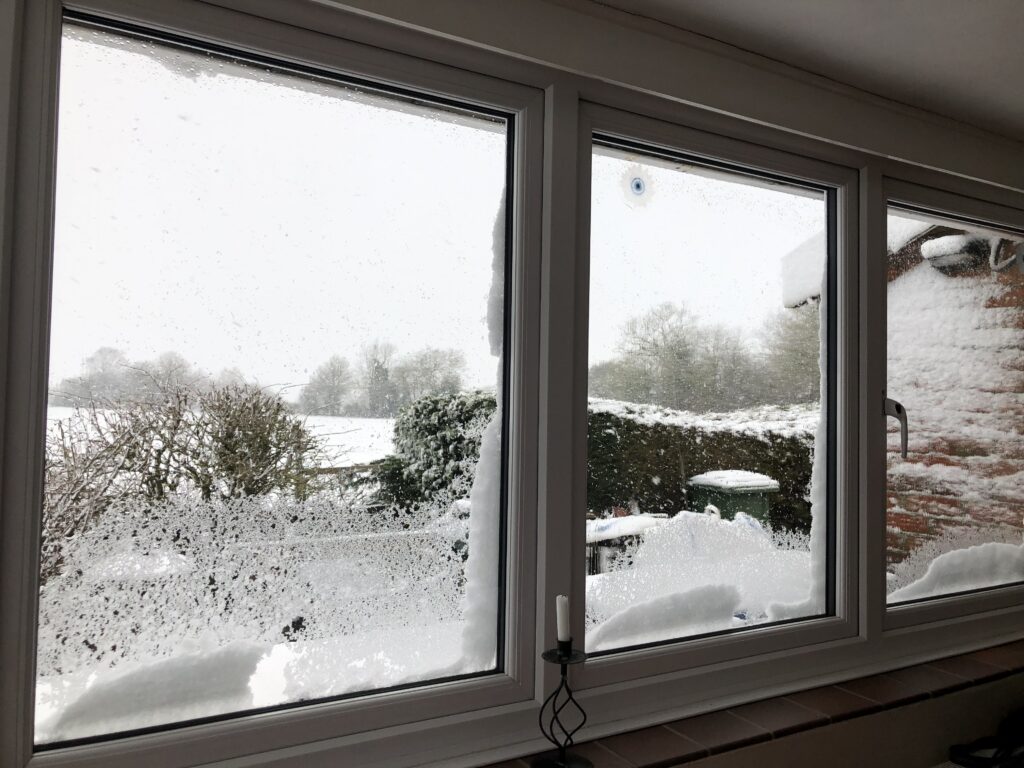
Among these reasons for optimism, the fact that we have had some “real” winter weather appears to sit oddly, for who would want frost and snow? Last year there was scarcely any frost, and climate change promises more warm wet winters. But frost and snow should be the norm, and there is a comfort in the right order of things in a changing world. We had quite a blizzard, turning the landscape monochrome, and piling up the snow on the window sills. As they say round here, “that snoo.”

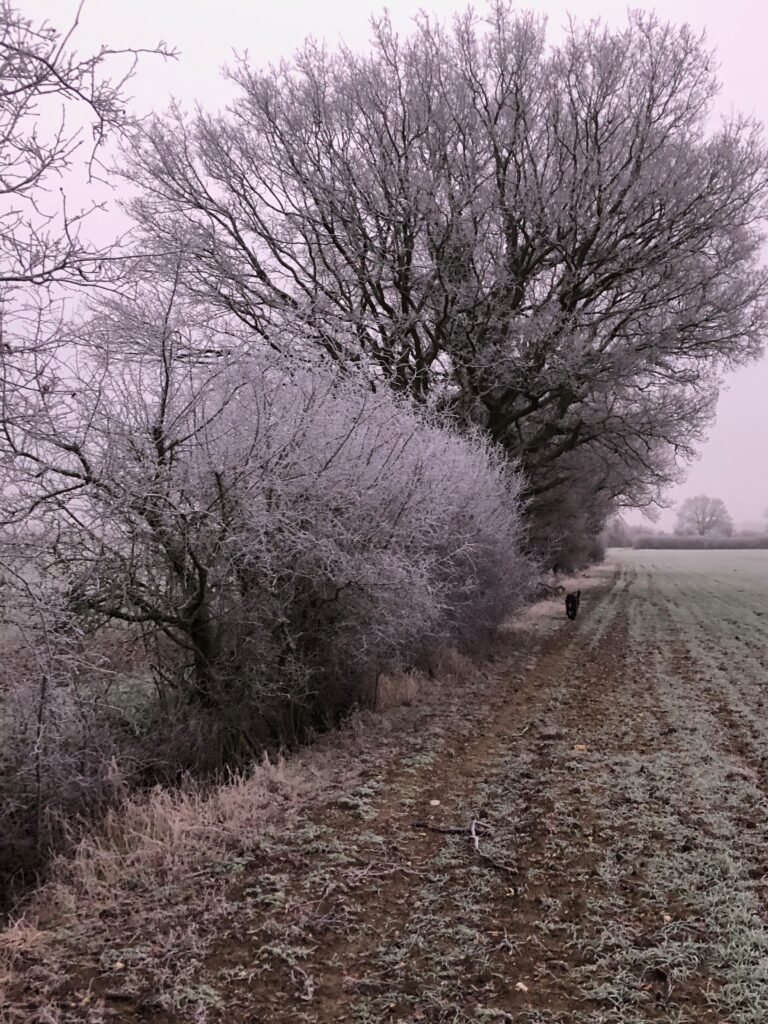
Hard frosts are a joy, freezing the ankle-deep mud into sharp ruts and ridges, almost more painful to walk on than rock, but allowing passage along  impassable footpaths and over fields usually too claggy to contemplate. We return on these mornings, boots and paws clean and dry. The dog rolls ecstatically on icy grass. These are the champagne days, bubbling and fizzing with the energy that comes from the all-too rare sunshine and blue sky. As with everything good, it seems, they do not last.

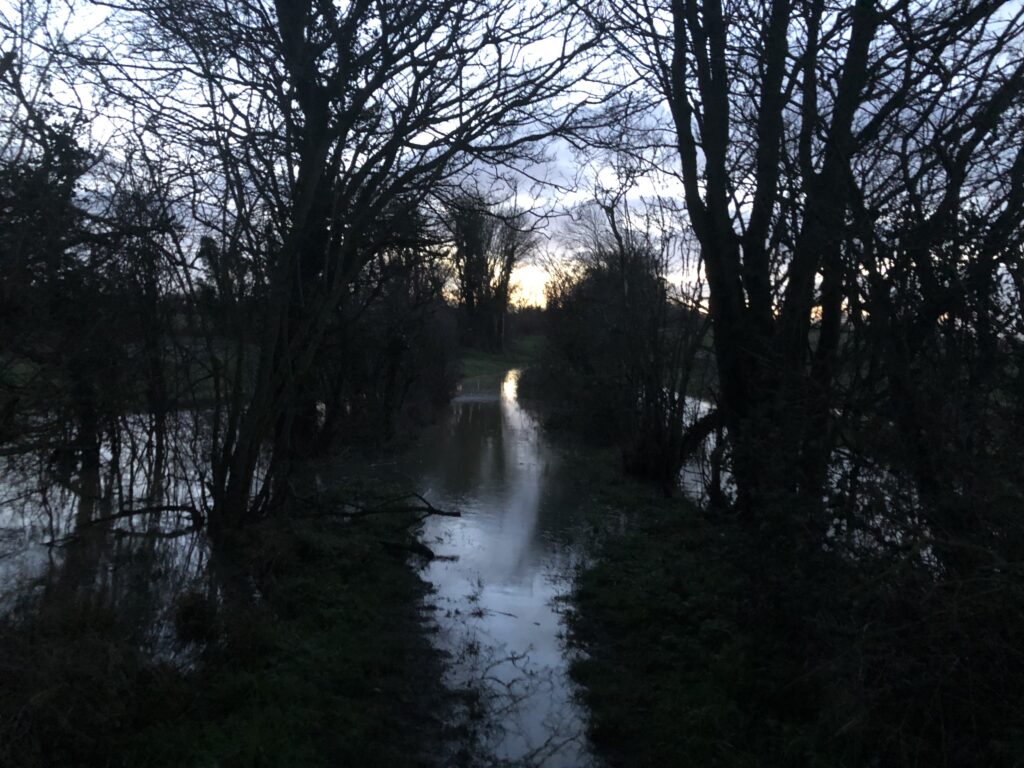
All-too rare. For, surpassing even last year’s record totals, the rainfall has been constant and heavy, and the sky louring and dark all day, the clouds pregnant with water in unprecedented quantities. People are saying “I’ve never seen it like this, not in all the years I’ve been here.” Walks involve long detours to avoid floods, the roads are awash, and I have lost count of how often I have had to pump out my drive so the postman can come up dry shod. Farmers cannot get on the land – except for one neighbour who gets his tractor out before daybreak on days when the frost is hard, and ploughs then.

Our morning path

It would be peculiar, and in a way disrespectful, not to mention the wider context of this January. The new year had scarcely begun when we were locked down for the third time in ten months. A combination of social mingling and travelling at Christmas, and a new variant of Covid 19 – of swift and fierce contagion – had hospitals all but overwhelmed, and deaths reaching record levels. One day more than 1800 bereavements were recorded. Maybe we are becoming war-weary and inured to these losses, the daily statistics, unless they affect us personally. But whoever thought to see so many deaths in one day in peace time? One Covid denier (“It’s just ‘flu”) has now seen three friends die, and at last urges prudence. And yet still, despite lockdown, rules, strictures, fines, horrific scenes nightly on our televisions, still the disease spreads.

Covid is cruel. Its selection of those victims most viciously attacked seems arbitrary. But the irony and the tragedy is that the very ways human beings connect – through speech and touch – are the vectors of disease and death. We can unwittingly kill those we love the most, or they us, and the burden of guilt and loss will last for decades.

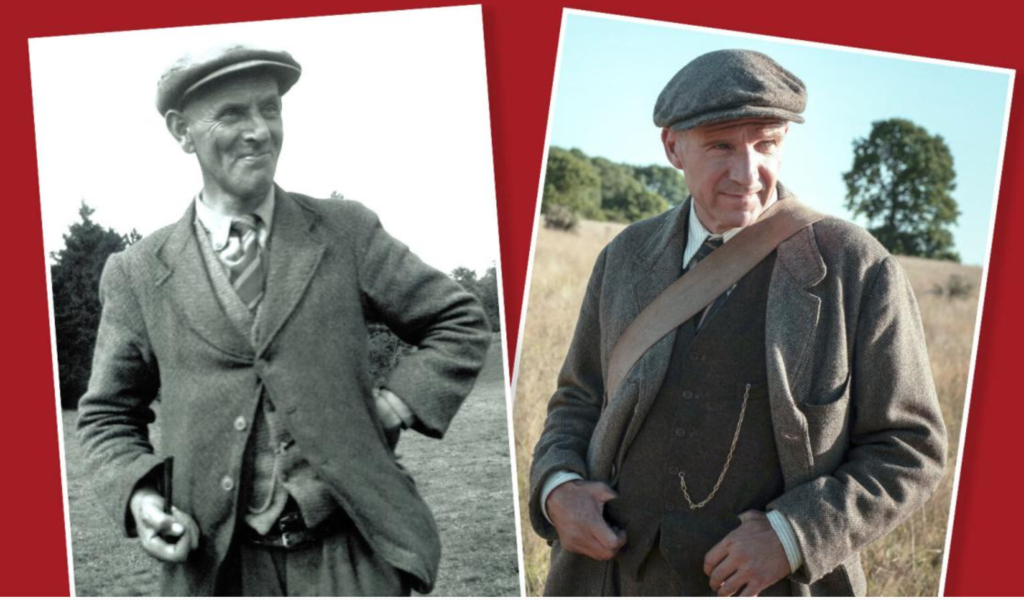
Some readers remark on the melancholy tone of these chronicles. These are tragic, difficult times. But I’ll move on to my favourite theme – Suffolk. I live about 20 miles from Sutton Hoo, the subject of the film “The Dig”, released last week. It is a film very much of two halves, and the first – before the excavation is swamped with archaeologists and cluttered with box office undercurrents of love and sex – is beautiful. It is as muted and undramatic as east Suffolk itself, gently hinting at a metaphor of both things and feelings hidden and under the surface.

Basil Brown and Ralph Fiennes (from The Times)

Ralph Fiennes transforms himself into an old Suffolk “boy” to play Basil Brown, the self-taught archaeologist, astronomer, and polymath. Fiennes has the Suffolk accent – those slow diphthongs – absolutely right (regional English accents portrayed on the screen are so often cringe-making). When I first came to Suffolk in the early Seventies there were many in the village who dressed exactly as Fiennes/Brown in the film, who cycled long distances if they needed to go somewhere, who spoke the same, stood the same, moved the same. This is the Suffolk of Harry Becker, of “Akenfield”; and I have watched the first half of the film through three times now, gazing at the facsimile of a lost age, and a lost world, the nostalgia all the sharper because of the uncertain times we are living in.

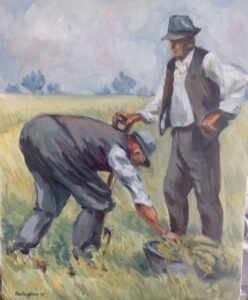
“After Becker”

Most of my life is indeed lived through a screen now, for lockdown perdures, and there are at least another five weeks of isolation to come. Friends, family and colleagues live in my computer; entertainment comes on a different screen. I little thought, three and a half years ago, when I started this monthly record that I should be recording a global pandemic, and that my world would have shrunk to the confines of garden, Common and the fields and woods around them.

December 2020

Now is the passage which leads to a new year, it is a blessed time of rest, and not a little indulgence. The earth sleeps. Midwinter. We look forward to a new beginning.

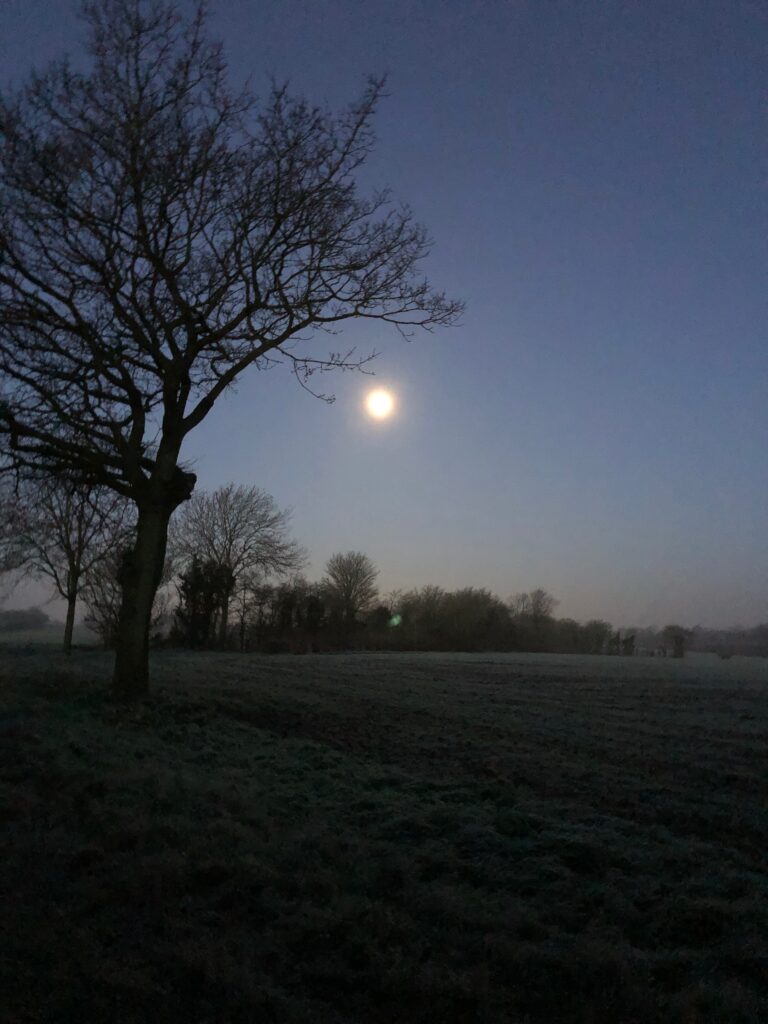
The signs are there already. The dawn is no longer silent. We go out, torch in hand, into the dark and cold, with Venus bright ahead in the south east if we are lucky. The owls are busy hunting, their eerie calls the first sound that greets us. On the Common we see the barn owl gliding low, pale and ghostly. Then the squawk and whirr of a pheasant disturbed; a blackbird’s call of alarm as we pass by. Light comes late and slowly, and now there is a constant twittering of small birds in the hedges. They know the year is turning. In the garden the spring bulbs have already pushed their green tips through the earth. Is it possible that light is seeping back?

Signs of hope. Never were they more needed.

Reader, many commentators are reminding us of the Chinese curse “May you live in interesting times.” The times are indeed so interesting, so darkly confused, so unlikely to yield certainties in this uncharted territory of pandemic, that any comment from me on them would be otiose.

However, in case some future archivist, fossicking through the internet offerings of 2020, chances upon these chronicles and requires some context, I will just say that December 2020 was the month when the pandemic just got a whole lot worse: a new strain (B117), virulent amongst the young particularly, has proved itself up to 70% more transmissible than its older cousin, the one which emerged a year ago and with which we were just beginning to feel familiar. It has hit us, with soaring rates of infection (as I write more than 53,000 in the past 24 hours), at a time when the United Kingdom is about to be dealt another  grievous, but self-inflicted, wound: Brexit becomes a reality at 23h00 GMT on 31 December when the transition period ends. I weep bitter and angry tears of loss: the country I have called home for years, and whose literature, language and culture were more familiar to me than my own now regards me as an alien, a foreigner from a “third country.”

It could (just) be worse for there is a trade deal of sorts, but the wound comes from the limitations to our children’s future, to employment, to human rights, to freedom to work and travel, to security, to who we are in the eyes of the world, to our culture, to our heritage. And for what? For our “sovereignty” – which was never in question. We have become a small-minded island, inward-looking, xenophobic, mean, insular. Community always – always – trumps isolation.

I fear that lockdown and the Covid constraints of the highest level tier 4 produce an effect in microcosm on me – and doubtless on many others who live alone – similar to that of Brexit on our country. This year has taught me that community not isolation is essential if one is to be healthy, or ‘whole’ – a better word. Without this contact we are wounded, we do not flourish cut off and alone. For some this may be a mortal wound. Soon, I fear, going out ‘normally’ will be so abnormal that it will appear frightening for many; we shall have to learn again how to be social, how to behave without fear of infection, how to be in the company of others.
I find my Book of Common Prayer (1662) and look for the prayer “In the time of any common Plague or Sickness” (did they know how much worse it would be three years later?):

O Almighty God, who in thy wrath didst send a plague upon thine own people in the wilderness, for their obstinate rebellion against Moses and Aaron; and also, in the time of King David, didst slay threescore and ten thousand, and yet remembering thy mercy didst save the rest; Have pity upon us miserable sinners, who now are visited with great sickness and mortality; that like as thou didst then accept of an atonement, and didst command the destroying Angel to cease from punishing, so it may now please thee to withdraw from us this plague and grievous sickness; though Jesus Christ our Lord. Amen.

We have already surpassed the three score and ten thousand deaths.

Of course most of us no longer believe that sickness is some sort of divine retribution visited upon mankind for sin (though I have met some loony Evangelicals who do), but we do know it is a consequence of our actions. Until we respect nature, no longer destroy the habitat of wildlife and cease to eat wild species, we shall continue to see these zoonoses develop, and some will be deadly. I fear this plague year will have taught us little.
Added to this grim picture here in East Anglia there have been serious floods. All along the river Waveney, which forms the border between Norfolk and Suffolk, unprecedented water levels have been recorded. The Shotford bridge on the road to Harleston (just in South Norfolk) was closed for fear of collapse as the river rose over it. I have never known that in the decades I have lived here. A friend at Bungay was evacuated from her home on Christmas Eve. Driving down to Fressingfield early that morning I was flagged down by a walker, warning me I should not get through the 300m-long flood where the beck had broken its banks.
On all counts I am among the lucky ones, truly blessed in that I can stay safe and warm in my home, with the company of a dog who keeps me laughing and an aged cat whose dementia drives me to distraction. Little need to go out except in my daily attempts to tire the dog, and I shall now start to consume the contents of my bulging “no-deal-Brexit” box, assembled over long months of apprehension. I am sitting pretty but alone, sovereign but solitary in my kingdom.

And so in these down days between Christmas and New Year, this liminal time of waiting while the earth sleeps in the depths and darkness of midwinter, I adopt my ‘normal’ practice and celebrate the feast. I do no work other than the necessary tasks of winter – carting logs, sweeping leaves, a bit of tidying up. We go for long walks, and although I think it wrong to drive in order to walk we go to the sea, the heath and the forest for a change of scene, to breathe different air, and to avoid…the mud.

The mud! Reader, I fully understand that sometimes I see my glass of blessings as half empty (a Facebook ‘friend’ chirpily reprimanded me recently), and I furthermore am conscious of the fact that any mud encountered on Suffolk walks is as nothing as compared to that of the trenches 1914-18. However, it begins to get one down. It comes in differing varieties: there is the liquid mud as slippery as ice, where keeping one’s balance requires intense concentration and a strain on the knees and ankles; there is the deep glutinous mud which sucks at the boots, holding them fast, dragging them from the feet, often leaving them behind, necessitating a filthy hobble back to retrieve the one which has disappeared into the morass. There is the claggy mud of a ploughed field where the farmer has not reinstated the footpath, and which results in a kilo or two of weight dragged on each foot. And then there is just…mud…acres and acres of it, churned by the passage of many feet, paws and hooves. I put the dog in the shower. She is not impressed.

Reader, what can be said that has not been said? We must let the past, and in particular this year with its losses, its bereavements, its sickness and strangeness, go.

I apologise that I have really nothing of value to say, other than to wish you a happy, safe and healthy new year. The road goes on.

October & November 2020

So, hands up who noticed there was no October? I’ve heard of only one so far, which suggests to me that it probably is time to stop soon.

So what happened to October? The absence was mainly because I decided to spare my readers yet another month of complaints about rain. There are only so many ways one can describe wet, and the daily drenchings that dampen the spirits, the mud that mires the mood as well as the boots and paws. The times we live in are difficult enough without inflicting this moaning on others.

Another reason was that I write these chronicles at the end of the calendar month, and at that point in October I had deserted Suffolk, its fields and woods, and my garden for a week on the Northumberland coast, a week away from work, from bills and attendant anxieties, from routine – and, as it turned out – from rain.

The path to the beach

I had searched, with strict criteria, somewhere to stay: it must of course welcome my dog; it must be quiet with no noise of neighbours; and it must be within easy walking distance of those vast empty beaches of golden sand that stretch for solitary miles. And I found it – a small stone cottage, a mile from the sea, with its own track to the beach over farmland, and to the nearby village.

And so we spent a week, the dog and I, walking and walking and walking – across the expanses of sand shining silver in a low sun, over dunes and fields, to tiny fishing villages, to castles dominating the cold North Sea, proud on their promontories. And every day the sky was full of geese flying south, squadron upon squadron, their eerie creaking cry as the formations passed overhead the companion to all our walks.

The skeins were high against the sky, and it was difficult to tell what breed they were, but I think from their pattern in flight that they were Brents.  Brent geese migrate in family groups, flying in wavering lines or flocking loosely together. They seldom fly in V-formation. These groups stay together from one breeding season to the next. They search for marshland, coastal grassland or farmland to rest and feed on, before pushing onwards.

These Brents breed in northern Russia and spend the winter in southern and eastern England. They nest on the boggy Arctic tundra, where the severe climate allows them only about two months of good weather in which to raise a family. By mid-September, they have left their breeding grounds, and arrive in large flocks on our shores from early October. They spend the winter feeding on eelgrass in estuaries and on crops in adjoining fields. In April they leave and head north once more – east to Siberia. They stop off along the Baltic coast before reaching the Arctic in early June, just as the snow and ice is beginning to thaw. 

We probably saw pink-footed geese as well, for we were within sight of Lindisfarne, where they arrive from Iceland. Barnacle geese too can be seen in huge numbers with up to 30,000 passing through. There is something mysterious – primal – in these mass movements of birds, called by instinct, by  forces within themselves to fly huge tracts of our planet, twice a year every year.

If a dog can be aware of the concept of ‘holiday’ I am sure mine was during that week. At home she has, as I frequently remind her, a pretty good life: daily long walks, freedom to gallop across fields in the dawn, a garden for interminable games of ball, food, warmth, and my abiding love which forgives all her sins. But here she is an only child, having social contact with few other dogs, and she longs for that. When I saw her bound onto the beach the first afternoon the joy was plain to see, and it was worth the 350 miles for that moment. Every day she ran, she chased whole packs of other dogs, and was chased in turn, she stole balls and obediently gave them up, she frolicked in the sea, jumping waves, rolling in the sand, racing up and down the dunes. I don’t think it is anthropomorphising to say that this was a happy dog.

As we walked down to the village each morning we passed what must have been the results of an effort by the entire population to celebrate Hallowe’en, with 20 or so decorated grisly and ghoulish figures lining the grassy path. I offer three examples:

Our efforts in Suffolk are less scary, and more in the spirit of public service:

On our walks I often meet the elderly farmer who constructed Pumpkin Man (he who brought us “Hidden camaras” and “Greengageges”). He is the source of much local knowledge, history, and can tell stories about all the native residents of our two villages. One day in October before Hallowe’en he hailed me from afar:

Him: Do you believe in the paranormal?

I hurried towards him, and as soon as I was near enough the dialogue went like this:

Me (cautiously): Well, I think there are unexplained things…

Him: I’ll tell you what happened to me last winter.

Me (thinks): We’ll be here for a while.

Him: I was up here one morning last winter just as it was light, and I saw this man with a round head and waxy complexion. And, do you know, he was wearing little diddy swimming trunks and a white vest.

Me (politely): How strange! Did he say anything?

Him: “Rood!”

Me: Rude?

Him: Yes, He said “Rood! Where’s the rood?”

[I should interject at this point for those unacquainted with the Suffolk accent that a long ‘o’ sound is pronounced ‘oo’ and conversely an ‘oo’ sound is pronounced ‘o’, so that if one went to school in Scole, it would be said “I went to skole in skool.” When someone dies there is a fooneral.]

Me: Rood?

Him: The rood, that rood over there.

Me: Oh…the road!

Him: That’s what I said. And I shooed him where the rood was.

Me: And then what happened?

Him: He disappeared. He just disappeared. I turned round and he was gone.
I must report that on none of our matutinal excursions have I ever seen a waxy round-faced man in diddy swimming trunks, and I suspect this was either an attempt at a Hallowe’en scare, or the old chap had seen a party-goer the morning after from a nearby venue. Who knows.

Now as I write we are coming into the true dark of the year. The days have been drear with fog, and scarce light all day. Fierce winds earlier in the month have whittled the trees bare, and their skeletal shapes loom out of the murk. We are condemned to solitude, and imprisoned alone in this darkness, in this second period of lockdown to control the virus which has ruled our lives for most of the year. And Covid Christmas forces a choice: loneliness or a potentially lethal togetherness.

We need light, any light; light from the sky, light at the end of this long, long tunnel. But it is Advent, and that points to a greater light, “And the darkness comprehended it not.” For many it will be hard to glimpse.

September 2020

Michaelmas Day 2020

The raindrops roll relentlessly down my study window; it is raining so hard that the rods of water bounce off the ground; the cloud hangs low over the miserable fields.

Is it a feature of advancing age that my life is increasingly ruled by the weather? Its effects on both mind and body feel so dominant, more than merely that I live in a profoundly rural area where the seasons dictate work, and weather rules activity. It certainly forms the subject of this blog. Maybe one day some digital archivist will unearth it as proof of our changing climate.

We have had, give or take a few windy and rainy days, six months of summer. The constant rains of winter ceased a week or so before full lockdown began at the vernal equinox, and the good weather continued with meteorological precision till the day of the autumn equinox. It has been a blessing which has mitigated the effects of the restrictions imposed on us to limit the spread of Covid-19. Meetings have taken place out of doors; church services have been held with the doors wide open to air the interior; meals with friends could be eaten in the garden.

Bad weather coming

Everything now has changed. Here in the east bitter northerly gales swept down the coast to buffet us. Heavy rain such as we have not seen for half a year turned dust to mud within hours. It is cold. It is not, after all, that this is unexpected, but that the promise of winter arrives with the threat not only of wet and cold, but of more stringent regulations in the face of rapidly rising cases of the virus, more hospital admissions, and the beginning of an upturn in daily deaths.

The first three weeks of September were golden and warm, summer clinging on till the last moment with dreaming misty mornings and shimmering hot days. There is always a tinge of poignancy in the knowledge that these days are numbered, and for me a twinge of pain, for this perfect weather recalls that of another September, 34 years ago now, when our lives changed for ever.

Mid-month the heat was building, and the dog and I went on what must surely be the last of our dawn excursions to see the sun rise over the sea. The regular reader will say there is nothing remarkable in that, but there was something that morning which took me beyond the usual joy in the loveliness of Suffolk shore and fields. As the sun rose through the mist I was conscious that I was in one of those liminal moments, a profoundly spiritual time, when darkness is vanquished by the light, and the animal world with its crepuscular creatures once again gives way to human noise and activity.

We walked through the dew towards the shore, along a path diamond-spangled with spider webs. Out of the brume an inquisitive calf loomed into view.

 In places in the hollows cold and lingering wisps of mist wrapped their chill around us. A slight rise in the path and the air was suddenly warm, a memory of the heat of yesterday clinging to the banks.

With no warning sound there was a crashing through the trees to our right parallel to the path, and red deer – five, six, maybe even seven, galloped alongside for a while. And then – then – we stopped stock still in our tracks. In front of us for one fleeting moment was a stag. He paused, his noble head with its many branched antlers held high and still, and then he was gone, leaping over the undergrowth to re-join his hinds. It was over in a second – no time for the camera on my phone for I was restraining the dog. But the encounter somehow signified more than this thrilling glimpse of one of the largest land mammals in the UK. It was the meeting of two worlds at the secret time of dawn, a timeless moment of mystery, an outward and visible sign of a special grace – of having witnessed something beyond my world, gone in a heart beat, but imprinted for ever in my mind’s eye. I felt more moved than I can say, almost that I could happily cease then and there to live, so that nothing following could ever mar or taint the memory.

There is a passage in the childhood book “The Wind in the Willows” by Kenneth Grahame when the two animals, Rat and Mole, are searching through the night for a lost young otter. Rat hears the ‘Piper at the Gates of Dawn,’ and knows an intense longing which I think is akin to what I felt:

“It’s gone!” sighed the Rat, sinking back in his seat again. “So beautiful and strange and new! Since it was to end so soon, I almost wish I had never heard it. For it has roused a longing in me that is pain, and nothing seems worthwhile but just to hear that sound once more and go on listening to it for ever.”

We continued into the rising sun, the sound of the sea gentle ahead of us. Across the dawn sky a skein of geese rose from the pools and flew south. And then we followed the shore north to the coastguards’ cottages, and back across the purple heath, and through woods of birch, pine and beech, dappled now by a radiant September sun. I have walked many thousands of miles through Europe – over mountain ranges, arid high plains, endless forests, battlefields of long ago, and gentle pastures – but somehow this walk will never be surpassed in memory.

On either side of them, as they glided onwards, the rich meadow-grass seemed that morning of a freshness and a greenness unsurpassable. Never had they noticed the roses so vivid, the willow-herb so riotous, the meadow-sweet so odorous and pervading. Then the murmur of the approaching weir began to hold the air, and they felt a consciousness that they were nearing the end, whatever it might be, that surely awaited their expedition.

Not my photo, but could this be the group I saw?

In case, reader, you are disputing that I saw red deer, I should note that the herd around RSPB Minsmere is the largest in the British Isles outside Scotland. The gentleman I saw will soon be fighting for his position, for in late September through October the stags return to Minsmere for the annual rut.

I have mentioned Minsmere and Dunwich frequently in these chronicles. Readers outside the area may be less aware than those who live nearby of the threat posed by the proposed construction of Sizewell C and D to the north of the ‘B’ power station, bordering the RSPB reserve, with a “campus” by the beautiful hamlet of Eastbridge. Posters from local opposition groups proclaim a threatened 600 lorries a day on our narrow roads and lanes.

More than 5600 different animals, plants and fungi have been recorded at Minsmere – more than on any other RSPB reserve and amongst the highest number of any nature reserve in the UK. Minsmere’s habitats include four of national conservation priority: reedbeds, lowland wet grassland, shingle vegetation and lowland heath. These habitats support a wide range of bird, plant and invertebrate populations of international conservation importance.

Among the diverse wildlife are nationally important populations of bittern, marsh harrier and avocet. Other wildlife in the wetlands include otter, water vole, kingfisher, specialist wetland plants and many rare dragonflies and other invertebrates. Across the heathland there are many rare species making a home, including nightjar, woodlark, Dartford warbler, adder, natterjack toad and silver-studded blue butterflies.

As well as its importance to today’s wildlife, Minsmere has played a significant role in wildlife conservation throughout the years. The reserve was the springboard for the recovery of both bittern and marsh harrier in the UK and, alongside RSPB Havergate Island a few miles down the coast, Minsmere ensured the successful return of breeding avocet to the UK after an absence of more than 100 years.

Unexpected meetings bring hope and pleasure. Online friendships can bring strangers together. I learned that a fellow pilgrim, who walked the Via Francigena from Canterbury to Rome two years after I did, and who is a member of the pilgrim organisation for which I work, was walking between East Anglian Cathedrals – Peterborough, Ely, Bury St Edmunds and Norwich. He must surely pass through Diss and onto the Boudicca Way? Yes, he would, and accordingly the dog and I walked a stretch with him one hot afternoon, through the gentle south Norfolk countryside, along lanes that time forgot, across meadows, over a gurgling stream, to little churches standing alone in their landscape. As pilgrims do, we had a lot to talk about.

Who could have thought, when I was young, that there could be virtual friendships? Virtual meetings and video conference calls? We used to joke as we answered our old-fashioned landline telephones, anchored as they were by a cord to the wall, that it was a good thing we couldn’t be seen the other end.

What else to say of September? We learn to live with uncertainty: everything changes and yet nothing does. Life goes on, but hedged around with questions – have I got my mask, my hand sanitiser, my vinyl gloves, with me? How many people can I meet at any one time? And where? Is the person behind me in the queue too close? Will we be locked down again? How will we get through a long winter without the comfort of friends and family?

The cycle of life in the country, the harvesting, the ploughing, the sowing, continues no matter what, and earths us, telling us – if we care to listen – that life goes on, and amid the pandemic gloom there will always be moments of transient grace – a bird that sings, a golden leaf that floats down in front of us, a noble stag at daybreak. I leave you with Sylvia Plath.

Black Rook in Rainy Weather

On the stiff twig up there

Hunches a wet black rook

Arranging and rearranging its feathers in the rain.

I do not expect miracle

Or an accident

To set the sight on fire

In my eye, nor seek

Any more in the desultory weather some design,

But let spotted leaves fall as they fall,

Without ceremony, or portent.

Although, I admit, I desire

Occasionally, some backtalk

From the mute sky, I can’t honestly complain:

A certain minor light may still

Leap incandescent

Out of the kitchen table or chair

As if a celestial burning took

Possession of the most obtuse objects now and then –

Otherwise inconsequent

By bestowing largesse, honour,

One might say love.  At any rate, I now walk

Wary (for it could happen

Even in this dull, ruinous landscape); sceptical

Yet politic; ignorant

Of whatever angel may choose to flare

Suddenly at my elbow. I only know that a rook

Ordering its black feathers can so shine

As to seize my senses, haul

My eyelids up, and grant

A brief respite from fear

Of total neutrality. With luck,

Trekking stubborn through this season

Of fatigue, I shall

Patch together a content

Of sort. Miracles occur,

If you care to call those spasmodic

Tricks of radiance miracles. The wait’s begun again,

The long wait for the angel,

For that rare, random descent.

August 2020

But, you will say, she was going to stop; she said she had nothing more to say. She said July would be an end of Common or Garden in Suffolk. And she did mean it. However, dear reader, vanity has yielded to the flattering requests to continue, but I do so on the understanding there can be little new, and doubtless much repetition of previous years.

Cue a threnody to the departing glories of summer, to the hot days and stifling nights, to the dusty stubble fields, to a time of ease and bounty. I think that’s what you have come to expect from me at this point in the year.

Little is “normal” about this year. The word itself is in too-constant currency since we all became aware of Covid-19 and its effects on our daily lives. There is much talk of “getting back to normal,” or “the new normal,” but maybe it is a word whose use should be curtailed, for when we says things are no longer “normal,” we mean that they are not as they once were, familiar, and enshrined and defined as the status quo ante in our memory.  In truth, there is no “normal” – normalcy – for life is perpetual change. It’s just that this year the change has sprung out and whacked us in the face.

Our weather has certainly not been “normal” this month, producing extremes of heat, then exceptionally dark and humid days, then storms and gales. Yet extreme is what we must become accustomed to as the warming of the planet produces our new normal. And this “normal” we have inflicted on ourselves.

Bank Holiday weather

As I write, in the dying days of the month, meteorological summer is thrashing its tail here in the east, doing a good imitation of autumn. So that’s a bit of “normal” – the security of the familiar, for the bank holiday here has produced weather we all recognise and are used to: lashing rain, wind, cold, and a weeping greyness that seeps into the soul. Normal August bank holiday. This, when all else is changing and passing, is how it is meant to be. We all grew up to expect it – the shivering seaside, the rain-soaked cricket pitches.

A hot day dawns

Hard then to remember the beginning of the month, when day after day – or so it seemed – we sweltered in scorching heat. Sleepless and sweating after a restless night, I went once again with the dog at sunrise to seek some breath of air at the sea. I thought that at 5.30am we should have Dunwich beach to ourselves.

Far from it: as we descended the steep shingle bank to the sea we had to dodge huddled human forms in their sleeping bags. Already families were swimming. We walked north as far as Walberswick and back, and then we both swam, the dog not leaving my side in the unusually balmy water of the North Sea.

This last idyllic taste of summer disappeared abruptly with violent storms. One night as we went out before bed we were surrounded 360° by constant flickering lightning. And after the storms came the wind, violent and destructive. Such is the exposed position of my house and garden that a gate was torn off its hinges, and yet again I lost a pane from my new greenhouse, despite its new more sheltered site. The old one was razed by storms Ciara and Dennis in February.

Heat and dust are now a memory, replaced by rain and cold, and the first log fire to cheer the chilly damp. Back to “normal.”

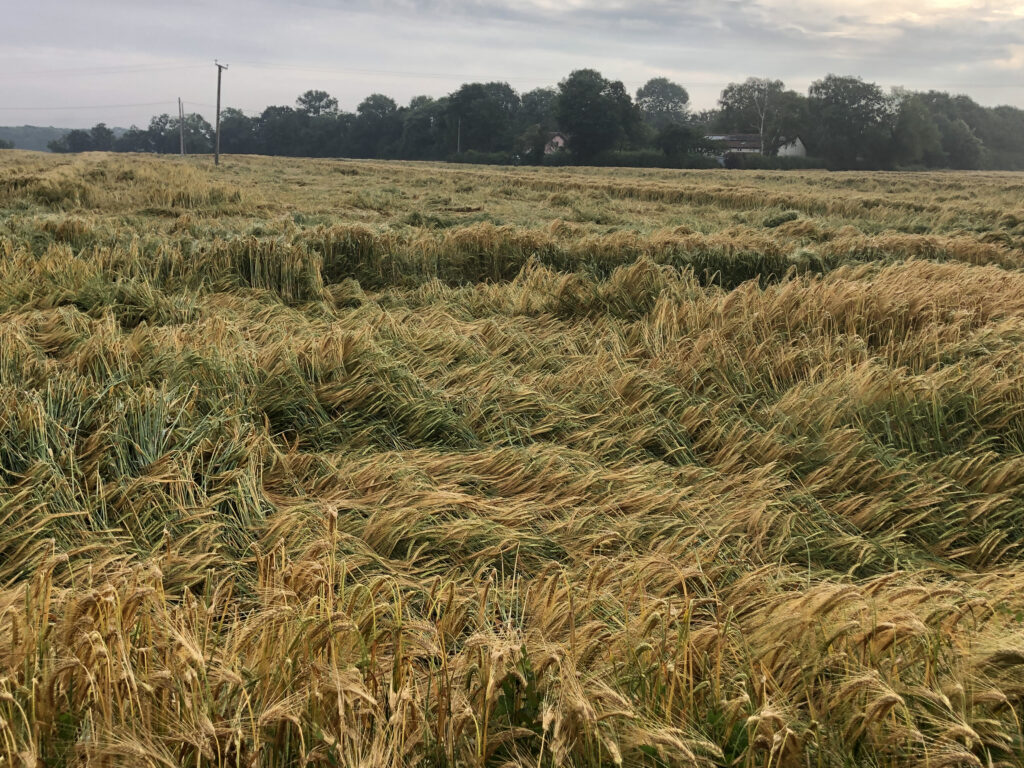
Harvest is finished, a poor yield this year, especially of wheat, after the water-logged fields of the winter and the extreme drought of the spring and early summer. I was going to say all is safely gathered in, but one farmer over whose land we often walk in the early morning is notoriously slow to cut. Year after year the good weather comes and goes, while his crop waits to be flattened by downpours, laid, and beginning to sprout before he stirs himself and his combine.
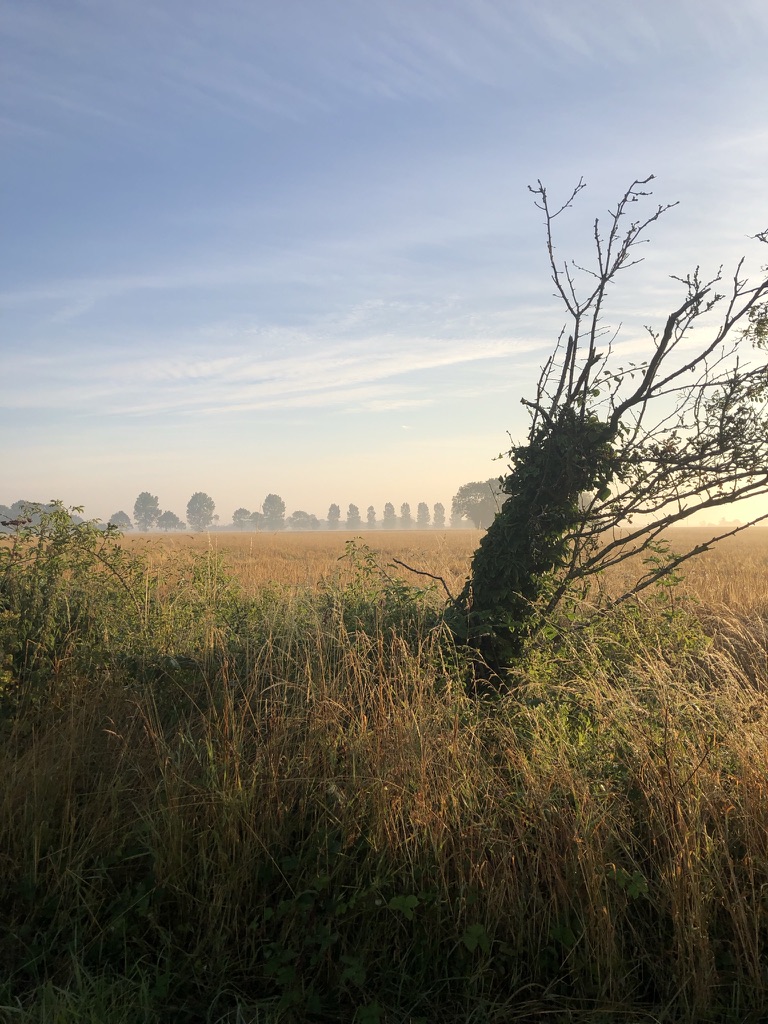
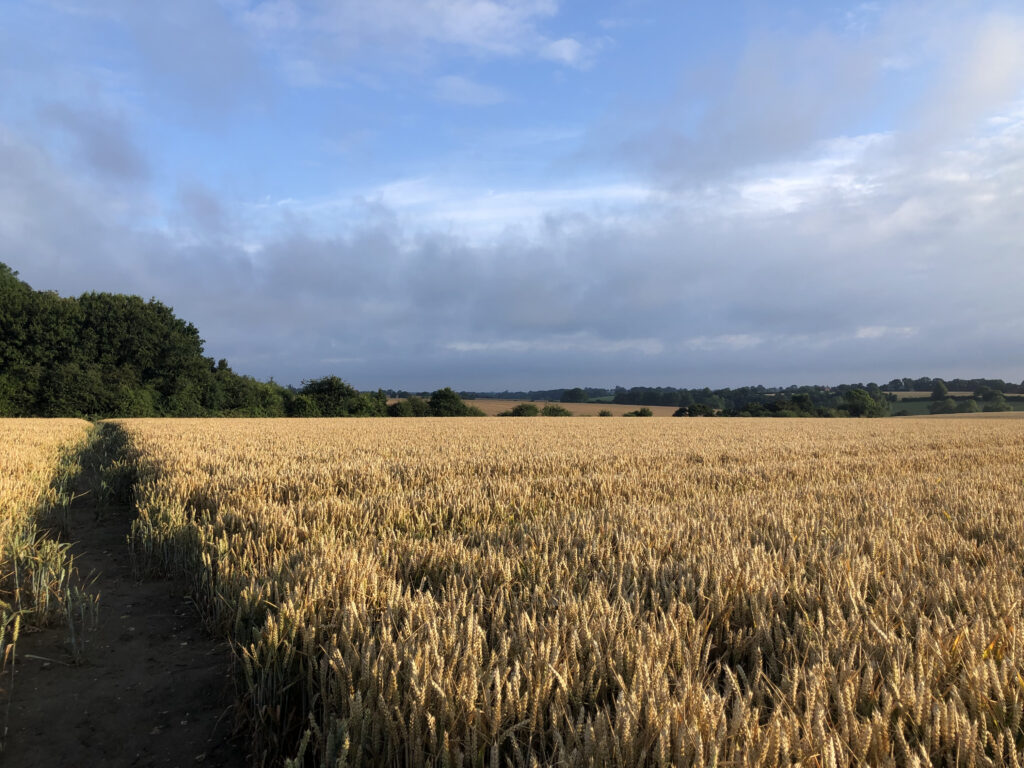
This year I have noted several fields of oats, which had become a rarity. They are tolerant of the damp conditions which obtained till mid-March, can be planted with more flexibility of timing, and are good as a break crop to help control the dreaded black grass. An oat field is a beautiful and a graceful thing, the grains translucent and shimmering. That they were once more common is attested by the wild oats on nearly every field margin (the top-most picture this month shows an example).

Because we walk our two hours so early in the morning to avoid heat, the young dog requires some exercise later in the day. A ball suffices for endless and insatiable amusement. To stimulate her brain and make her work we have, in previous years, done several scent work courses, during which she graduated from finding a felt mouse stuffed with catnip (easy) to detecting a hidden £5 note (quite skilled), an activity which I feel should be encouraged. When we lose a ball she is relentless in her quest to find it. In October she will be introduced to mantrailing. Perhaps she will find me a man…

Dogged searching

After taking a visiting daughter to the station in nearby Diss (over the border in Norfolk) the dog and I once again walk part of the Boudicca Way, of which I wrote in June. We pass a lane leading to the village of Burston, and I am reminded that the first weekend of September usually sees the Burston School Strike Rally, habitually attended by the major Trades Unions, and addressed by the great and the good – and leaders – of the Labour Party. But not this year of course; this year there is no normal, and Covid has claimed another cancellation.
Many have not heard of the Burston School Strike, which lasted from 1914 to 1939, conferring an enduring fame on this tiny south Norfolk village, and making it a symbol of Socialism. I knew nothing of this before I worked on a local newspaper back in the 1980s. This is the story of the longest strike in UK history.

Tom Higdon and his wife Annie were appointed as teachers at the Burston and Shimpling Council School in 1911, but had previously worked as teachers at Wood Dalling School, also in Norfolk where – as Christian Socialists – they had objected to the poor conditions, and about the employment of children by local farmers, which interrupted their education. Many of these farmers were also school managers so the Higdons’ activities created social tensions.

Eventually, the Norfolk Education Committee gave the Higdons the option of dismissal or employment at another school. They transferred to Burston where they found conditions for many labouring families were similar to those at Wood Dalling. Tom Higdon gained election to the parish council at Burston in the hope of making improvements, while Annie repeatedly made requests for better conditions at the school.

Local farmers objected, as did the Revd Charles Tucker Eland, the local rector and chairman of the school managers, a man of plentiful income and considerably less compassion. Allegations of pupil abuse were made against the Higdons in 1914 and they were subsequently dismissed. Many of the children and their parents believed the allegations to be fabricated, and on 1 April 1914 Violet Potter led her fellow pupils out on strike to show their support for the Higdons.

A separate Burston Strike School was established on the village green for those pupils and parents who refused to send them to the official council school. Many labour organisations supported the Strike School and eventually enough money was raised to build a permanent schoolhouse. It opened in 1917. The strike ended in 1939 when Tom Higdon died.

And so tomorrow autumn starts. There is much work still to be done, harvesting, picking, processing. We hear little of the Brexit talks, buried in news of a rising tide of Covid cases, of holidaymakers quarantined, of schools returning to an uncertain future. But what seems certain is that we may be in for a very rough time soon, if the talks yield no good trade deal and the end of the Transition Period coincides with a wave of Covid and winter ‘flu. Out to the garden, then; off to the hedgerows…

July 2020

July 2020

You see strange and wonderful sights when you walk, and particularly when you walk early in the day. Some of these encounters bring us to within touching distance of those animals who live so close to us, but who for the most part remain unseen. We see signs of their existence, but – as with neighbours in cities – we rarely meet. Sometimes, however, it is the eccentricity of our human nature that stops me in my tracks.

I offer this photo as an example of the latter, glimpsed one morning in a Suffolk wood. Unless, of course, this is not human whimsy, and I have stumbled unknowingly on the Little Folk…

As for the former, the dog and I – walking down a track around 6am – came face to face with a badger. This was a marvellous encounter, for in my three score years and thirteen I have seen only one badger, a shabby and mangy specimen late at night on the outskirts of a southern French town. British Brock however  was a splendid creature – sleek, fat and groomed. We glimpsed him at the same moment, the dog and I. She stiffened, and quivered, straining forward. I stood absolutely still.

Badgers are extremely short-sighted for they are nocturnal and live mostly underground in their setts. Brock trotted on towards us, unconscious of our presence, and then – at the correct social distance of two meters – halted, peered myopically at us, saw a wolf-like hairy dog in front of his face,  realised the full horror of his situation, did a swift U-turn, and disappeared back down the track at a shambling canter. Such encounters make my day.

What of July? It has been what my father would have called a mouldy month. After the Mediterranean spring has come a British summer: dark, gloomy, windy and often wet. On the dry days harvest is in full swing. First the oilseed rape, and early in the month the combine turned in to the field beside the house – a great lumbering roaring mastodon that sent straw and dust flying and the earth shaking. I am glad the rape has been cut for once it has flowered it then smells of rotting cabbage until harvest. Rape stubble though is vicious: sharp calf-height stalks prevent walking over the field, unless you want bleeding legs. Even the dog declines to chase a hare far through it.

After the rape, the barley and the wheat, and the fields of gold disappear into the monstrous jaws of the combine . The distant rumble of the engine accompanies me to sleep, and the clatter and roar of the tractors hauling grain through the small hours  then wake me again. The air smells of straw, a scent I love, a smell of summer – and of adolescent holidays spent at stables.

My own harvest is abundant: every day I pick and process, pick and process. The early days of lockdown this year have taught us that food security is vital, and the Brexit negotiations don’t seem to be going too well. We are not surprised. It seems both right and somehow sacred to work my small parcel of land, and – insofar as possible – live from it.

A hill of beans

These final few days of July have seen a return to sun and heat.

Once again the dog and I go and walk by the sea in the brief hours of cool before the sun is high. Between the tiny hamlet of Eastbridge and the beach we see the ponies often – but wrongly – called Tarpan horses, a name which comes from the Kasakh or Kyrgyz for wild horse.. They certainly have the look of the horses in cave paintings: dun with the characteristic dark eel stripe down the back, stocky, a thick neck and a thick, often standing, mane.

Strictly speaking, these are not Tarpans, but Koniks, a breed created by Polish horse-breeders to resemble, as closely as possible, this extinct wild horse of Europe. Although they look and behave much like Tarpans, they are a separate breed, since it is impossible to re-create an extinct species/breed.

They were brought to these marshes by the Suffolk Wildlife Trust, for they are at home in wetlands, where they graze the reed-edge and fen vegetation and create tussocky areas that are favoured by birds such as snipe and teal.

Nearer to home the horses on the Common managed somehow to bridge the cattle grid, and one misty morning I saw four of them walk in procession, led by the dominating white mule, up the lane to disappear down a grassy headland behind a hedge. They were too far off for me to do anything about it, and besides that mule is not to be messed with. Have they returned? The Common looked strangely empty, with only a few mares grazing. I return to painting them over and over. I could draw a horse with my eyes shut, and they have been my subject since childhood. A meagre claim to fame aged 11 was to have a painting of the rumps of two heavy horses ploughing tour the country as the result of some long-forgotten competition.

High summer segues into late summer, and there is a hint of autumn in the chill of dewy mornings. The long grasses are dying back, and when cut for hay smell sometimes inexplicably of liquorice. Leaves have long since lost their freshness. Despite the sporadic dampness of the month the paths and fields are dusty. The year is past its youth, past even its middle age, and the poignancy of August is that it is the beginning of the end, the year slips into old age, and soon we shall descend once more into the darkness.

It is now three years since I started these chronicles. Each year the same flowers grow, the same birds sing, the same crops are cultivated. Each year the weather is either good, bad or indifferent. I feel – as witnessed by the above – that I have little to say, and last month there was an accusation of trying too hard to write poetic prose. “You really went for it,” said a friend. And so I think it is time to stop.

Thank you for reading.

June 2020

Five forty-five on a morning already hot, the hottest of the year so far.  The dog and I walk south along the shore, by a gentle sea whose soothing suck and drag over shingle induces a sense of peace, and of rightness with the world. The sun, still close to the horizon, makes a silver pathway across the water.

The dog (I can no longer say “the young dog” for she is now nearer four than three) has till now never cared for water – apart from standing hock-deep in slimy and stinking ponds. It is odd, considering each of her parents is from a race of water dogs. Today, though, is different: she discovers the joy of swimming. Taken by surprise by the sudden shelving of the shore, she has no choice but to swim. She is surprised; she likes it: “Look, mummy! Look at me! I’m swimming!” And then I cannot get her out of the water – she frolics, she cavorts, she plunges, and …she swims.

We had driven towards the sunrise to Dunwich – a staccato journey, braking constantly to avoid hares zig-zagging, small rabbits playing, pigeons lumbering into flight, a muntjac, and two cock pheasants fighting, oblivious to the motorised danger. On our way back, driving with car windows down, through the shade of Dunwich Forest we hear nightingales.

Midsummer… The scents of midsummer: mown grass, honeysuckle, privet, roses, young barley on the breeze, the delicate perfume of field beans in flower. Midsummer…. The winter barley has turned and soon Suffolk will be a sea of gold. Midsummer…nights never truly dark.

Midsummer. On cue comes the St John’s Wort for the Nativity of St John the Baptist, a quarter day which signals that the year is half over. It is always a poignant moment when the solstice is past, the point of sunrise ceases its slow drift northwards, and nights begin to lengthen. More perhaps than at New Year we look both forward and back; this year more than most.

A gardener, of course, is always – Janus-like – looking forward and back, learning from the successes and failures of past sowings; looking forward to harvesting the result of hard physical toil. A gardener’s job today is always to create tomorrow out of yesterday.

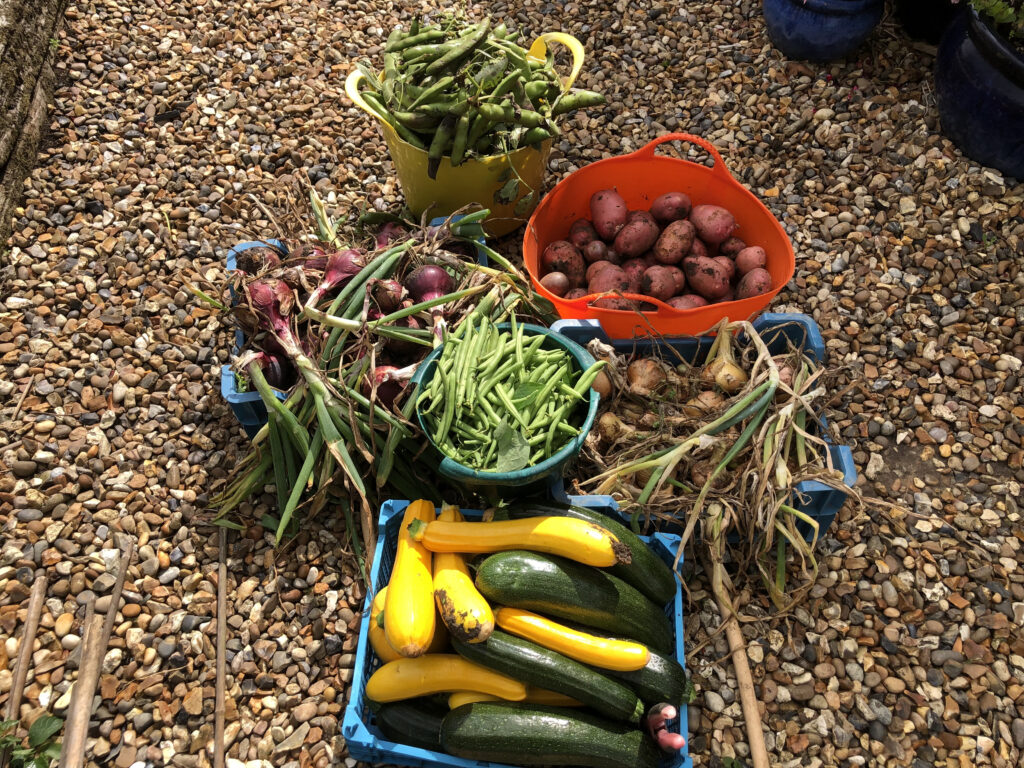
Midsummer is that moment of transition, and now at this tipping point of the year I can start to eat the result of past labour – broad beans, peas, chard, courgettes, potatoes, beetroot, lettuce, onions, herbs, artichokes. The “front” garden, too, is at its best. For two or three weeks each year (as I never fail to note in this chronicle), my flower beds give a passable imitation of a real cottage garden, the abundance of flowers hiding and disguising the weeds.

At the beginning of the month, with the first tentative steps out of total lockdown, the glorious sun and warmth which had lasted all spring deserted us. New month, new weather once more. The sky became grey again and rain could be smelled on the wind before it came. It was cold as only June in England can be. A fire was lit.

With the partial liberation we learn to place the words “socially distanced” in front of any activity involving another person or persons. On a grey windy day I met a friend for a socially-distanced walk, and we explored part of the Boudicca Way, a walking trail which links Norwich station southward to Diss, meandering – seemingly back in time to the 1950s – through the gentle South Norfolk countryside, sometimes on lanes innocent of traffic; sometimes by a river, across a ford, through pastures and meadows. We sat a while outside the tiny isolated church of St Andrew, Thelveton. No sign in the lane proclaimed its presence to passers-by; no notice told us to which saint it was dedicated. The only company was a meadow of cows and calves, guarded by a bull; the only sound was birdsong. And yet the churchyard was neatly mown, the graves tended, the headstones upright and clean.  

Boudicca, or Boadicea, was of course the legendary flame-haired warrior queen of the Celtic Iceni people. Boudicca’s husband, Prasutagus, was king of the Iceni (in what is now Norfolk) as a client under Roman suzerainty. When Prasutagus died in 60 CE with no male heir, he left his private wealth to his two daughters and to the emperor Nero, trusting thereby to win imperial protection for his family. Instead, the Romans annexed his kingdom, humiliated his family, and plundered the chief tribesmen. While the provincial governor Suetonius Paulinus was absent in 60 or 61, Boudicca raised a rebellion throughout East Anglia. The insurgents burned Camulodunum (Colchester), Verulamium (St. Albans), the mart of Londinium (London), and several military posts. According to the Roman historian Tacitus, Boudicca’s rebels massacred 70,000 Romans and pro-Roman Britons, and cut to pieces the Roman Ninth Legion. Paulinus met the Britons at a point thought to be near present-day Fenny Stratford on Watling Street and regained the province in a desperate battle. Defeated, Boudicca either took poison or died of shock or illness.

Statue of Boudicca and her daughters at Westminster Bridge

Hard to think of all that slaughter as we walked the irenic green lanes.

In a few days the major part of our Covid incarceration and enforced inactivity will come to an end. Only hindsight will tell us whether we are unlocking too soon for safety, too late for the stricken economy; whether there will be spikes, second waves, more deaths, more disaster. Three months, which at the beginning might have seemed to some too long a sentence, have for me flown past. And now, reviewing, the question forces itself upon me: “What have I done with them? What have I actually achieved in this unprecedented period?”

And the best answer I can give is that of the Abbé Sieyès, priest and political theorist under the French Revolution, who – when asked what he did during the Reign of Terror – replied “J’ai vécu.” I survived. Maybe it seems obvious, looking back, that the majority of us would survive, but three months ago we looked on appalled at the Four Horsemen riding over the land. The Grim Reaper stalked us, and any careless contact, a touch, a cough could spell sickness and death. He may yet come back to get us.

What have we done with it? Have we re-evaluated? re-assessed? Have we promised that things will be different? that we shall live simply, travel less, save the planet, enjoy our loved ones, eat local produce, grow our own food, reduce stress, change our priorities? I hope so, but I am pessimistic, for I know that real behaviour change takes at least six months to become rooted in our lives.

We can now, cautiously, breathe again – for a while at least, and the existential questions recede. Time now for other worries to take over: a dear friend anxious about her octogenarian husband’s memory lapses; another who lives in a marriage of coercive control. “For better for worse…in sickness and in health.” Today we hear of a likely spike in the number of divorces after couples in three months of lockdown were forced to confront realities often evaded by long hours at work. Happy are those who can say “J’ai vécu” after years of marriage.

A friend has called these chronicles “melancholy.” Maybe that is because I am pessimistic about human nature; maybe because I am all too aware of the swift passing of the seasons, and thus that there are few remaining years for me. I don’t feel sad, only occasionally wistful for the chances missed, the graces resisted.

But hey! Who could be melancholy with the prospect of a haircut in a few days!